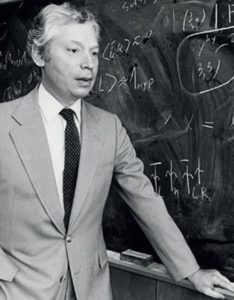
Germany’s Greatest Physicist
 Max Born (1882-1970) was born in Breslau (now Wroclaw, Poland) to a German-Jewish family. He first studied at the University of Breslau, then switched to the University of Gottingen where he met renowned mathematician (and former Jew of the Week) Hermann Minkowski, who became one of his mentors. After earning his Ph.D, Born continued his studies at Cambridge. He soon returned to Gottingen to work with Minkowski on unifying electrodynamics with Albert Einstein’s relativity. Over the next few years, Born published 27 important papers that made him a superstar in the world of physics and math. During this time, he met his wife and was pressured to convert to Lutheranism to marry her. He refused. However, in 1914 he received a letter from Max Planck inviting him to become a professor of theoretical physics at the University of Berlin—and to accept this position he would have to become a Christian, since professorships were still barred to Jews. Born ended up “converting” nominally for this reason. With the outbreak of World War I, Born joined a military research unit. During the war, he became best friends with Albert Einstein (who once described Born as the greatest physicist in all of Germany), and also briefly worked with Fritz Haber in discovering the Born-Haber cycle. Born would return to Gottingen, where Werner Heisenberg was one of his main students. Together, they did important work in advancing quantum mechanics. In 1932, Heisenberg won a Nobel Prize for his discoveries in quantum physics, but he protested that Born didn’t receive the prize with him. Another two of Born’s students went on to win Nobel Prizes in physics before he did. (It was only in 1954, two years after retirement, that Born received a Nobel Prize of his own!) Another of his Ph.D students was J. Robert Oppenheimer, later the “father of the atomic bomb”. When the Nazis came to power in 1933, Born was suspended from his job because he was a Jew. He moved to Cambridge temporarily and there wrote a bestselling physics book, as well as a textbook that became the standard for physics students for many decades to come. He then became professor of natural philosophy at the University of Edinburgh. Meanwhile, Born and his wife helped Jewish refugees escape Germany and settle in the UK. After retiring at the age of 70, Born returned to Germany and lived out the rest of his life there. One of his grandchildren is actress and singer Olivia Newton-John, who passed away last week.
Words of the Week
The difference between science and Torah is in the fundamental concept that science does not demand any behaviour. One can be the greatest scientist in the world and behave like the most degraded human, like the Nazis, who achieved the greatest scientific findings while manifesting the most degenerate behaviour…
– Rabbi Menachem Mendel Schneerson, the Lubavitcher Rebbe
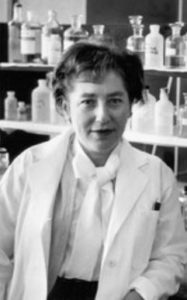 Mildred Cohn (1913-2009) was born in New York to Jewish-Russian immigrants. Her father was a rabbi and Cohn grew up in a religious, Yiddish-speaking home, though one which also prioritized secular education and the arts. Cohn graduated high school by the age of 14 and got her Bachelor’s degree in biochemistry at 18, followed by her Master’s from Columbia University. Unable to afford any further schooling, Cohn got a job researching for the National Advisory Committee for Aeronautics (NACA), which would later become NASA. She was the only woman among seventy men, and was told she shouldn’t expect any promotions. Two years later, she had enough money to return to school, pursuing her PhD at Columbia under recent Nobel Prize-winner Harold Urey. Cohn focused her work on carbon and oxygen isotopes. From there, she moved on to Washington University to do research on metabolism using sulfur isotopes. Later, she switched to using nuclear magnetic resonance and made a huge breakthrough in 1958 when she was able to visualize ATP, the central energy molecule that powers human cells and essentially all living things. Cohn discovered much of what we know about ATP and how it works. All in all, she wrote 160 scientific papers and won numerous awards, including the National Medal of Science (awarded to her by President Reagan). She was the first female editor of the Journal of Biological Chemistry and the first female president of the American Society for Biochemistry and Molecular Biology. In 2009 she was inducted in the National Women’s Hall of Fame. Cohn was married to renowned Jewish physicist Henry Primakoff. Many of her ATP discoveries came while she was working at the lab of another great Jewish scientist, Gerty Cori.
 Gerty Theresa Radnitz Cori (1896-1957) was born in Prague. Her father was a chemist who had invented a new way of refining sugar. At 16, Cori decided to become a doctor, but found that she was missing nearly all the prerequisites. So, in one year she took eighteen years-worth of courses in Latin, science, and math. Cori passed her entrance exam and was among the first women ever to be admitted to Prague’s medical school. After graduating, she worked at a children’s hospital and also did research on blood disorders, the thyroid gland, and the body’s ability to regular temperature. Due to persistent food shortages and rising anti-Semitism after World War I, Cori and her husband (also a doctor and scientist) left Prague and moved to New York. The couple did research together at what is now the Roswell Park Cancer Institute in Buffalo, focusing on glucose metabolism. Cori published 11 papers of her own, and another 50 together with her husband. By 1929, the Coris had figured out how the body metabolized glucose in the absence of oxygen, a process now known as the Cori Cycle. For this, they won a Nobel Prize in 1947. This made Cori the first American woman to win a Nobel Prize (and only the third woman overall), as well as the first woman ever to win a Nobel Prize in Medicine. In 1931, the couple took over a lab at Washington University (with Cori being paid one-tenth her husband’s salary). Here they made many more vital scientific discoveries, and mentored a new generation of scientists—six of which went on to win Nobel Prizes of their own. For this reason, their lab was deemed a National Historic Landmark in 2004. Like Mildred Cohn, Gerty Cori won countless awards and was inducted into the National Women’s Hall of Fame. There are craters on the Moon and on Venus named after her, as well as a commemorative US stamp. After battling the disease for a decade, Cori succumbed to bone cancer, likely caused by her extensive work with X-rays.