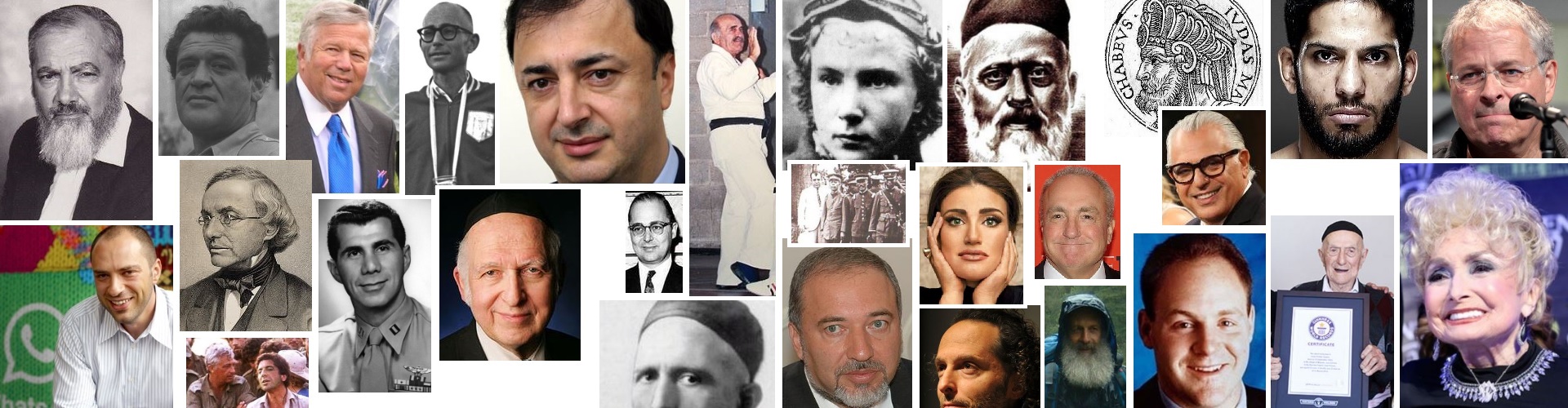
Miracles in the Holocaust
 Yekutiel Yehudah Halberstam (1905-1994) was born to a Hasidic family of the Sanz dynasty in the small Jewish town of Rudnik, Poland. At just 14, he lost his father, and replaced him as the town rabbi. At the age of 21, he was invited to become the rabbi of Klausenberg (then part of Hungary), and head its yeshiva. During the Holocaust, his entire family was sent to Auschwitz, and Rabbi Halberstam tragically lost his wife and 11 children. Nonetheless, he did not lose faith and continued to serve as an inspirational leader for the Jews in the camps. During a 1944 death march that took place on Tisha b’Av, the Rebbe recited the traditional Kinot as the Nazis tortured the Jews. Since it was Tisha b’Av, the Jews took off their leather shoes, so the Nazis used the opportunity to make the Jews march on broken glass. They then left them to die of thirst in the summer heat. As reported by several survivors, the Rebbe asked everyone to start digging in the earth. When they did so, water miraculously emerged out of the soil. The Jews were saved, and the bewildered Nazis left them alone. The Rebbe then said: “Here we have proof that despite all the troubles and the apparent concealment of God’s face, the Holy, Blessed One still loves us.” Another time, Rabbi Halberstam was shot in the arm by a Nazi and left to bleed to death. He wrapped a leaf around the wound and made a vow that if he survived, he would dedicate the rest of his life to saving the lives of others. The Rebbe survived. First, he stayed at the DP camps to run soup kitchens and care for the countless orphans. He established and headed the She’erit haPletah (“Surviving Remnant”) organization, which built mikvehs, set up Jewish schools, organized chuppas, and raised money for the victims. During this time, he met General (and future US president) Dwight Eisenhower, who was inspired by the “wonder rabbi”. Rabbi Halberstam then moved to New York, got remarried, and had seven more children. In 1960, he made aliyah and settled in Netanya. The Rebbe opened both a Hasidic-Ashkenazi yeshiva, and a Sephardic yeshiva, established the town of Kiryat Sanz and, to fulfill his Holocaust vow, founded the Sanz Medical Center/Ladiano Hospital. Today, the hospital serves half a million people, runs strictly according to Jewish law, and has the distinction of being the only hospital in Israel that has never closed—not even for a worker’s strike. Famous for his deep love and concern for every Jew, Rabbi Halberstam was beloved by everyone who knew him, secular and religious, Ashkenazi and Sephardi. His two sons continue to lead the Sanz-Klausenberg communities in New York and Netanya.
Tisha b’Av Begins this Saturday Night
Words of the Week
I promised myself that if, with God’s help, I got well and got out of there, from those evil people, I would build a hospital in Eretz Yisrael where every human being would be cared for with dignity. And the basis of that hospital would be that the doctors and nurses would believe that there is a God in this world and that when they treat a patient, they are fulfilling the greatest mitzvah in the Torah.
– Rabbi Yekutiel Yehudah Halberstam, the Sanz-Klausenberger Rebbe
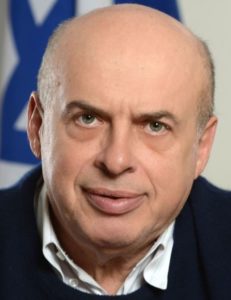 Anatoly Borisovich Sharansky (b. 1948) was born in Donetsk, Ukraine. He was a child chess prodigy, and won his city’s chess championship as a teenager. He went on to study math in Moscow and later worked in a secret Soviet research lab. In 1973, Sharansky applied for an exit visa to Israel and was refused. Henceforth, he became a vocal activist on behalf of Soviet Jewry, and became the world’s most famous refusenik. He soon expanded his scope to work for all human rights, and was the spokesperson for the Moscow Helsinki Group, today Russia’s primary human rights organization. In 1977, Sharansky was arrested on trumped-up charges of treason and espionage, and sentenced to 13 years of hard labour. He was tortured, and kept in solitary confinement for long periods of time. (He would later remark that one of the things that helped him through it was playing chess in his mind.) After ceaseless activism from his wife, mother, and countless international supporters, Sharansky was finally released in 1986. Shortly after, he received a Congressional Gold Medal from the US government. He moved to Israel and started going by his Hebrew name, Natan. A couple of years later, he published a bestselling memoir, Fear No Evil. (This book was passed on by
  Charles Ellis Schumer (b. 1950) was born in Brooklyn to a Jewish family with Russian, Ukrainian, and Polish ancestry. He scored a perfect 1600 on his SAT and went to Harvard, where he first studied chemistry before switching to law. He passed the bar in 1975, but went right into politics, having once been inspired when volunteering on a presidential campaign. Schumer was elected to the New York State Assembly straight out of law school. After three terms, he won a seat on the US House of Representatives. He served on the House for nine terms until 1998, when he ran for a Senate seat instead and won again. He has since been re-elected to the Senate three times, with consistently high approval ratings. In 2016, he was voted head of the Senate Democrats, making him the minority leader. Earlier this year, when the Democrats took control of the Senate, he became the majority leader. In both cases, Schumer became the first Jew (and first New Yorker) to hold the Senate leader title. Impressively, Schumer visits every single one of New York’s 62 counties every year to meet with his constituents. He has been praised for helping average New Yorkers deal with even minor issues that are not the role of a senator to address. Over the years, Schumer has worked hard to keep jobs and factories in America, and has been fiercely critical of China. In 2017, he tried unsuccessfully to get Trump to impose a ban on Chinese buyouts of American companies. (This week, he finally pushed through a massive $250 billion