Tag Archives: Israel

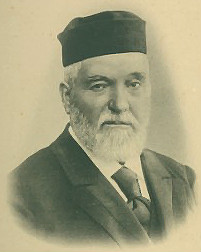
Jew of the Week: Wolf Wissotzky

Tea!

If you had a name like Kalonimus Kalman Vulf Ze’ev Yankelevich Wissotzky, you’d kick ass, too.

Kalman Ze’ev Yankelevich Wissotzky (1824-1904) was the son of struggling merchants in Russia. After studying at the famous Volozhin Yeshiva, he joined an agricultural colony which paved his way into the tea trade. In 1849, he established the Wissotzky Tea company in Moscow and very soon became known as the “King of Russian Tea.” By 1904, Wissotzky Tea was popular across the world, with branches in Europe and America. Meanwhile, the situation in Russia worsened to the point that Wissotzky Tea moved their headquarters to Israel. (During the Russian Revolution, the masses protested “Jewish domination” and chanted their slogan: “Tea of Wissotzky, Sugar of Brodsky, and the Tzar is Leiba Trotsky!”) In 1936, Wissotzky Tea opened a factory in Israel, becoming the first tea company in the region. Since then it has been Israel’s leading tea brand. It would surely make Wolf Wissotzky proud – he was an ardent Zionist and one of the main shakers of the movement. He gave 10,000 rubles to the Alliance Israelite for Zionist causes, then another lump sum of 20,000, as well as 6000 rubles to start one of Israel’s first monthly magazines (called HaShiloach). Wissotzky personally traveled to Israel and laid the groundwork for the Lod, Nablus and Gaza settlements. He also established and financed the first school in Jaffa. Outside of Israel, too, Wissotzky was a great philanthropist. In 1898, he gave 70,000 to build a yeshiva in Byelostok. Most amazingly, he worked tirelessly to help the Cantonists – young Russian Jews forcibly taken from their homes and conscripted into life-long military service. Wissotzky ensured many of them had Shabbat services and Passover meals, and helped bring countless young boys back to Judaism. Ultimately, he would leave over 1 million rubles to charity. In those days, one ruble was equal to 0.514 ounces of gold, which in today’s value is nearly $1,000. So, Wissotzky donated nearly one billion dollars to charity! Now that’s philanthropy!

Words of the Week

Great minds discuss ideas; average minds discuss events; small minds discuss people.
– Eleanor Roosevelt

Jews of the Week: Salita, Foreman and Greenberg

Jewish Boxers 

Yuri Foreman, Rabbi Boxer

From the beginnings of professional boxing early in the last century, Jews have played an enormous role in the sport. The tradition continues with today’s two young stars Dmitry Salita and Yuri Foreman. Most amazingly, both are practising Orthodox Jews! Salita was born Dmitry Lekhtman in Odessa, Ukraine (he uses the maiden name of his mother, who passed away from breast cancer). His family immigrated to Brooklyn where he began his career at age 13, building an amateur record of 59 wins to just 5 losses. At 19 he began his professional career, and his record stands at 33 wins, 1 draw and 1 loss, with 17 KOs. Salita has said, “I will never compromise my beliefs. Never. It’s not a question. I have a personal relationship with God… My boxing is such a big part of my life, but it won’t get in the way of my religion.” Meanwhile, Yuri Foreman was born in Belarus, where his mother signed him up to boxing so that he can stand up to anti-Semites. The family moved to Israel, then Brooklyn. Foreman recorded 75 wins to 5 losses in his amateur career, and since going pro has 28 wins and 2 losses. He is also studying to become an Orthodox Rabbi, and has said, “You have the physical and mental challenges in boxing, just like you have lots of challenges in exploring the different levels of Judaism. They are different but the same.” Final mention goes to rising star Roman Greenberg, nicknamed “the Lion from Zion”, a Moldovan-Israeli who was the youngest ever to win Israel’s heavyweight title. His record stands at 27-1. He says: “I represent Israel and myself. All through history, the Jews have always had to fight for their freedom and for their lives. When I come out wearing the Star of David, it shows the whole world that the Jews are still here and that they are successful.” Amen.

Kosher Boxer Dmitry Salita


Words of the Week

We can easily forgive a child who is afraid of the dark; the real tragedy of life is when men are afraid of the light.
– Plato

Jew of the Week: Mordechai Emmanuel Noah

Israel in Buffalo?

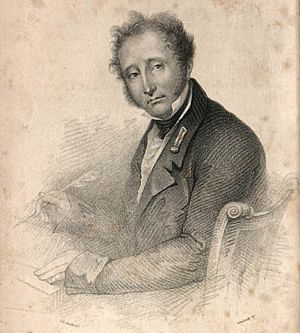
Noah had the rank of Major

Mordecai Manuel Noah (1785-1851) is considered by many to be America’s first famous Jew. Coming from a blended family of Sephardic-Portuguese and German-Ashkenazi Jews, Noah’s father was one of the main financiers of the American Revolution. Mordecai began his career in trade, then moved into law while living in South Carolina. He made a name for himself as a journalist, writing passionately to drive the American cause and boosting the nation’s morale in the face of war with the British Empire. For his wisdom and eloquence, President Madison appointed him consul to Imperial Russia in 1811, then consul to Tunis in 1813. There he worked to fight against marauding pirates and saved countless Americans captured and enslaved in Morocco. However, in 1815 the anti-Semitic President Monroe repealed Noah’s position. This stirred a massive controversy. Former presidents John Adams, Thomas Jefferson and James Madison all joined Noah’s side, championing equality for all. Nonetheless, Noah left politics, returning to New York where he founded a variety of newspapers (including the Enquirer). He wrote several popular plays (including the famous She Would be a Soldier), as well as three books. He is a founder of New York University and Mt. Sinai Hospital, and also served as a judge and sheriff of New York. But most intriguing of all is that in 1825 Mordechai Noah bought a massive piece of land near Buffalo to be established as a Jewish state called “Ararat”. Surprisingly, thousands of Christians came out in support to lay the first cornerstone, along with Masons, the New York militia and St. Paul’s Church! Unfortunately, the project failed, and Noah realized a Jewish state could only be established in the Holy Land. To this he dedicated the last years of his life, spearheading the return to Israel long before Herzl and the Zionists.


Words of the Week

The progeny of Abraham are likened to the dust of the earth (Genesis 13:16), and to the stars of the heavens (Genesis 15:5). For when they fall, they fall as low as dust; when they rise, they rise as high as the stars.
– Midrash

The original marker for the refuge of Ararat