
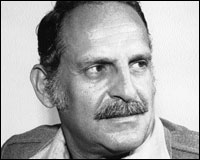
Shimon Erem, an Israeli Hero
Shimon Kazarnofsky (1922-2012) was born in Lithuania. His parents immigrated to Israel in 1925 when he was just three years old. At 15, he joined the Jewish Underground and fought valiantly to establish the State of Israel. With the outbreak of World War II, he enlisted in the British Army’s Jewish Brigade and would receive four medals for his bravery in fighting the Nazis. Stationed in Italy at the end of the war, he stayed in Europe to run underground operations: hunting escaped Nazis and smuggling Jewish refugees to Israel. At the onset of the Independence War, Kazarnofsky (now going by his new Hebraized last name, Erem) returned to Israel and organized the first Officer’s School of the Israeli Army. He battled (and was wounded) on both the Jordanian and Egyptian fronts. In 1956 he commandeered the Sinai War, then served in 1967 as commander of special forces in the Six-Day War. Despite moving to California in 1970 (where his wife is from), he immediately returned to Israel in 1973 to fight in the Yom Kippur War. Erem finally retired from the military with the rank of Brigadier General, and returned to the United States where he worked tirelessly to raise support for Israel. He once said, “Every morning when I get up, I ask myself: What can I do to help Israel today?” Sadly, Erem passed away last Sunday.
Words of the Week
… I will insist that the Hebrews have done more to civilize men than any other nation. If I were an atheist and believed in blind eternal fate, I should still believe that fate had ordained the Jews to be the most essential instrument for civilizing the nations… They are the most glorious nation that ever inhabited this earth. The Romans and their Empire were but a bauble in comparison to the Jews. They have given religion to three quarters of the globe and have influenced the affairs of mankind more, and more happily than any other nation, ancient or modern.
– President John Adams, in a letter to F.A. Van Der Kemp, 16 February 1809
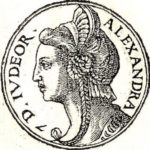 Shlom-Tzion (139–67 BCE), more commonly known by her Hellenized name Salome Alexandra, has the distinction of being the only true, independent Jewish Queen of Israel in history. Her husband was the king Alexander Yannai, a Sadducee who sparked a civil war and began an extermination campaign against traditional Judaism. At his death, Salome took over and restored peace to the kingdom. She ended her husband’s cruel persecutions of the rabbis (recalling many of them from exile in Egypt, including her brother, the great Shimon ben Shetach). She also re-established the Sanhedrin, the Jewish Supreme Court. Together with the sages of the day, a public school system was instituted for all children, rich or poor. Salome also championed the rights of women and developed the marriage document (ketuba) with clauses that protect the bride, as we still use to this day. Greatly expanding the army and fortifying Judea’s borders, Salome protected the kingdom from foreign powers (particularly Armenia and Syria). Her reign was marked by incredible prosperity, and the Talmud recounts that during her nine-year rule the rains always came in their times, oats grew as large as olives and wheat grains as large as kidney beans. Sadly, the kingdom quickly unraveled at her death, and was shortly after conquered by Rome.