Tag Archives: Israel

Jews of the Week: Imi Lichtenfeld and Roy Elghanayan

Krav Maga & The Jewish Bruce Lee
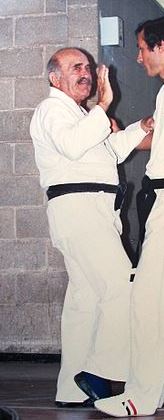
Lichtenfeld

Lichtenfeld

Imre Lichtenfeld (1910-1998) was born in Budapest and grew up in Bratislava. His father was a police chief inspector who also owned the Hercules Gymnasium where he taught acrobatics and self-defense. Training under his father, Lichtenfeld became Slovakia’s Wrestling Champion, Boxing Champion, and Gymnastics Champion. In response to rising anti-Semitism in the 1930s, he put together a group of Jewish boxers that defended local communities from thugs. He realized that his training was of little help in real-life combat situations, so he started developing a new system of self-defense based on practical techniques, natural motions, and “simultaneous defense and attack”. In 1940, Lichtenfeld left Czechoslovakia due to the Nazi invasion and joined the Free Czech Legion, fighting alongside the British Army in North Africa. After two years of distinguished service, he finally made his way to Israel, and was immediately recruited to train the fighters of Haganah and Palmach (the Jewish defense groups that later became the IDF). His very effective self-defense system became known as Krav Maga – “contact combat” or “close combat”. With the formation of the State of Israel in 1948, Lichtenfeld (now better known by his Hebraicized name Imi Sde-Or) was appointed the IDF’s Chief Instructor of Physical Fitness and Krav Maga. He served in this role for the next 20 years, then shifted his focus to training Israeli police, while also opening two training centres for the general public in Tel-Aviv and Netanya. In 1995, he founded the International Krav Maga Federation.
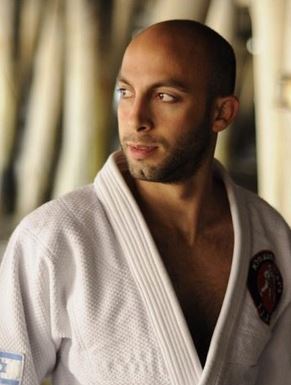
Elghanayan (courtesy: bjjlegends.com)

Elghanayan (courtesy: bjjlegends.com)

Perhaps the best-known Krav Maga expert today is Roy Elghanayan (b. 1984), nicknamed the “Jewish Bruce Lee”. He began his training in Krav Maga and martial arts at an early age, and his skills were quickly recognized when he joined the IDF. He soon became the Chief Instructor of Krav Maga for the Israeli Special Forces. He holds a 4th Degree Black Belt, and is recognized as Israel’s Official International Ambassador for Authentic Krav Maga. He is also the only person to hold two Israeli Krav Maga national championship titles. Over the years, he has developed his own unique style, and has taught self-defense all over the world, including to the LAPD and the CIA. He currently runs a Krav Maga club in Los Angeles, and has also choreographed fights for some Hollywood films. When asked about the secret ingredient in his diet, he answered: “I only eat kosher protein”. Click here to see Elghanayan in action.

Words of the Week

Everybody has a plan, until they get punched in the face.
– Mike Tyson
Jews of the Week: Nathan, Benzion and Yoni Netanyahu

Nathan Mileikowsky (1879-1935) was born in what is now Belarus to an Orthodox Jewish family descended from the great Vilna Gaon. When he was ten, he joined the famous Volozhin yeshiva and after eight years of diligent study was ordained as a rabbi. During this time he became drawn to Zionism and soon dedicated his time to the Zionist cause. He traveled across Europe, Russia, and later the United States to raise support for Zionism – becoming one of the world’s most popular Zionist speakers – as well as to raise money for the Jewish National Fund. In 1920, Mileikowsky made aliyah to Israel. He headed a school in Rosh Pina, promoted settlement of the Galilee, and wrote articles for the Hebrew press – often under the pen name “Netanyahu”. He continued to tour globally, at one point giving over 700 lectures in under 9 months, and publishing some of these talks in a popular book. Towards the end of his life, Mileikowsky settled in Herzliya and established a farm.

Benzion Netanyahu

Benzion Netanyahu

His son, Benzion Mileikowsky (1910-2012), was born in Warsaw while Nathan was head of its Hebrew Gymnasium. Growing up in Israel, he adopted his father’s pen name “Netanyahu”. Benzion studied at the Hebrew University in Jerusalem, taking on a more hard-line approach to Zionism. He became editor of a number of Zionist newspapers, and later the chief editor of the Encyclopaedia Hebraica. In 1940, Benzion moved to New York to build American support for the Jewish state, serving as executive director of an American Zionist group. Later on, he became a professor of Judaic studies and medieval history at Cornell University. Benzion published five books on Jewish history, and edited a number of others. His three sons are: Iddo, a doctor and author; Benjamin, Israel’s longest-serving prime minister; and Yoni, the eldest son.

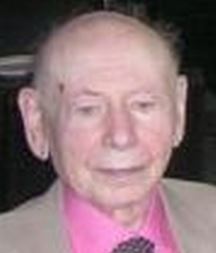
Last known photograph of Yoni Netanyahu

Last known photograph of Yoni Netanyahu

Yonatan “Yoni” Netanyahu (1946-1976) was born in New York, went to high school in Pennsylvania, and studied at Harvard. He first enlisted in the IDF in 1964, and fought in the Six-Day War, getting wounded while rescuing a soldier behind enemy lines. A few years later, he joined Israel’s special forces unit, Sayeret Matkal, and by 1972 became its deputy commander. For his heroic service during the 1973 Yom Kippur War he was awarded a distinguished medal. In 1976, now commander of Sayeret Matkal, Yoni led Operation Entebbe, successfully rescuing over 100 Israeli hostages held in Uganda. Sadly, Yoni was the mission’s sole casualty, and passed away during the flight back home. In 1980, his personal letters were published, and were described as a “remarkable work of literature”. Both a film and play have recently been made about his life.

Words of the Week

God treats a person the same way they treat their children.
– Rabbi Shlomo of Karlin

Jew of the Week: Yolande Harmor

Yolande Harmor

Yolande Harmor

Yolande Gabbai Harmor (1913-1959) was born in Alexandria, Egypt. She went to school in France and returned to Egypt at 17 to get married. Working as a journalist, she soon became a noted writer in Egypt, as well as a popular socialite and member of Egypt’s “high society”. Meanwhile, Harmor was also drawn to Cairo’s Zionist circles. In 1945, she was recruited by the Jewish Agency and became a secret agent, gathering intelligence about Egypt’s royalty and politicians. She was able to get close to people like the Grand Mufti of Cairo, members of the Muslim Brotherhood, and even Egypt’s King Farouk himself. Her intelligence reports included detailed accounts of Arab military plans and troop numbers, giving the nascent Israeli state critical information to win the War of Independence. In July of 1948, Harmor’s cover was blown and she was arrested. However, as a favourite of some of Egypt’s most powerful people (many of whom had fallen in love with her), she was dealt with fairly lightly. After a few months, it became apparent that Harmor had developed stomach cancer. She was released from prison and deported out of Egypt. Harmor moved to Paris, and served on Israel’s UN delegation, and then for the Israeli Foreign Ministry. Throughout this time, she continued to use her sources in Egypt to secure key intelligence information. In 1951, Harmor finally settled in Israel. Unfortunately, her efforts for the State of Israel were soon forgotten. Saddened, and further weakened by the passing of her beloved second husband, Harmor succumbed to her cancer at the young age of 46. In recent years, her incredible story has come to light once again. The city of Jerusalem established ‘Yolande Harmor Square’ in 1997, and a documentary film about her life was released in 2010.

Words of the Week

The Jews have been objects of hatred in pagan, religious, and secular societies. Fascists have accused them of being Communists, and Communists have branded them capitalists. Jews who live in non-Jewish societies have been accused of having dual loyalties, while Jews who live in the Jewish state have been condemned as ‘racists’. Poor Jews are bullied, and rich Jews are resented. Jews have been branded as both rootless cosmopolitans and ethnic chauvinists. Jews who assimilate have been called a ‘fifth column’, while those who stay together spark hatred for remaining separate…
Dennis Prager and Joseph Telushkin, ‘Why The Jews?’