A Modern Miracle Worker
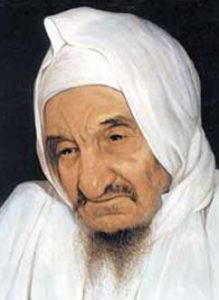 Rabbi Israel Abuhatzeira (1889-1984) was born on Rosh Hashanah in Tafilalt, Morocco to a long line of Sephardic rabbis and miracle-workers. (His grandfather was the famed Abir Yakov, who was himself a grandson of Rabbi Shmuel Abuhatzeira, who had studied with Rabbi Chaim Vital, a disciple of the great Arizal.) The young Israel grew up on an estate that included a yeshiva and a beit din (the local Jewish courthouse), surrounded by wise scholars, judges, and mystics. By the age of 12, Israel was recognized as a child prodigy, and already began living the life of a mystic – fasting regularly, rising at midnight to pray and meditate – while hiding it all from his parents. He married at 16. After his father passed away and his older brother was murdered, the community begged him to take over as the town rabbi. Although only 22 years old, and exceedingly humble and modest, he eventually accepted. Within a decade, he was famous across Morocco, and as far as Israel, as a wise rabbi, a saint and a miracle-worker. On his first trip to the Holy Land, it is said that he reopened the Arizal’s ancient synagogue, which had been sealed off for years due to an apparent curse. Though he wished to stay in the Holy Land, Rabbi Abuhatzeira returned to Morocco to take care of his community. When the conditions for Jews in Morocco deteriorated even further after the founding of the State of Israel, Rabbi Abuhatzeira took it upon himself to facilitate Moroccan Jewry’s migration back to their Promised Land. He made the move himself in 1950. By then, he carried a new title: Because his prayers and blessings were known to always came true, he was referred to as Baba Sali, the “Praying Father”. The main possessions that he brought over from Morocco were 30 crates of books and manuscripts, together with thousands of pages of his own holy writings. He is considered one of the greatest kabbalists and holiest rabbis of recent decades. He was sought after not only by Jews, but by Arabs as well, and stories of his miracles abound. He took ill several months after his 94th birthday, and passed away soon after. The Baba Sali’s funeral was attended by over 100,000 people, and his grave in the town of Netivot is now a popular pilgrimage site. His yahrzeit begins tonight.
24 Amazing Torah Prophecies That Came True
Words of the Week
A man’s kind deeds are used by God as seeds for the planting of trees in the Garden of Eden; thus, each man creates his own Paradise. The reverse is true when he commits transgressions.
– Rabbi Dov Ber of Mezeritch
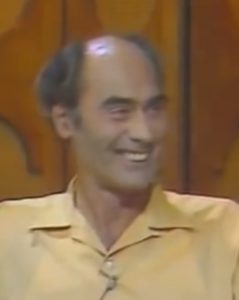
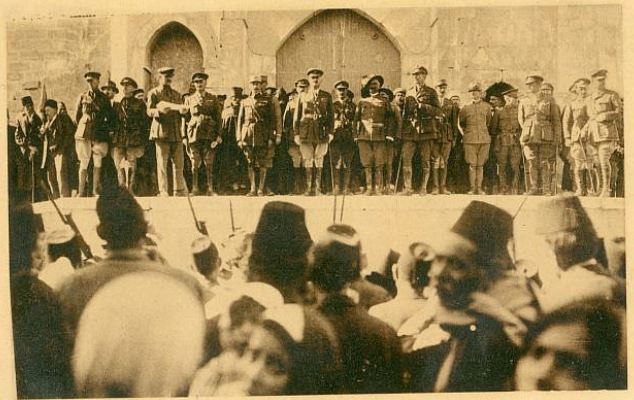
 Abraham Tzvi Idelsohn (1882-1938) was born in Latvia to a religious Jewish family. He studied to be a synagogue cantor. At 27, he made aliyah to Israel and worked as a musician and composer. In 1919, he opened a Jewish music school. A few years later, he left for Ohio where he served as professor of Jewish music at Hebrew Union College, the major seminary of Reform Judaism. Between 1914 and 1932 he published his ten-volume magnum opus, Thesaurus of Hebrew Oriental Melodies. Many consider him “the father of Jewish musicology”. His most famous melody is undoubtedly ‘Hava Nagila’. In December of 1917, British army general Edmund Allenby defeated the Ottomans and conquered the Holy Land for Great Britain. The Jews of Israel were elated, and celebrated the general’s arrival in Jerusalem. They asked Idelsohn to compose a song for the special occasion. Idelsohn remembered an old happy tune he had adapted from a Hasidic niggun. The song was a hit. A few years later, he asked his music class to write words for the song.
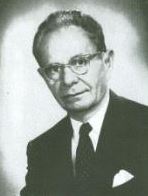 A young Moshe Nathanson (1899-1981) was in that class, and wrote a couple of simple lines based on Scriptural verses from Psalm 118. The rest is history. Nathanson was born in Jerusalem, the son of a rabbi. In 1922 he moved to Canada and double-majored in law and music at McGill University. He ended up studying at what is now the prestigious Julliard School of Music in New York. From there, he was hired to be the cantor of the first Reconstructionist Synagogue, and served in that role for the next 48 years. He wrote an important four-volume tome of liturgical songs. Nathanson also spent 10 years broadcasting Jewish music on American airwaves (“Voice of Jerusalem”) and dedicated much of his life to promoting Jewish folk music. Today, Nathanson’s and Idelsohn’s ‘Hava Nagila’ is the most recognizable Jewish/Hebrew song in the world, and a staple of every bar mitzvah and wedding. There is even a full-length documentary about it, called Hava Nagila (The Movie). This past year marked the song’s centennial anniversary.