Moses of the 19th Century
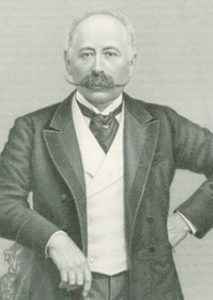 Moritz Tzvi von Hirsch auf Gereuth (1831-1896) was born in Munich to a wealthy German-Jewish family. His grandfather was a banker for the Bavarian king, and became the first Jew to be permitted to own land in Bavaria. His father also served as the court banker, and became a German baron. Hirsch studied in Brussels, then took a banking job himself at age 17. Years later, he branched off on his own, eventually making his fortune from sugar, copper, and railroads. One of his boldest projects was building a Vienna-to-Istanbul rail line. Hirsch settled in Paris where he lived for the remainder of his life, going by the French version of his name, Maurice de Hirsch. In 1860, the Alliance Israélite Universelle (Kol Israel Haverim) organization was founded in Paris to secure human rights and education for Jews around the world. Hirsch became their biggest supporter, essentially bankrolling their operation to the tune of several hundred thousand pounds a year. The organization was most famous for building Jewish schools, including the first schools in pre-State Israel. The Alliance schools were also the first to teach a Hebrew curriculum, playing a key role in the language’s revival. Hirsch also donated countless sums to schools and hospitals across Germany, France, and England. He paid for the renowned Pasteur Institute’s entire biochemistry building. In the last two decades of his life, Hirsch was devoted to easing the plight of Russian Jews. He founded the Jewish Colonization Association in 1891 with a starting budget of £2 million pounds. The money was used to resettle Eastern European Jews in the Americas (particularly in Canada and Argentina), as well as in Ottoman Palestine. Altogether, Hirsch donated £18 million to the organization, the equivalent of about $4 billion today! Needless to say, it played a massive role in getting the Zionist movement off the ground and re-establishing a Jewish state in Israel (though de Hirsch himself didn’t believe it would ever actually happen!) as well as saving countless lives from pogroms and oppression. Maurice de Hirsch is ranked among the most generous philanthropists of all time. His wife, Clara de Hirsch, is also on this list, in her own right. She came from a wealthy banking family, too, and donated another 200 million francs of her own funds. When the couple tragically lost their only son in 1887, Maurice de Hirsch declared: “My son I have lost, but not my heir; humanity is my heir.” For his efforts to launch a mass-exodus and liberation of Jews, he has been called the “Moses of the 19th Century”.
Words of the Week
I suppose I shall spend all my money in this movement. But, after all, what is the use of money unless you do some good with it?
– Baron Maurice de Hirsch

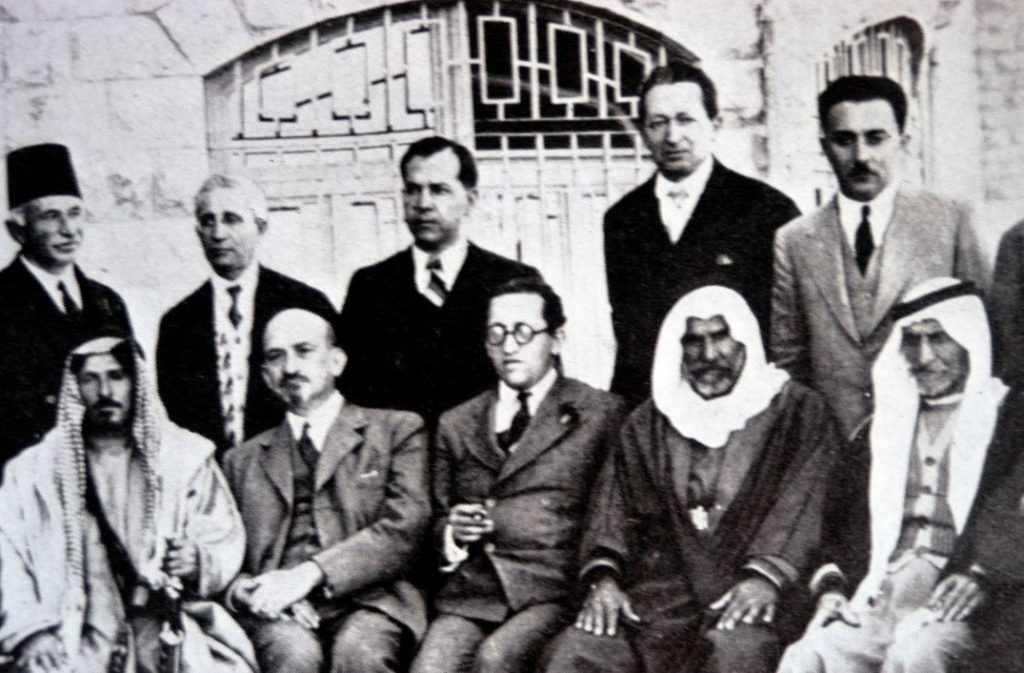
 Chaim Vitaly Arlozorov (1899-1933) was born in what is today Ukraine to a traditional Russian-Jewish family. His grandfather was a renowned rabbi and Talmud commentator. When Arlozorov was six years old, his town of Romny experienced a terrible pogrom, causing his family to flee to Germany. He went on to study economics at the University of Berlin and became a socialist, though he rejected and opposed both Marxism and Communism. During that time Arlozorov become involved with HaPoel HaTzair, the Zionist-socialist youth organization. He worked tirelessly on behalf of the Zionist movement to re-establish an independent state for the Jewish people. Arlozorov argued such a state should be based on socialism so that all Jews could equally own a piece of the Holy Land, thereby also allowing a return to fulfilling the Sabbatical (shemittah) and Jubilee (yovel) years as mandated by the Torah. While many Ashkenazi Zionists wanted Yiddish to become the official language of the future state, Arlozorov played a key role in ensuring it would be Hebrew. In 1921, he participated in the defence of the Jewish town of Neve Shalom when it was attacked by Arab mobs. This inspired him to work towards establishing a peaceful relationship between Jews and Arabs. In 1933, he organized a conference at the King David Hotel in Jerusalem between Zionist and Arab leaders—possibly the first of what would be many future “peace talks” throughout the Arab-Israeli conflict. Back in 1930, it was Arlozorov who initiated the merger between the two big Zionist-socialist parties, forming Mapai (which later became Israel’s Labour Party). In 1931, he was appointed political director of the Jewish Agency and oversaw Jewish immigration to the Holy Land. When the Nazis came to power and began instituting their anti-Jewish policies, Arlozorov sought to save Germany’s Jews by bringing them Israel. In a deeply controversial move, he started negotiations with the Nazis and eventually prevailed with the Ha’avara Agreement where German Jews could make aliyah provided that they use all of their money to buy only German goods that would be exported to Israel. Over the next several years, the agreement brought 60,000 German Jews to Israel—saving their lives—as well as some $100 million in resources and goods. These resources allowed for countless other Jews to make aliyah as well, and to develop the infrastructure of the future state. Unfortunately, not everyone was thrilled with the Ha’avara Agreement—both in the Jewish world and within the Nazi party. Two days after returning from the negotiations, Arlozorov was assassinated while taking a Shabbat-evening walk on a Tel-Aviv beach with his wife. To this day, it is a mystery who was behind the assassination, some blaming right-wing Zionists, others finding connections to Nazi agents, or to Arab thugs, or even to the Soviets. His funeral was presided by as many as 100,000 people. It is widely agreed that had he been alive, Arlozorov would have become Israel’s first prime minister. Among other honours, nearly every major town in Israel today has an “Arlozorov Street” or neighbourhood named after him.