
Paul Reichmann
Moshe Yosef “Paul” Reichmann (1930-2013) was born in Vienna to Hungarian Orthodox Jewish parents. By a miracle, the family escaped Austria right before the Nazi takeover of the country, then fled from Hungary to Paris to Morocco. At the end of World War II, Reichmann studied in yeshivas in England and Israel before returning to Morocco and working as a shirt salesman. Shortly after, he moved to Toronto to open a new branch of his brother’s tile company, Olympia. By 1964, he built a separate property development company called Olympia & York. In 1976, the company built First Canada Place – what was then Canada’s tallest building (and the tallest bank office tower in the world). The company would expand to New York and Tokyo, London and Israel, becoming the world’s largest property developer. Reichmann’s vision of magnificent buildings adorning the skyline prompted Prince Charles to comment: “Do they have to be so tall?” Despite the tremendous success, Reichmann never abandoned his Orthodox roots, maintaining his prayer and study regimen, and having his company cease all operations on Shabbat and holidays. He used a great part of his fortune to finance synagogues, yeshivas, and charitable institutions around the world. In 1992 he lost the bulk of his wealth when Olympia & York went bankrupt in the midst of a large economic recession (and a failed project for London’s Canary Wharf – considered one of the largest development projects in history). He managed to rebuild a sizable portion of his wealth over the next two decades, and continued donating millions of dollars every year to good causes. Very private and shunning luxury, Reichmann was famous for his business integrity. He would seal multi-million dollar deals with a handshake, and never failed to keep his word. Sadly, the man who touched so many lives passed away earlier this week. Click here to read more about one of the greatest philanthropists of the century, and watch a video here.
Words of the Week
Abraham was told that his descendants will be like the dust of the earth [Genesis 13:17], and as the stars of heaven [Genesis 15:5]. So it is with Israel: When they fall, they will fall as low as the dust; when they rise, they will rise as high as the stars.
– Midrash Pesikta Zutrati
 Feigele Peltel (1921-2012) was born in Warsaw, Poland. At 21 she joined the Jewish Combat Organization. Using her “Aryan” looks and fluency in Polish, she was able to pose as a Pole and come in and out of the Warsaw Ghetto. Through this, she smuggled weapons and supplies in, while saving countless children (and adults) by bringing them out of the ghetto. Her code name was ‘Vladka’, which she later adopted as her legal name. She also worked as a recruiting agent to bring more people into the resistance. One of these was Benjamin Meed, whom she would later marry in the U.S. Together they were among the key organizers of the infamous Warsaw Ghetto Uprising. Vladka wrote a popular book about her experiences, and along with her husband, continued to work in Holocaust education for the rest of her life.
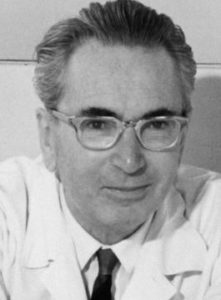 Meanwhile, Viktor Emil Frankl (1905-1997) was a distinguished psychiatrist and neurologist in Austria. He showed a talent for psychology at an early age, and provided psychoanalysis for high school students free of charge while in med school. He later worked in the dreaded “Suicide Pavilion” where he treated over 30,000 women at risk for suicide. After the Nazi takeover, Frankl was first demoted, then imprisoned, and spent three years in concentration camps. He used these experiences to develop a new philosophy of psychology, described in his world-famous book Man’s Search for Meaning (originally titled Saying Yes to Life in Spite of Everything). Frankl founded logotherapy, based on the belief that the central motivating force in humans is to find meaning in life, and most problems stem from this deficiency. Frankl revolutionized the field of psychology, wrote several highly-acclaimed books, and won multiple prestigious awards. Interestingly, he proposed that just as there is a Statue of Liberty on the East Coast, there should be a Statue of Responsibility on the West Coast. Plans are now in the works to build