
The Rabbi Who Discovered the Quadratic Formula
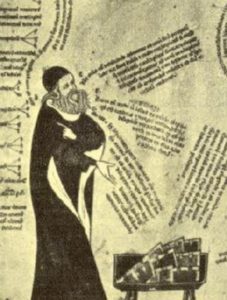 Avraham bar Chiya (c. 1070-1145) was born in Barcelona to a Sephardic Jewish family. It appears that his family was persecuted by its Christian rulers, so they fled to the neighbouring Arab kingdom of Zaragoza. Bar Chiya came from a long line of rabbis, and was also extensively trained in science, math, and astronomy. Famed for his wisdom, he became the court astronomer of Al-Musta’in II. Eventually, he was appointed minister of police and given the title sahib al-shurtah, “city governor”. This is why he was known in the Jewish community as HaNasi, “the prince” or “the president”. Al-Musta’in II was unable to defend his domain from the Christians, who soon took over. Bar Chiya moved to southern France for a while and lived in Narbonne and Provence. There he composed some of the most important scientific texts of the Medieval era. He translated a number of Arabic works into Latin, opening their study for Europeans, and played a key role in introducing the Hindu numerals we use today (by way of Arabia) to Europe, and thus to the rest of the world. Bar Chiya also synthesized ancient Greek wisdom with contemporary Arabic knowledge, and published new discoveries in number theory, arithmetic, geometry, optics, astronomy, and music theory. His Treatise on Measurement and Calculation inspired later greats like Plato of Tivoli and the world-famous Fibonacci. Meanwhile, Bar Chiya also served as the chief rabbi of the Jewish communities he presided over, and composed two important Jewish commentaries and texts. He is credited with being the first person to write a scientific book in Hebrew, and played an instrumental role in the development of the Hebrew language. His disciples included both Jews and non-Jews, among them the great Rabbi Abraham ibn Ezra, and the Flemish astronomer Rudolf of Bruges. The first historical appearance of the quadratic equation (with a complete solution of x2 – ax + b = c) appears in one of Bar Chiya’s works! He is also referenced in many philosophical works as “Abraham Judaeus”. All in all, his impact on the development of science, mathematics, and human history is unparalleled.
Jew of the Week Turns 10 Years Old Today!
What I Learned from 10 Years of Writing Jew of the Week
Words of the Week
The mind of man plans his way, but God directs his steps.
– King Solomon (Proverbs 16:9)
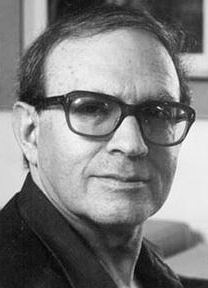
 Dennis Mark Prager (b. 1948) was born in New York City to an Orthodox Jewish family. He attended religious schools, and during his time at the Yeshiva of Flatbush met the future renowned rabbi Joseph Telushkin. Prager majored in history and Middle Eastern studies at Brooklyn College before spending several years at Columbia University studying both the Middle East and Russia, followed by a stint at the University of Leeds learning Arabic and comparative religions. In the mid-70s, Prager teamed up with Rabbi Telushkin to co-author The Nine Questions People Ask About Judaism. The bestselling book was a huge success and shot Prager into the spotlight. Shortly after, he was hired to be the director of the Brandeis-Bardin Institute of the American Jewish University. (He would later teach Hebrew Bible at the University between 1992 and 2006.) In 1982, he met an executive of Los Angeles’ KABC Radio who was struck by Prager’s impressive knowledge, and instantly hired him to host a Sunday radio show called Religion on the Line. It was so popular that Prager was soon doing radio shows every day except Friday and Saturday (because of Shabbat). Meanwhile, he co-authored another bestseller with Rabbi Telushkin, Why the Jews? The Reason for Antisemitism. By 1999, Prager’s radio show was nationally syndicated, as was his newspaper column. He was called “One of America’s five best speakers”, as well as “one of the three most interesting minds in American Jewish Life”, and was described by the LA Times as “An amazingly gifted man and moralist”. All in all, Prager has published seven books (including The Ten Commandments: Still the Best Moral Code) and produced five films (including Israel in a Time of Terror, and the forthcoming No Safe Spaces about the extremes of political correctness). He continues to host one of America’s most popular radio shows, and is among the most sought-after political commentators in the world. Today, Prager is perhaps most famous for his Prager University, which he co-founded in 2009 in response to the growing trend of squashing conservative voices in the media and on campus. PragerU’s concise and informative five-minute videos have become hugely popular. To date, they have garnered over 1 billion views, with hundreds of millions of followers across social media sites. The videos have been so successful that PragerU has been called “the right-wing YouTube empire that’s quietly turning millenials into conservatives.” Perhaps because of this, Google recently started blocking some of PragerU’s videos, perplexingly citing them as “inappropriate”. Regardless of whether one agrees with Prager’s views or not, the blatant suppression of free speech sets a dangerous precedent. For this reason, Prager has launched a lawsuit against Google and YouTube, together with a campaign to draw support for the preservation of free speech (see their video,