Tag Archives: Anti-Semitism

Jew of the Week: Paul Erdős

Greatest Mathematician in History
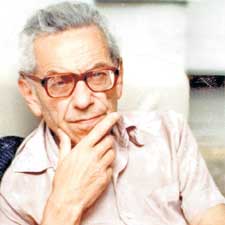
Math Extraordinaire Paul Erdos

Paul Erdős (1913-1996) was born in Budapest, Hungary, the son of Jewish mathematicians from whom he inherited his gift. By age three, Erdos was able to instantly calculate the amount of seconds a person had lived. In 1930, he was allowed into university despite Hungary’s restrictions on Jewish students. After becoming a mathematics professor, he was forced to flee European anti-Semitism and came to teach at Princeton University. By 1956 he was so well-known that his native Hungary gave him a free pass to enter and exit the country as he pleased, despite Hungary’s position behind the Iron Curtain. Erdős would go on to publish more papers on mathematics than any other human in history. He wrote 1,525 math articles in his life, collaborating with 511 people (he was a strong proponent of group work). Unmarried and without children, he was a wandering mathematician, travelling the globe with all his possessions in a single suitcase. He donated every award and prize he received. Erdos wished his epitaph to say: “I’ve finally stopped getting dumber.”

Words of the Week

Old age is a virtue and a blessing… It is true that a 20-year-old can dance the night away while his grandmother tires after a few minutes. But man was not created to dance for hours on end. Man was created to make life on earth purer, brighter and holier than it was before he came on the scene… In this regard, a person’s value and productivity only increases with age… The institution of ‘retirement’, which pushes million of men and women to the sidelines of society each year, is a tragic waste of human life and resources.
– The Lubavitcher Rebbe

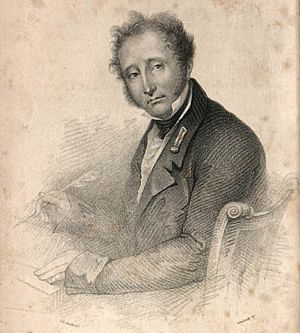
Jew of the Week: Uriah P. Levy

America’s Commodore

Happy 4th of July!

Uriah Phillips Levy (1792-1862) was born in Philadelphia to parents descended from German and Portuguese Jews. At age 10, he left home to work as a cabin boy on a merchant ship. At 13, he returned home for his Bar Mitzvah (having already traveled the world!) He continued on the nautical path and became a sailor. Levy enlisted in the navy during the War of 1812, where he was captured and imprisoned for 16 months. After the war, he returned to the navy and rose through the ranks, participating in many conflicts (including the Barbary Wars) and eventually becoming commodore of the Mediterranean Fleet. This made him the first ever Jewish commodore – the highest naval rank at the time. Facing extreme anti-Semitism throughout his military career, he would defend his honour in some violent fights, for which he was court-martialed no less than 6 times! He became a champion of the lowly soldier, refusing to participate in flogging or any form of corporal punishment. For this he was dismissed from his post, but by 1850 was able to convince Congress to pass an anti-flogging bill, thus abolishing the practice. He then wrote a new manual for humane military discipline. Away from the army, Levy found success in real estate, and became a noted philanthropist. In 1834 he purchased Thomas Jefferson’s estate (Monticello) and paid for its restoration. For this he is considered by many to be the first (modern) person to restore a historical site. He donated Monticello to the U.S. government in 1862. He also commissioned a statue of Jefferson for the Capitol building, which remains to this day the only piece of artwork in the Capitol to be privately commissioned. Levy financed the Bnai Yeshurun Jewish seminary of New York and served as the first president of the Washington Hebrew Congregation. The destroyer ship USS Levy is named after him.

Words of the Week

Do not harden your heart nor shut your hand from your destitute brother.
– Deuteronomy 15:7.
It is forbidden to withhold charity and relief for the needy if we are aware of their desperate situation and have the means to assist them. This is one of the 613 commandments of the Torah.

Jew of the Week: Mordechai Emmanuel Noah

Israel in Buffalo?

Noah had the rank of Major

Mordecai Manuel Noah (1785-1851) is considered by many to be America’s first famous Jew. Coming from a blended family of Sephardic-Portuguese and German-Ashkenazi Jews, Noah’s father was one of the main financiers of the American Revolution. Mordecai began his career in trade, then moved into law while living in South Carolina. He made a name for himself as a journalist, writing passionately to drive the American cause and boosting the nation’s morale in the face of war with the British Empire. For his wisdom and eloquence, President Madison appointed him consul to Imperial Russia in 1811, then consul to Tunis in 1813. There he worked to fight against marauding pirates and saved countless Americans captured and enslaved in Morocco. However, in 1815 the anti-Semitic President Monroe repealed Noah’s position. This stirred a massive controversy. Former presidents John Adams, Thomas Jefferson and James Madison all joined Noah’s side, championing equality for all. Nonetheless, Noah left politics, returning to New York where he founded a variety of newspapers (including the Enquirer). He wrote several popular plays (including the famous She Would be a Soldier), as well as three books. He is a founder of New York University and Mt. Sinai Hospital, and also served as a judge and sheriff of New York. But most intriguing of all is that in 1825 Mordechai Noah bought a massive piece of land near Buffalo to be established as a Jewish state called “Ararat”. Surprisingly, thousands of Christians came out in support to lay the first cornerstone, along with Masons, the New York militia and St. Paul’s Church! Unfortunately, the project failed, and Noah realized a Jewish state could only be established in the Holy Land. To this he dedicated the last years of his life, spearheading the return to Israel long before Herzl and the Zionists.


Words of the Week

The progeny of Abraham are likened to the dust of the earth (Genesis 13:16), and to the stars of the heavens (Genesis 15:5). For when they fall, they fall as low as dust; when they rise, they rise as high as the stars.
– Midrash

The original marker for the refuge of Ararat