Tag Archives: American Jews

Jews of the Week: Isaac Leeser and Warder Cresson

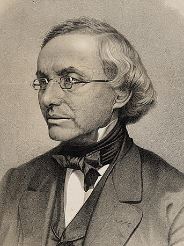
Isaac Leeser

Isaac Leeser

Isaac Leeser (1806-1868) was born in the Germanic kingdom of Westphalia. Growing up, he received both a religious Jewish education, as well as a secular German one, and was fluent in Latin, German, and Hebrew. He immigrated to the United States at the young age of 17 and lived with his wealthy uncle. While working in his uncle’s business, Leeser started to teach Judaism in his local synagogue, and vocally defended his religion when it was under attack in the public sphere. By age 22, he was quite well known, and was invited to take over Philadelphia’s Congregation Mikveh Israel, one of America’s oldest Sephardic synagogues. Leeser introduced American Jewry to the German custom of delivering a sermon between prayers (something now common in all synagogues). He wrote a book about Judaism in 1829 but found no publisher willing to print it. So, he started his own press, establishing the Jewish Publication Society. In 1845, he published his English translation of the Torah – the first by a Jew. Eight years later, he published a complete English Tanakh. This translation was the authoritative Jewish version for decades, and is still widely used today. Leeser helped found some of America’s first Jewish schools, seminaries, and magazines. He was also a civil rights activist and worked hard on behalf of all minorities. He is regarded as one of America’s most important Jewish pioneers.
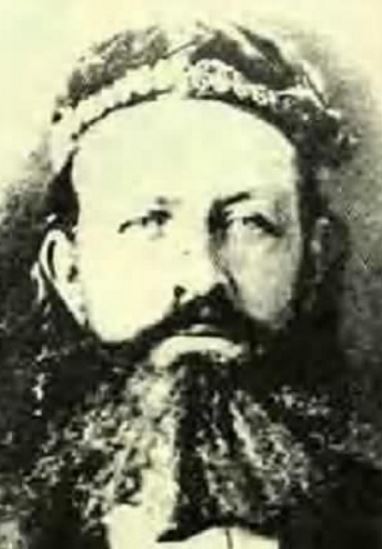
Michael Boaz Israel, aka. Warder Cresson

Michael Boaz Israel, aka. Warder Cresson

In 1840, Leeser met a wealthy farmer named Warder Cresson (1798-1860). Cresson was a very religious Quaker, a preacher and writer. After some discussions with Leeser, Cresson took a deep interest in Judaism. In 1844, he was appointed America’s first consul in Jerusalem. This brought him face-to-face with Judaism and he grew close to Jerusalem’s ancient Sephardic community. He started writing for Leeser’s magazine, The Occident, and even began doing counter-missionary work to stop Christian proselytizing of Jews. In 1848, Cresson converted to Judaism, was circumcised, and took on the Hebrew name Michael Boaz Israel ben Avraham. Upon his return to Philadelphia, his wife divorced him, sued him, and sought to have him declared insane. The case made headlines across the US. Cresson ultimately won the suit, proving his absolute sanity and wisdom. He returned to Jerusalem, married a Sephardic woman and had three kids. In 1852, he established a Jewish agricultural colony – predating the Zionist movement by several decades, and in fact, helping to inspire it. He continued writing on Jewish topics, and died as a respected and prominent leader in Israel’s Sephardic community. His original tomb and burial place on the Mount of Olives was recently rediscovered.

Words of the Week

Just as the olive yields oil for light only when it is pounded, so are man’s greatest potentials realized only under the pressure of adversity.
– The Talmud

Jew of the Week: Bob Dylan

First Musician to Win a Nobel Prize

Bob Dylan in 1963

Bob Dylan in 1963

Robert Allen Shabbatai Zisl Zimmerman (b. 1941) was born in Minnesota, the grandchild of Ukrainian- and Lithuanian-Jewish immigrants. Listening to the radio as a child, Zimmerman fell in love with music. In high school, he formed a number of bands, mostly doing covers of Elvis Presley. While studying at the University of Minnesota, Zimmerman regularly performed at clubs and coffeehouses near the campus, introducing himself as “Bob Dylan” (after the poet, Dylan Thomas). He soon dropped out of school and moved to New York City. It only took about a year for him to get signed by Columbia Records. Though his first album didn’t do very well, and he was nearly dropped from the record label, Dylan’s second album fared much better. With this album, Dylan showed that he was not only a musician and songwriter, but a talented poet as well. The Beatles described his music as “incredibly original and wonderful”. By 1963, Dylan was tremendously popular, and had become an important part of the civil rights movement, too. He went on to produce an unbelievable 37 albums (so far), selling 120 million copies. His “Like a Rolling Stone” was listed as the greatest song of all time on multiple occasions, and his hand-written lyrics for this song recently sold at an auction for a record $2 million. His 2009 album made him the oldest artist ever to debut at number one on the Billboard 200 chart. Since 1988, Dylan has been on a “Never Ending Tour”, consistently performing around 100 concerts every year, and continuing to perform regularly to this day. Dylan also wrote a novel, published six books of his drawings and paintings, as well as a bestselling autobiography that was nominated for the National Book Award. He has won twelve Grammy Awards, an Oscar, a Golden Globe, and a Presidential Medal of Freedom. Last week, it was announced that he received the Nobel Prize for Literature – the first musician to do so. It has been said that Dylan inspired countless musicians “from Mick Jagger to Eminem”, while President Obama once admitted that “There is not a bigger giant in the history of American music.” TIME Magazine placed him on the list of the 100 Most Important People of the 20th century. Many have argued that Dylan’s lyrics should be studied in schools, and indeed, courses on Bob Dylan are now offered at a number of universities around the world.

Chag Sukkot Sameach!

Words of the Week

Most people worry about their own bellies, and other people’s souls, when we all ought to be worried about our own souls, and other people’s bellies.
– Rabbi Israel Salanter

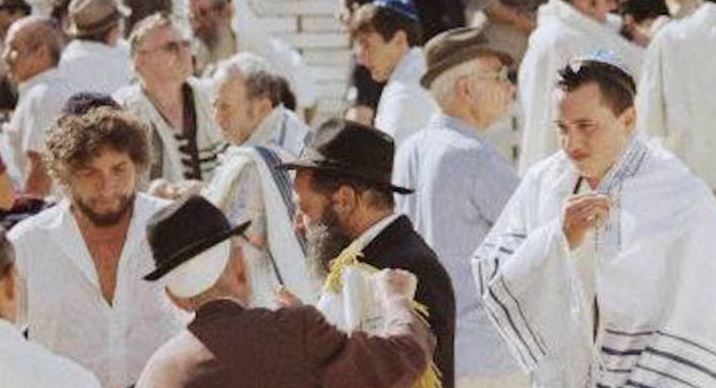
Bob Dylan at his son Jesse's bar mitzvah at the Western Wall in Jerusalem, 1983

Bob Dylan at his son Jesse’s bar mitzvah at the Western Wall in Jerusalem, 1983

Jew of the Week: Danny Lewin

The ‘Fighting Genius’ of 9/11

Danny Lewin

Danny Lewin

Daniel Mark Lewin (1970-2001) was born in Denver, Colorado. He spent his early childhood there, playing sports and the violin, and programming his first Apple II computer when he was just nine years old. His family made aliyah to Israel when he was 14. Living near Jerusalem, Lewin found school of little challenge and often skipped class to work out at a gym. It wasn’t long before he won the Mr. Teenage Israel bodybuilding competition. Not surprisingly, he joined the IDF’s elite Sayeret Matkal commando unit. After four years as an officer – attaining the rank of captain – Lewin went to study at Technion, while also working for IBM. From there, he got a full scholarship to MIT and studied towards a PhD in computer science. During this time, he came up with a new algorithm that had the potential to revolutionize the nascent internet. Others didn’t see it that way, and felt his concept wouldn’t go very far. Despite the opposition, he teamed up with one of his professors and started a new company, Akamai Technologies. In March of 1999, a series of events caused a surge in internet activity that crashed many websites. It appeared that only the sites served by Akamai had survived. Akamai Technologies became an overnight sensation. A successful IPO shortly after made Lewin a billionaire. On September 11, 2001, Lewin boarded American Airlines flight 11. According to air traffic control recordings, Lewin attacked two of the terrorists on board, but was surprised by a third knife-wielding terrorist from behind. He was killed about 30 minutes before the plane struck the North Tower of the World Trade Center. Lewin therefore carries the tragic distinction of being the first victim of 9/11. He left behind a wife and two small children. At just 31 years of age, he was expected to make big waves, with some predicting he could have become an Israeli prime minister (like fellow Sayeret Matkal graduates Barak and Netanyahu), or one of the world’s true tech titans. His Akamai Technologies is still a multi-billion dollar internet giant today. In his honour, Cambridge, Massachusetts has a Danny Lewin Square and Park, and the annual award for best student paper on computing is named after him, too.

Words of the Week

Long after we have forgiven you for killing our sons, we will be working to forgive you for turning our sons into killers.
– Golda Meir