
Father of Israeli Satire
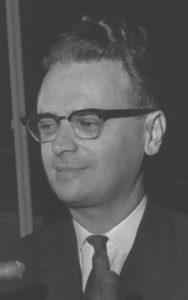 Ferenc Hoffman (1924-2005) was born in Budapest, Hungary to a secular Jewish family. He loved to write from a young age, and won a prize for a novel he wrote while still in high school. He was also an avid chess player. During World War II, he was first expelled from university before being imprisoned at a number of concentration camps, ending up in the Sobibor death camp. One of the ways he survived is by challenging the guards to chess matches. Another is by maintaining his sense of humour. After the Holocaust, he went by the name Franz Kishunt, studying sculpting and art history while also writing satire. In 1949, he escaped communist Hungary and made aliyah, becoming “Ephraim Kishon”. He was a passionate Zionist and would staunchly defend the State of Israel for the rest of his life—often being disparaged by the media for his hardline views. Within two years of settling in the Holy Land, Kishon was fluent in Hebrew (he literally hand-copied an entire dictionary) and began writing satire for a number of papers. His most famous column was Had Gadya in the Ma’ariv newspaper, which he wrote almost daily for over 30 years. Kishon soon became Israel’s greatest and most famous humourist. He also wrote popular plays, an opera, and books that have been translated into some 40 languages, including So Sorry We Won! about the Six-Day War. In the 1960s, Kishon entered the world of film. He wrote, directed, and produced five movies, the first being the critically-acclaimed Sallah Shabbati, highlighting the struggle of Mizrachi Jewish refugees to Israel. The film won a Golden Globe and was nominated for an Oscar, making Kishon the first Israeli with that distinction. (The film also launched the international career of Israeli actor Chaim Topol, most famous for portraying Tevye in Fiddler on the Roof.) Kishon’s fourth film, The Policeman, also won a Golden Globe and was nominated for an Oscar. Not surprisingly, Kishon has been credited with opening up Israeli cinema to the world, and paving the path to Hollywood for Israelis. He won a long list of awards, including the Bialik Prize and the Israel Prize. He was a billiards champ, a pioneer in the field of computer chess, and even created a board game (“Havila Higiya”) once popular in Israel. Kishon has been called the “father of Israeli satire”, and inspired an entire generation of Israeli humourists.
Words of the Week
The State of Israel wasn’t founded so that anti-Semitism would end. It was founded so that we could tell the anti-Semites to shove it.
– Ephraim Kishon
 Reuven Rivlin (b. 1939) was born in Jerusalem to a family descended from the great
  Schneur Zalman Rubashov (1889-1974) was born in the Belorussian town of Mir, near Minsk, to a deeply religious Chabad family, and was named after Chabad’s founder,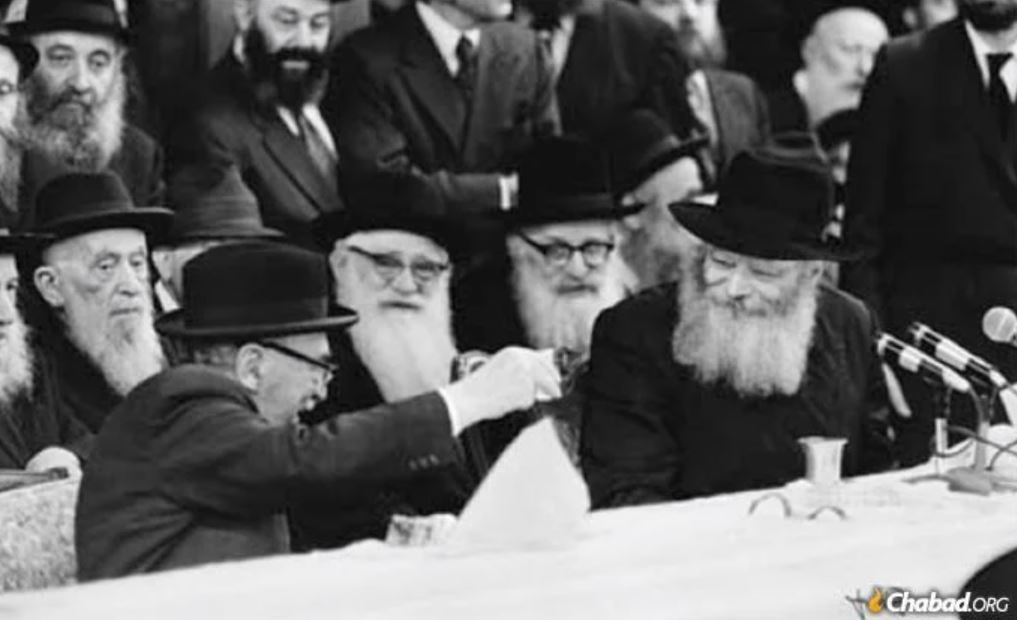
 Renata Sobel (b. 1930) was born in Chelm, Poland. Orphaned at a young age, she was raised by her grandparents. When the Nazis occupied Poland, the family managed to escape and spent the war years in the harsh conditions of Siberia. Young Renata was unable to receive a formal education. After the war, she was engaged to Eliezer Reisfeld—on the condition that he allow her to pursue an education. As a child, Renata was inspired by a biography of Marie Curie and wished to become a scientist, too. The young family made aliyah to Israel in 1950 and settled in Jerusalem. There, Renata Reisfeld took up studies at the Hebrew University. Despite having no knowledge of Hebrew or English, she was the first to complete the entrance exam into the prestigious chemistry program that had only 23 spots. Reisfeld earned her Ph.D, then went to Oregon State University for post-doctoral work. One of Reisfeld’s main areas of research has been photovoltaic cells, and she played a big role in helping to bring down the cost of solar panels to make renewable solar energy possible on a large scale. She is also an expert on nanotechnology and solid state lasers. By 1975, Reisfeld had become the head of the chemistry department at Hebrew University. The following year, she was invited to speak at a conference in Paris. Her flight from Tel-Aviv made a stop in Athens, where Palestinian and German hijackers took control of the plane and diverted it to Entebbe, Uganda. Because she was one of the few hostages that spoke English, she represented the group of 102 passengers, and spoke with Idi Amin. The dictator took a liking to her, and when she asked him to take the hostages out on a tour of Uganda, Amin agreed! Eventually, the hostages were rescued in a daring raid by Israeli commandoes (which took the life of