 Pnina Tamano-Shata (b. 1981) was born in Wuzaba, Ethiopia, the granddaughter of a renowned Ethiopian rabbi. When she was three years old, her family fled Ethiopia due to civil war and famine. Israeli Hercules planes rescued her family in Sudan and brought them to Israel in a secret mission known as Operation Moses, which brought 8000 Ethiopian Jews back to their ancestral home. (Another 14,000 were brought in 1991 through Operation Solomon.) Tamano-Shata and her family spent several years in an immigrant facility before settling in Petah Tikva. From age 11, she worked to support her struggling family, and in high school was placed in the gifted program. After completing her military service, Tamano-Shata enrolled in law school. She was the president of the school’s Ethiopian Student Union, and was a noted social justice activist. After graduating, she became a reporter for Israel’s Channel 1. Five years later, she was covering a protest by Ethiopians in Israel and instead of reporting with the bias that her bosses asked for, joined the protesters herself. This inspired her to quit the media and enter politics. She joined the Yesh Atid party. When the party won a surprising 19 seats in the 2013 elections, Tamano-Shata became a Member of Knesset. This made her the first Ethiopian woman to hold a Knesset seat. She worked tirelessly for equality and affordable housing in Israel. Although she lost her seat in the 2015 elections, Tamano-Shata is still a vocal activist, role model, and an important leader for the 150,000 Ethiopian Jews in Israel.
Words of the Week
The truly righteous do not complain about evil, but rather add justice; they do not complain about heresy, but rather add faith; they do not complain about ignorance, but rather add wisdom.
– Rabbi Avraham Itzhak Kook
 Abraham Michael Saperstein (1902-1966) was born in London and grew up in Chicago, the son of Polish-Jewish immigrants. From a young age, Saperstein was fascinated with sport, and played on his high school’s baseball, basketball, football, and boxing teams. Forced to drop out of university to support his struggling family, Saperstein never lost his dream of an athletic career, despite being just 5’3″ tall, and being a Jew in a time of rampant anti-Semitism. While working as a playground supervisor, Saperstein was given an opportunity to play for a semi-pro basketball team. He did well, and soon became the team’s coach, manager, and booking agent. In 1926, Saperstein founded his own basketball team, the Harlem Globetrotters.”Harlem” was not for its geographical location – it was based in Chicago – but because it was an all-black team. At the time, most sports leagues were for whites only, with separate leagues for black people. Basketball in particular was considered a “white sport”, with black players banned from the NBA. Saperstein and his original five players made just $8 (split evenly between them) in their first game. Throughout the difficult years of the Great Depression, Saperstein was the team’s coach, manager, driver, publicist, and even substitute player! The team was once described as “Four clean-limbed young colored men and a squat bandy-legged chap of Jewish extraction”. To make ends meet, the team had to play just about every night. Since most hotels did not allow black guests, Saperstein often snuck his players into his own room. The team quickly built a reputation for “ball-handling wizardry” and showmanship. In 1948, the Globetrotters played against the all-white NBA champions, the Minneapolis Lakers. To everyone’s shock, the Globetrotters won. A year later, they won a rematch. This proved once and for all that black players were just as good (if not better) than white players. The following year, the first black player (a former Globetrotter) was signed to an NBA team, finally breaking basketball’s colour barrier. That same year, the Globetrotters played in Madison Square Garden, the first time a basketball game sold out at MSG. Saperstein then established two more basketball teams in the US, as well as an international one. He also founded and owned several baseball teams. His ultimate wish was to own an NBA team, but he was thwarted time and again. Instead, he started his own competing league, the American Basketball League (ABL). To make it more exciting, Saperstein added a new line to the court and invented the three-point shot. The ABL did not last long, but the NBA soon adopted the three-point shot into its own league, forever changing the game. Saperstein was both a visionary and a tireless labourer. He took just one day off a year – Yom Kippur – and died of a heart attack while at work. Saperstein has been credited with revolutionizing basketball, making sports more entertaining, and most importantly, playing a key role in ending athletic racial segregation. One former player said the Globetrotters had “done more for the perception of black people, and the perception of America, than almost anything you could think of.” The Globetrotters still put on 450 shows a year, and have played over 26,000 exhibition games, in over 120 countries, making them one of the most popular and well-known basketball teams of all time.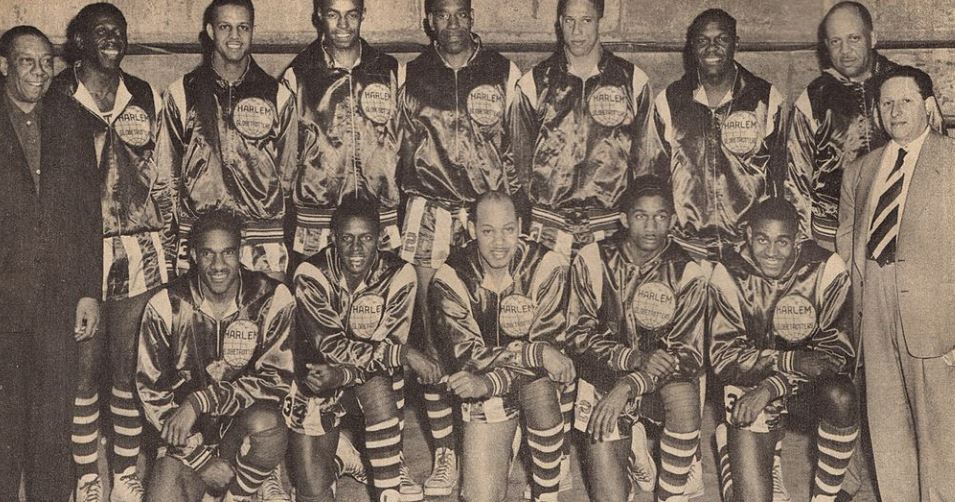
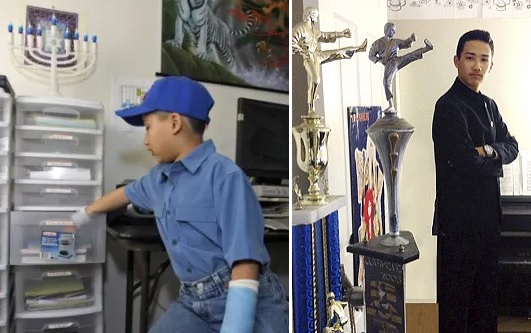
 Moshe Kai Cavalin (b. 1998) was born in Los Angeles, the son of a Taiwanese mother and an Israeli-Brazilian father. He started speaking at 4 months of age, and was reading and doing math by 3. At 6, he was rejected from elementary school because he “knew more than the teacher”, and had to be home-schooled. At 8, he became the youngest person in American history to take college classes. He got his first degree three years later, with a perfect 4.0 GPA. He then enrolled at UCLA – with a full scholarship – and earned a BS in mathematics. Meanwhile, Kai wrote two bestselling books (an inspirational autobiography, and a manual to deal with bullying). For fun, he scuba dives, plays piano, and chess, and avoids video games which, he says, are “not helping humanity in any way.” He is also an avid martial artist – thanks to his father, a former IDF special forces commando – and has won 26 gold medals. Incredibly, Kai got a pilot’s license, too. This led to a phone call from NASA in 2015. NASA needed a pilot who also knew math, physics, and computer programming to develop surveillance and anti-collision technology for drones and airplanes. Kai has been at NASA ever since, working hard to keep the skies safe. He is concurrently doing his Master’s in cybersecurity, and intends to later get a Master’s in business from MIT before opening his own cybersecurity company. Kai describes himself as a religious person and often credits God with giving him the insight to solve problems. One of his professors once said: “I think most people just think he’s a genius, they believe it just comes naturally… He actually worked harder than, I think, any other student I’ve ever had.”