Jew of the Week: Alan Veingrad

The Super Bowl Champion Who Keeps Kosher

Alan Stuart Shlomo Veingrad (b. 1963) was born in Brooklyn and grew up in New Jersey and Miami. He went to Hebrew school as a child, then to Miami Sunset High School where he was captain of the football team. Veingrad was also an All-American track and field athlete. He went to what is now Texas A&M University on a sports scholarship. In 1984, he was voted the Lone Star Offensive Lineman of the Year. Despite working out round-the-clock and gaining over 100 pounds he was still considered too small for the NFL and went undrafted in 1985. Still, he was able to sign with the Tampa Buy Buccaneers as an undrafted free agent. The following year he signed with the Green Bay Packers and played on the starting line up as a right offensive tackle. In 1991 he signed with the Dallas Cowboys and was instrumental in helping the team win Super Bowl XXVII in 1993. After earning his championship, Veingrad retired from professional football. Since then, he has worked in real estate and finance, as a motivational speaker, and an AIPAC advocate for Israel. One Friday, his cousin invited him for Shabbat dinner, which lit a spark inside him. Veingrad then went to a Torah class to learn more, and soon found new meaning in life. He eventually became fully Torah-observant, and has since been called the “only Orthodox Jew to wear a Super Bowl ring”. He has traveled around the world to share his story, and also made an excellent series of 1-minute Jewish motivational videos, called Shlomo’s Playbook. Veingrad was inducted into the National Jewish Sports Hall of Fame in 2010 and was the NYPD’s Person of the Year in 2012.

Words of the Week

The creation of a Palestinian state is only a means for continuing our struggle against the state of Israel for our Arab unity. In reality today there is no difference between Jordanians, Palestinians, Syrians and Lebanese. Only for political and tactical reasons do we speak today about the existence of a Palestinian people, since Arab national interests demand that we posit the existence of a distinct Palestinian people to oppose Zionism…
Zuheir Muhsin, member of the PLO Executive Council, in a March 31, 1977 interview with Dutch newspaper “Trouw”.
Jew of the Week: Rabbi Abraham Joshua Heschel

The Rabbi Who Marched With Martin Luther King Jr.

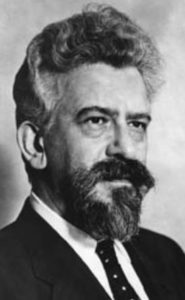
Rabbi Heschel

Avraham Yehoshua Heschel (1907-1972) was born in Poland to a long line of Hasidic rabbis from both his father’s and mother’s side. He was named after his ancestor, the Apter (or Apatower) Rebbe. After receiving semicha (rabbinic ordination) himself, Rabbi Heschel decided to pursue secular studies at the University of Berlin. (There he briefly crossed paths with three other future great rabbis: Yitzchak Hutner, Joseph B. Soloveitchik, and the Lubavitcher Rebbe.) While earning his Ph.D in philosophy, Heschel also studied at Berlin’s Reform seminary and received a liberal rabbinic ordination to go along with his Orthodox one. Meanwhile, he was part of a Yiddish poetry club and published his own book of Yiddish poems in 1933. Heschel was arrested by the Gestapo in 1938 and deported back to Poland. He moved to London just six weeks before Poland was invaded by the Nazis. (His mother and three sisters perished in the Holocaust.) Heschel eventually settled in New York. He first worked at the (Reform) Hebrew Union College for five years before switching over to the (Conservative) Jewish Theological Seminary. There he spent the rest of his career as a rabbi and professor of Jewish ethics and Jewish mysticism. Despite working at these institutions, Heschel never identified himself with any particular Jewish denomination, and was himself strictly Torah-observant. His discourses often weaved together Biblical, Kabbalistic, and Hasidic teachings. He especially focused on the ancient Hebrew prophets, and sought to revive their message in healing today’s world. Because of this, he was an active civil rights and peace activist. Heschel famously marched alongside Martin Luther King, Jr. in Selma. Later that year, he presented King with the ‘Judaism and World Peace Award’. The two formed a very close friendship. Heschel also wrote numerous books, including five bestsellers. These books have been credited both with bringing countless Jews back to traditional observance, as well as opening up the study of Judaism to the wider world. Heschel worked hard to build bridges between Jews and gentiles. He represented the Jewish world at the Second Vatican Council between 1962 and 1965, successfully getting the Catholics to formally abandon the belief that Jews were responsible for Jesus’ crucifixion—and therefore that all Jews are “accursed”—and to remove all prayers derogatory to Jews. Heschel is considered one of the most influential Jews of the 20th century, and remains among the most widely read and studied Jewish philosophers and theologians. Today, the 18th of Tevet, is his yahrzeit.

Words of the Week

Prophecy is the voice that God has lent to the silent agony, a voice to the plundered poor, to the profane riches of the world. It is a form of living, a crossing point of God and man. God is raging in the prophet’s words.
– Rabbi Abraham Joshua Heschel

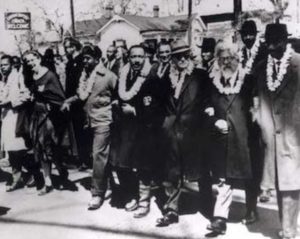
Rabbi Abraham Joshua Heschel (second from right) with Martin Luther King Jr. marching on Selma in 1965.

Jew of the Week: Jerry Bruckheimer

The Man Behind Your Favourite Blockbusters

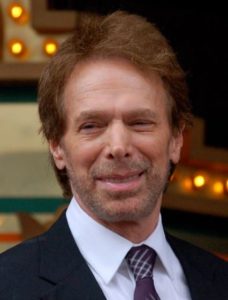
Jerry Bruckheimer at a ceremony to receive his star on the Hollywood Walk of Fame (Credit: Angela George)

Jerome Leon Bruckheimer (b. 1943) was born in Detroit to German-Jewish immigrants. His favourite pastimes growing up were stamp-collecting, photography, and watching films. Bruckheimer studied psychology at the University of Arizona, then got a job in advertising. After producing a number of TV commercials, Bruckheimer decided to pursue his passion for film. He teamed up with directors Dirk Richards and Paul Schrader to make several movies, and soon caught Hollywood’s attention. Bruckheimer’s first big hit was Flashdance, which went on to earn $200 million and become a cultural icon. The following year came Beverly Hills Cop—originally meant to star Sylvester Stallone before Eddie Murphy took the lead, launching his film career. Two years later, Bruckheimer produced another big hit: Top Gun, going on to earn $356 million despite costing just $15 million to make. It won an Oscar and was later selected by the Library of Congress for historical preservation. (A long-awaited sequel is coming out later this year.) Top Gun was the first movie in Hollywood history that was produced in collaboration with the US Navy, and is credited with cleaning up the US military’s image after the Vietnam War. Bruckheimer went on to make blockbusters like Days of Thunder, The Rock, Armageddon, Enemy of the State, and Pearl Harbor. He produced the hugely successful Pirates of the Caribbean series, too—one of the highest-grossing film franchises in history. Bruckheimer has been hugely successful on the small screen as well. His first TV show was CSI: Crime Scene Investigation, which spawned multiple spin-offs. He is behind the The Amazing Race, now in its 32nd season in the US, with a whopping 15 Emmy Awards (and 77 more nominations). At one point, three of Bruckheimer’s shows were in the top 10 in TV ratings. He has become something of a Hollywood legend, for whom nearly every film and show strikes gold. Bruckheimer has had a tremendous influence in the development of the modern “blockbuster”. He is a hockey fan, too, and invested in an NHL expansion team coming to Seattle starting in the 2021-2022 season. His latest production is the third installment of the classic cop-duo comedy Bad Boys, starring Will Smith and Martin Lawrence, which opens in theatres next Friday.

Words of the Week

Do not try to evade taxes, lest the government catch you and take everything you own.
– Rabbi Yehuda haNasi (Talmud, Pesachim 112b)