The Rebel Evolutionist
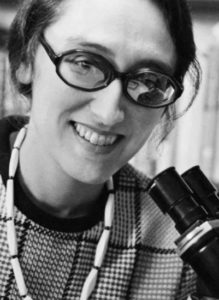 Lynn Petra Alexander (1938-2011) was born in Chicago to a prominent Jewish (and passionately-Zionist) family. She got accepted to the University of Chicago when she was just 15 years old, and graduated with a BA four years later. That same year, she married (former Jew of the Week) Carl Sagan, then on his way to becoming a world-renowned scientist himself. She then went to the University of Wisconsin and earned her Master’s in genetics and zoology, followed by a PhD from UC Berkeley. Around that time, she divorced Carl Sagan and later married another scientist, Thomas Margulis. Although she divorced him as well, she kept the last name and is best known today as Lynn Margulis. In 1966, she became a biology professor at the University of Boston and remained there until 1988, when she became Distinguished Professor of Biology and Geosciences at the University of Massachusetts. Her 1967 paper “On the Origin of Mitosing Cells” was initially rejected by fifteen journals and stirred a great deal of controversy before being confirmed experimentally in 1978. Much of her research (and the opposition to it) was based on demonstrating major flaws within Darwin’s evolutionary theory. She would say that “Natural selection eliminates and maybe maintains, but it doesn’t create.” Margulis offered one hypothesis of her own, endosymbiosis, now a widely-accepted theory in biology and a key mechanism of evolution. Margulis also co-authored the first paper on the now-famous Gaia hypothesis regarding the intricate interactions between living things and the planet. Margulis worked tirelessly to the last days of her life. She co-authored another big (and controversial) paper in 2009—at the age of 71! Margulis has been called a “scientific rebel” and won countless awards, including a National Medal of Science from President Bill Clinton and a NASA Public Service Award for Astrobiology. She also has 15 honourary doctorates and was elected to the National Academy of Sciences. In 2002, she was ranked among the 50 most important women in science.
Words of the Week
We never judge a statement by its author, but only on its own merit.
– Rabbi Moshe Chaim Luzzatto (1707-1746), Derekh Tevunot
 Sergey Mikhaylovich Brin (b. 1973) was born in Moscow to Russian-Jewish parents. After many long months trying to emigrate from the Soviet Union, the family was finally permitted to leave in the spring of 1979, when Brin was six years old. The family lived in Vienna, then Paris, and finally made it to the US with help from the Hebrew Immigrant Aid Society. Brin’s father got a job as a math professor at the University of Maryland, and his mother worked as a researcher for NASA. Following in his parents’ footsteps, Brin studied math and computer science at the University of Maryland. He went on to do graduate studies at Stanford, and there met Larry Page.
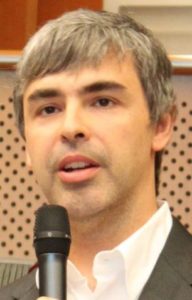 Lawrence Edward Page (b. 1973) was born in Michigan. His mother is Jewish, and his grandfather lives in Israel. Page’s parents were both computer scientists, and he grew up immersed in technology. He was also passionate about music, and credits music training with helping to shape his analytical mind. Page studied computer engineering at the University of Michigan before heading over to Stanford. Together with Brin, the two co-authored a paper on “The Anatomy of a Large-Scale Hypertextual Web Search Engine”. They then developed a new algorithm that would dramatically improve the capabilities of search engines. Brin and Page used their dorm rooms as office and lab, scrapping together whatever money they could for servers and other parts, and slowly building the infrastructure for their new search engine. (There were a number of other people involved, too, who were instrumental in its development.) The new search engine, originally called BackRub, was launched on the Stanford website in 1996. By the following year, Brin and Page understood that the search engine had the potential to transform the world. They renamed it “Google”, and bought the google.com domain on September 15, 1997 (twenty-three years ago, today). The rest is history.