
Jew of the Week: Louis Brandeis

Robin Hood of the Law
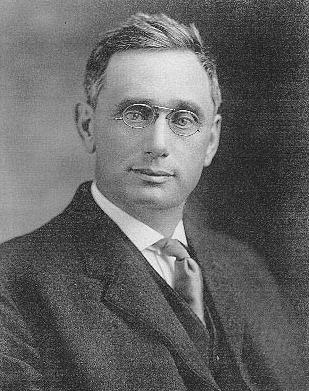
Louis Brandeis

Louis Dembitz Brandeis (1856-1941) was born in Kentucky to Jewish immigrants from Prague. Despite his own family’s secularism, Brandeis’ role model and inspiration growing up was his uncle Naphtali Dembitz, a religious Jew, and in his honour Brandeis changed his middle name to Dembitz. A graduate of Harvard Law School, he achieved the highest grade point average in the school’s history – a record that stood for 80 years. This distinction, among others, led to his acceptance to the Massachussets bar without even taking the exam! Working at a Boston law firm, Brandeis quickly became famous as the “People’s Lawyer”, always defending the little guy, focusing on the public good, and refusing to take cases where he believed the defendant was guilty. Brandeis fought successfully against corruption, corporate power and consumerism, monopolies and banks; he fought for healthy workplace hours and wages, better living conditions for the poor and a host of other public causes. More amazingly, he stopped accepting payment for this work. In 1916, Brandeis was nominated to the Supreme Court, one of the most controversial events in U.S. political history. It caused such a great furor that for the first time ever a public hearing was held. Brandeis was termed “dangerous”, not only because he was a Jew, but as was later said, “because of his brilliance, his arithmetic, his courage. He was dangerous because he was incorruptible…” Brandeis’ confirmation to the Supreme Court came a month later, in a process that normally took a single day. He would serve as supreme court justice for 23 years. Meanwhile, Brandeis was also a lifelong Zionist, and served as president of the Provisional Executive Committee for Zionist Affairs. In his later years he donated generously to Israel. Nicknamed ‘Robin Hood of the Law’, he is most remembered for upholding free speech and individual privacy, crusading for the public, and revolutionizing many aspects of American law. Brandeis passed away on the eve of Sukkot.

Words of the Week

He who learns but does not think is lost. He who thinks but does not learn is in great danger.
– Confucius


Jew of the Week: Abenezra

Abenezra’s Commentaries

Avraham ben Meir ibn Ezra (1089 – c. 1167 CE) was a world-renowned scholar born in Tudela, Spain. He became famous at an early age for both his beautiful poetry and philosophical genius. In 1140, ibn Ezra (also known as Abenezra) left Spain and began a fascinating journey that took him across North Africa, to the Holy Land, back through Europe, Italy, France and England. It was during this time that he wrote most of his famous works, including some of the first Hebrew grammar books, and a commentary on the entire Torah and Tanakh. His commentary contained such depth that subsequently many commentaries were written on ibn Ezra’s commentaries! He is famous for his rationalism and logic; in religious matters, too, sometimes even criticizing sacred texts. Not surprisingly, he was also a scholar of mathematics and science, writing several treatises on astronomy, arithmetic and even a manual for using an astrolabe. He is credited with being among the key figures who introduced Europe to the Indian system of mathematical symbols and decimal fractions (still used to this day). Ibn Ezra’s poetry continues to be recited around the world, in both translations and the original Hebrew and Arabic. Among other titles, he has been called “ibn Ezra the Great” and the “Admirable Doctor”. The lunar crater Abenezra is named after him.


Words of the Week

Words are the pen of the heart; song is the pen of the soul.
– Rabbi Schneur Zalman of Liadi

Jew of the Week: Ralph H. Baer

The Father of Video Game Consoles

Ralph Baer, Video Game Console Inventor

Ralph Baer, Video Game Console Inventor

If any one person can be credited with sparking the video game industry, it is Ralph Baer. Born in Germany in 1922, Baer was expelled from school at age 11 because he was Jewish. Fearing violent anti-Semitism, the Baer family fled to America before the onset of the Holocaust. Instead of going to school, Ralph worked in a factory for 12 dollars a week, but made sure to learn on his own. During World War II he served as an intelligence officer based in London, stationed in France. After returning home Baer was among only a handful of people to earn a Bachelor of Science in television engineering, and worked for several electronics companies (including IBM) before joining Sanders Associates, a defense contractor which builds electronics for the military. It was there that Ralph Baer began developing a gaming system in 1966. The prototype was complete by 1968, and in 1972 was released by Magnavox as the first ever home video game console, known as the Odyssey.

Magnavox Odyssey

Magnavox Odyssey

Shortly after, Baer also developed the first peripheral device to a video game console, the famous ‘light gun’. This gun technology has been used in some of the most popular video games ever since. Today, video games make up an incredible $25 billlion industry, with nearly 70% of all households owning consoles. Baer continued to develop electronic games (he invented the popular handheld memory game Simon) and home consoles until retiring in 1987. He was recently inducted into the National Inventors Hall of Fame, and has received, among many other awards, the National Medal of Technology for his “groundbreaking and pioneering creation, development and commercialization of interactive video games.”

Update: Sadly, Ralph Baer passed away on December 6, 2014.

Words of the Week

Trying to be happy by accumulating possessions is like trying to satisfy hunger by taping sandwiches all over your body.
– George Carlin