Category Archives: Extraordinary Individuals

Unique Jews In a Category of Their Own

Jews of the Week: Abu-Kariba & Yusuf Dhu-Nawas

How Arabia Almost Became Jewish

Arabia, one-time home of Jewish Kings

In the 400s CE, before the time of Muhammed, the Arabian Peninsula was dominated by the powerful Kingdom of Himyar, based in Yemen. Their ambitious king was a man named Abu-Kariba, who gathered a massive army to war with the Byzantines (aka. the Eastern Roman Empire). However, Abu-Kariba got only as far as the city of Yathrib, which was then the heart of Jewish Arabia (and today is the second holiest site in Islam, called Medina). While fighting a rebel army in Yathrib, Abu-Kariba fell ill. Two Jewish sages from the city went across enemy lines and healed the king. Their kindness, courage and wisdom prompted Abu-Kariba to convert to Judaism, along with his entire army. Kariba changed his plans and returned home to Yemen to spread the new faith. However, his successor Dhu-Shenstir, was a mad pagan who brutally tortured his people. Thankfully, he was killed by Yusuf Dhu-Nuwas, who became the new king and restored Judaism to the throne. “Dhu-Nuwas” is Arabic for ‘Lord Sidelocks’, because of the long sidelocks he wore, like many Jews do today. Dhu-Nuwas tried his utmost to stop Jewish persecution by Christians in the Byzantine Empire. When his calls went on deaf ears, he kidnapped a handful of Byzantine officials and executed them, sparking a war which he won. Emboldened by his success, he worked mightily to re-establish a Jewish kingdom in Israel, collaborating with the famous Torah leader of the time, Mar Zutra (the Third). Unfortunately, in 525 CE, the Byzantines allied with Ethiopia, as well as the Arab Christians, and destroyed Dhu-Nawas’ growing domain. His dream of a pan-Jewish empire came to an end. This spectacular episode is the reason many historians suggest “only a hair’s-breadth prevented all Arabia from becoming Jewish.”


Words of the Week

I am for peace, but when I speak, they are for war.
King David, Psalms 120:7

Modern Arabia, where few Jews may be found…
Jew of the Week: Don Fernando de Aguilar

Shana Tova v’Metuka!

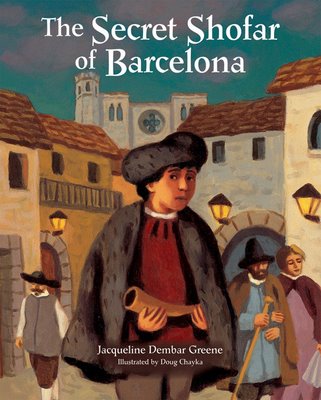
Don Fernando de Aguilar on the cover of a children’s book

Don Fernando de Aguilar (c. 1500) When Spain expelled its Jews in 1492, some chose to stay behind and convert superficially to Christianity, practicing their Judaism in secret. One of these Conversos (or Marranos) was Don Fernando de Aguilar, who also happened to be the conductor of the Royal Orchestra in Barcelona. Despite the fact that Judaism was outlawed in Spain (until 1967, in fact) de Aguilar organized secret prayer services in the basement of Don Manuel’s leather shop. But there was one mitzvah they could never keep: hearing the shofar. After many years of longing for the sounds of the shofar, Don Fernando came up with a clever idea. He wrote a concert featuring the “melodies of the world”, set to play in Barcelona over the High Holiday season. Fernando expertly weaved the shofar into his opus, with packed crowds of hidden Jews listening in, along with the fooled Inquisitors. Rabbi Eliyahu Kitov writes: “It was said that no one had ever been more successful in confusing Satan on Rosh HaShanah than was Don Aguilar.”

Words of the Week

Three books are opened on Rosh Hashanah: The righteous are inscribed in the book of life; the wicked are inscribed in the book of death, and the judgment of the intermediates hangs in balance until Yom Kippur…
– Talmud, Rosh HaShana 16b

Jew of the Week: Beruria

Women Are Always Right

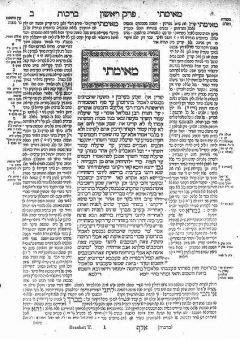
A Page of Talmud

Beruria (c. 170 CE) Despite the fact that her parents were executed by the Romans for the crime of teaching Torah, Beruria went on to become a famous Jewish sage herself, exceeding the greatness of many rabbis of her time (and all-time). She is said to have learned 300 chapters of Jewish law in a single day (a bad day, no less) and settled quite a few rabbinic disputes. Married to the miracle worker Rabbi Meir, they were forced to flee Israel from the Romans and lost two of their sons in a plague. A well-known story narrates the couples’ heroic rescue of Beruria’s kidnapped sister from a brothel. In a nod to the modern-day adage that women are always right, the Talmud ends a debate between the sages by stating simply: “Beruria has spoken correctly.”

Words of the Week

“Seek G-d when He may be found, call upon Him when He is near” (Isaiah 55:6) These are the ten days between Rosh Hashanah and Yom Kippur.
– Talmud, Rosh HaShana 18a