The Holocaust Survivor Who Saved a Classroom
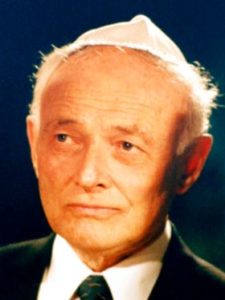 Liviu Librescu (1930-2007) was born in Ploiesti, Romania. In November of 1940, the Romanian government allied with Nazi Germany, and Librescu’s family was deported to a labour camp. Eventually, they ended up in the Focsani Ghetto from which Librescu was liberated in 1945. He stayed in Romania and enrolled in aerospace engineering studies (inspired by his time watching birds fly in and out of the ghetto). A year after graduating he joined the Bucharest Institute of Applied Mechanics where he served as a researcher for 22 years. In 1969, Librescu earned his Ph.D in fluid dynamics, and wrote some very important papers that were unfortunately unknown in the West. He was also recruited by the government to work on top secret military projects. However, Librescu was soon fired for refusing to swear allegiance to the Romanian Communist Party and for requesting to emigrate to Israel. Thankfully, one of his groundbreaking research papers was smuggled out of Romania and brought him international attention. It reached the desk of Israeli Prime Minister Menachem Begin, who personally put pressure on the Romanian government to free Librescu. In 1978, the Romanians relented and Librescu made aliyah to the Holy Land. For the next seven years, Librescu taught at Tel-Aviv University and the world-famous Technion in Haifa. In 1985, he took a sabbatical year and visited Virginia Tech in the US. He decided to stay and joined their Department of Engineering Science and Mechanics. Librescu went on to become one of Virginia Tech’s most famous and beloved professors. He is credited with publishing more papers (250) than any other Virginia Tech professor, and among his many awards are a Dean’s Award for Excellence in Research and a Frank J. Maher Award for Excellence in Engineering Education. He was also on the editorial boards of seven scientific journals, and a guest editor of five more. On April 16, 2007, Librescu was teaching his regular class when a gunman walked into the engineering building at Virginia Tech and opened fire. When the gunman tried to enter Librescu’s classroom, the professor blocked the door and told his students to escape through the windows. He was fatally shot five times. All but one of his students were able to escape. The remaining 22 were saved by Librescu’s heroic actions. In a horrible twist of irony, the Virginia Tech shooting took place on the 27th of Nisan – Holocaust Memorial Day. President Băsescu of Romania posthumously awarded Librescu the Grand Cross of the Order of the Star of Romania (the country’s highest civilian honour), and renamed the street in front of the US Embassy in Bucharest after him. Virginia Tech’s Jewish Student Center is now named after him, too, as is a professorship at Columbia Law School. He was called the “Most Inspiring Person of 2007”. President George W. Bush eulogized Librescu with the following words: “With the gunman set to enter his class, this brave professor blocked the door with his body while his students fled to safety. On the Day of Remembrance, this Holocaust survivor gave his own life so that others may live.”
Words of the Week
Few are guilty; all are responsible.
– Rabbi Abraham Joshua Heschel
 Lina Bauer (1830-1909) was born to a wealthy, religious German-Jewish family in Breslau (now Wroclaw, Poland). Her parents were noted social justice activists and philanthropists. Among other things, her father built an apartment building to provide housing for destitute workers, while her mother and aunts sought to save women from brothels and give them a proper education. Lina was raised with these important values. At just 18 years of age, amidst the wars of 1848, she established the Penny Society for Poor Pupils to raise money for shoes, clothes, and books for needy children. The organization would continue to operate for the next eighty years, providing countless children with basic necessities. Lina received an extensive education in music, literature, history, and science, and was so passionate about her studies that her mother wanted to take her out of school. Undeterred, Lina continued to study in secret at night. Meanwhile, she fell in love with a poor Polish Jew and married him in 1854 despite her parents’ wishes. The couple moved to Berlin and Lina (now Morgenstern) started to write to help pay the bills. Morgenstern was heavily influenced by the German thinker Friedrich Fröbel, famous for his concept of a “kindergarten” where small children can learn, play, and grow healthy and happy. Fröbel’s preschools did not go very far, and were even suppressed by the Prussian authorities. It wasn’t until Morgenstern co-founded the Berlin Women’s Association for the Advancement of Fröbelian Kindergartens that the idea took off. She chaired the organization for five years, during which time she established eight kindergartens, and a training academy for kindergarten educators. Fröbel’s other students established the first kindergartens in America, and the institution was soon adopted around the world. Morgenstern ultimately left her post to start a new charity: the Volksküche, or “people’s kitchen”. This organization distributed healthy meals to the poor, inspiring the thousands of soup kitchens that operate around the world today. Morgenstern herself opened up ten such kitchens, each serving as many as 2500 people per day! Morgenstern also published a number of important works on feminism, education, health, and child care. Her Das Paradies der Kindheit (“The Paradise of Childhood”) was the kindergarten textbook used globally for decades, and went through seven editions in her lifetime alone. Meanwhile, her Illustrated Universal Cooking Book – a result of all those years working in soup kitchens – was so popular that the Nazis did not include it in their Jewish book-burning list. Among the other organizations that Morgenstern founded are the School for Further Education of Young Ladies, the Berlin Housewives’ Association, the International Congress of Women, and the Berlin Society for Child Protection. During the Franco-Prussian War of 1870, she started a group for the care of soldiers, assisting some 60,000 troops. Morgenstern had become so popular and beloved that the German emperor and empress, Wilhelm and Augusta, visited her and became her patrons. Morgenstern was awarded the Victoria Medal, the Service Cross, and the War Medal. Despite all this, she was a central target for anti-Semites, and their attacks ultimately forced her into bankruptcy and illness. The Empress sent her to San Remo to recover, but it was not enough. Morgenstern left the public sphere and spent her last years writing. Among her final works is a collection of 250 biographies of inspiring women. In those last years she also directed the German Peace Society, advocating for pacifism, arms reduction, and peaceful coexistence. Disbanded by the Nazis, the organization was reformed in 1945, and continues to operate to this day. Morgenstern quietly passed away in 1909, and is buried in Berlin’s Jewish cemetery.