Category Archives: Religious Leaders

Spiritual and Religious Greats of the Jewish People

Jews of the Week: Jeremiah and Gedaliah

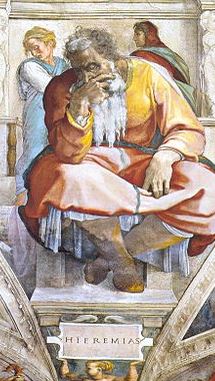
'Jeremiah' by Michelangelo (from the Sistine Chapel)

‘Jeremiah’ by Michelangelo (from the Sistine Chapel)

Yirmiyahu ben Hilkiah (c. 6th century BCE), better known as Jeremiah, was born to a family of Kohanim in Anathoth, Israel towards the end of the First Temple period. As the Kingdom of Judah descended into more and more sin, the righteous Jeremiah began receiving divine revelations prophesying the destruction of Jerusalem and the captivity of the Jewish people by the Babylonians. Although Jeremiah was very young, and did not want to take up the calling of a prophet, he nonetheless followed God’s direction to warn the people of their impending doom, and to inspire them to repent. Unfortunately, the people chastised Jeremiah and he was imprisoned for his teachings. Jerusalem was indeed destroyed, and the people exiled to Babylon. Jeremiah captured these events in his Book of Lamentations (Eichah), and recorded his prophecies in the Book of Jeremiah (written by his scribe Baruch). He is also credited with composing the Book of Kings, making him the author of three of the 24 books of the Tanakh, the Hebrew Bible. After prophesying to five kings of Judah, and surviving the destruction of the Temple, Jeremiah lived out the rest of his life in Egypt. Jewish texts compare Jeremiah to Moses, and he is also honoured as a prophet and holy man by Christians, Muslims, and the Bahai.

Archaeologists have discovered official clay seals bearing the names of Yehuchal and Gedaliah ben Pashur, two of the king's ministers that opposed Jeremiah and imprisoned him, as recounted in the Bible. Gedaliah ben Pashur should not be confused with the righteous Gedaliah ben Ahikam (Photo Credit: Gaby Laron, The Institute of Archaeology, The Hebrew University.)

Archaeologists have discovered official clay seals bearing the names of Yehuchal and Gedaliah ben Pashur, two of the king’s ministers that opposed Jeremiah and imprisoned him, as recounted in the Bible. Gedaliah ben Pashur should not be confused with the righteous Gedaliah ben Ahikam (Credit: Gaby Laron, The Institute of Archaeology, The Hebrew University.)

One of the leaders that Jeremiah supported was Gedaliah ben Ahikam, who was appointed by the Babylonian king Nebuchadnezzar to govern the Judean province after Jerusalem’s destruction, and to facilitate the rebuilding of Israel with the small group of Jews that were not exiled. Gedaliah successfully inspired the people to reestablish their farms and vineyards, rebuild their homes, and to inspire many other Jews who fled before the war to return. Sadly, Gedaliah was assassinated on Rosh Hashanah. Fearing another uprising and the response from King Nebuchadnezzar, the Jews of Israel fled to Egypt, despite Jeremiah’s insistence that God would protect them. This essentially left the land nearly devoid of any Jews for the next several decades, until the end of the Babylonian empire at the hands of the Persians, and the ensuing end of the Jewish exile. To mark the tragedy of the righteous Gedaliah’s assassination, and the temporary end of the Jewish presence in the Holy Land, the day after Rosh Hashanah (today) is observed as a fast day, known as the Fast of Gedaliah.

Words of the Week

Of everything G‑d created in His world, not one thing was created without purpose.
– Talmud, Shabbat 77b
Jews of the Week: Rav Uziel and the Chofetz Chaim

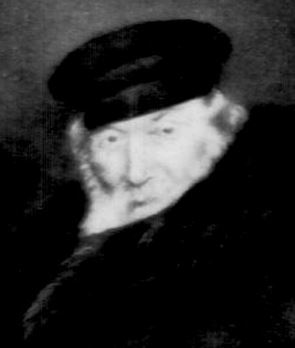
The Chofetz Chaim

The Chofetz Chaim

Israel Meir Kagan (1839-1933) was born in what is today Belarus to an Orthodox Polish-Jewish family. After his father’s passing when he was just ten years old, the family moved to Vilnius where Kagan continued his Jewish studies. Quickly noted as a great scholar, at the age of 17 he was married and appointed rabbi of the town of Radin. Soon after, he founded the Radin Yeshiva, which would go on to become one of the greatest yeshivas in the Ashkenazi world. Meanwhile, Rabbi Kagan wrote many popular books of wisdom, most notably Chofetz Chaim, a book about the laws of proper speech, the title of which became Rabbi Kagan’s nickname. His Mishna Berura became a standard text of Jewish law, and still used extensively today. He wrote nearly two dozen other books on a wide array of topics. At the same time, the Chofetz Chaim traveled across Europe to inspire Jews to observe the Torah, and to counter the growing secular movement. He was also an important member of Agudath Israel. Click here to see rare footage of the Chofetz Chaim at the First Congress of Agudath Israel in 1923.

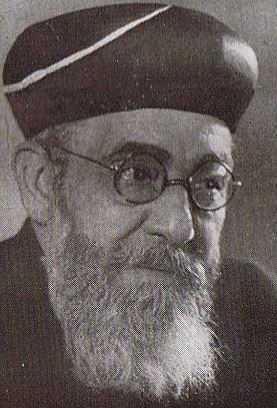
Rav Uziel

Rav Uziel

Ben-Zion Meir Chai Uziel (1880-1953) was born in Jerusalem, the son of the president of the city’s Sephardic community. Like the Chofetz Chaim, Uziel was also quickly noted as a great scholar, and by age 20 founded his own yeshiva. By 31, he was the Sephardic Chief Rabbi of Jaffa, where he worked alongside his Ashkenazi counterpart, Rabbi Kook, bridging the two communities together. During World War I, he worked tirelessly to stop the persecution of Jews, which earned him a sentence of exile in Damascus. In 1923 he returned to Israel as the Chief Rabbi of Tel-Aviv, and in 1939 became the Sephardic Chief Rabbi of Israel, a post he held until his passing in 1953. Rabbi Uziel was a founding member of the Jewish Agency, and played a key role in the founding of the State of Israel. Of course, he wrote a great deal of widely-read Torah thought and commentary as well. Rav Uziel and the Chofetz Chaim passed away on the same day, twenty years apart: the 24th of Elul.

Shana Tova! Rosh Hashanah Begins This Sunday

Words of the Week

In Jewish history there are no coincidences.
– Elie Wiesel

Jew of the Week: Yehoshua Sofer

The Father of Israeli Hip Hop – and Hebrew Martial Arts 

Nigel Wilson, aka Yehoshua Sofer

Nigel Wilson, aka Yehoshua Sofer

Nigel Wilson (b. 1958) was born in Jamaica to a Chasidic family, and grew up in Los Angeles. There, he fervently studied the Korean martial arts of Tang Soo Do and Kuk Sool Won, earning black belts in each before working as a martial arts trainer and bodyguard. At the same time, he took a great interest in LA’s hip hop scene. In 1989, Wilson moved to Israel and became a rap artist himself, under the stage name Nigel Ha’Admor. His songs gave rise to a new form of “street Hebrew”, and inspired later famous Israeli rappers like Subliminal and Hadag Nahash, which is why some have described Wilson as the “father of Israeli hip hop”. By 2000, his rapping days were behind him, and Wilson went back to martial arts, heading a Korean martial arts school in Jerusalem for a couple of years before opening his own schools in Tel Aviv and Jerusalem. These schools, however, were quite different, teaching a new martial arts style that Wilson, now known as Yehoshua Sofer, called Abir Qesheth. Hebrew for “Bow Warrior”, Sofer claimed that this was an ancient Israelite martial art going back to at least the time of King David, and passed down in secret from generation to generation by a small group of grandmasters. He claimed to have received this wisdom from his own father, tracing it back through their Yemenite Jewish roots, as the secluded Jews in Yemen were the last to carry on the Abir tradition. Not surprisingly, many scoff at Sofer’s claims, especially in light of his background in the entertainment industry. However, researchers have indeed found a great deal of supporting evidence for his claims, and Abir has grown tremendously in popularity. Today, it is a complete fighting system with unique, practical self-defense tactics based on the letters of the Hebrew alphabet. More significantly, Abir incorporates spiritual teachings, Jewish prayer, and Torah study, making it truly one-of-a-kind. Before all else, Sofer’s greatest vision is to end the age-old stereotype of the “weak diaspora Jew” and bring back the old spirit of the ancient Hebrew warrior.

Words of the Week

Impossible is a word found only in the dictionary of fools.
– Napoleon Bonaparte