Category Archives: Religious Leaders

Spiritual and Religious Greats of the Jewish People

Jew of the Week: Rashi

Illustration of Rashi from 1539

Illustration of Rashi from 1539

Shlomo Itzchaki (1040-1105) was born in Troyes, France, the only child of a rabbi. He began his Torah studies at age 5 under the tutelage of his father. At 17, he married and moved to Worms, Germany to study at the yeshiva of Rabbi Yakar. He later studied under several other rabbis, including his uncle, and the chief rabbi of Mainz. At 25, now himself a rabbi, Itzchaki returned to Troyes and was invited to serve on the town’s rabbinical court. Soon after, he took over as the head of the court, and the central authority on Jewish religious and legal matters. By 30, Rabbi Itzchaki had opened a yeshiva, which went on to become a centre of Torah study for countless Jews. Undoubtedly, the Rabbi is most famous for his profound commentaries on the Bible and Talmud. These are included in just about every publication of the Bible and Talmud since the 1500’s. In these texts, he is referred to simply as “Rashi”, an acronym of his initials. Rashi’s commentary on the Five Books of Moses alone inspired over 300 future commentaries. Even the Christian world studied his texts (here, Rashi was sometimes referred to by his Latinized name, Isaacides). In fact, many Christian commentaries on the Bible are based on Rashi’s texts. One of the more famous ones, that of the monk Nicolas de Lyre, was so heavily drawn from Rashi that de Lyre was nicknamed “Rashi’s ape”. Nonetheless, it was de Lyre’s commentary that inspired Martin Luther, the father of Protestant Christianity, and Luther used this text to produce his famous translation of the Bible. In addition to his commentaries, roughly 300 of Rashi’s other legal texts exist today. These texts are studied by linguistic scholars, too, who are looking to better understand both Hebrew and medieval French. According to tradition, Rashi also worked as a winemaker to support himself financially. He had three daughters who were scholars in their own right, with some suggesting that they completed a number of his unfinished commentaries, and possibly even donned tefillin. Rashi’s grandsons were some of the biggest rabbis of the following generation, including Rashbam and Rabbeinu Tam. Recently, an ancient map was discovered showing the location of Rashi’s grave. It happens to be under a public square in Troyes. A monument now stands over the site.

Words of the Week

The first gulp from the glass of natural sciences will turn you into an atheist, but at the bottom of the glass God is waiting for you.
– Nobel Prize-winning physicist Werner Heisenberg
Jew of the Week: Rebbetzin Henny Machlis

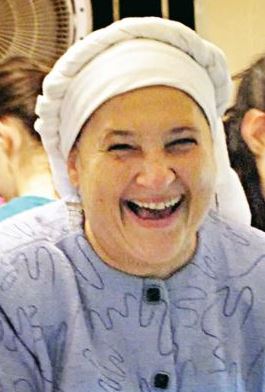
Rebbetzin Henny Machlis (Photo Credit: Joan Roth)

Rebbetzin Henny Machlis (Photo Credit: Joan Roth)

Henny Machlis (1957-2015) was born and raised in Brooklyn, the daughter of an Orthodox rabbi. She studied genetics, dietetics, and education at both Brooklyn College and Yeshiva University. Shortly after marrying Rabbi Mordechai Machlis, the two opened up their home to host people for Sabbath meals. Their inspiring words of wisdom and delicious cooking brought more and more guests. Soon, the Machlis family was hosting between 200 and 300 guests for Shabbat meals each week! Among their guests were students, immigrants, and tourists, widows and orphans, the impoverished, homeless, and mentally ill. Many of these slept over for days or weeks, on their couches, tables, and even in their van. Rebbetzin Machlis would cook for 8 hours straight to prepare for each Shabbat, with the help of her 13 kids. Cleaning up would often take until Tuesday. Each Shabbat cost the family $2500, some of which was covered by donations, but most came from their own modest funds, together with many loans, and even the sale of their personal belongings. Amazingly, the family only took off one week a year, during the holiday of Passover. Their door was never locked, and people regularly came in for a safe place to stay. At the same time, the Rebbetzin taught a regular women’s class on Jewish philosophy, while mentoring and advising countless others. Despite her hard work, Machlis was famous for always being cheerful, calm, warm, and modest. Over the past 36 years, her family has hosted over 400,000 people. Sadly, Rebbetzin Machlis passed away last month after a battle with cancer. Many visited her in the hospital, and even there, the Rebbetzin continued her kindness, giving up her own hospital bed to give homeless people a place to rest. At her funeral, a stranger pushed aside her son to draw nearer, saying “I have to get closer. She’s my mother.” Indeed, many consider Henny Machlis their spiritual mother. One person said of her: “When I was with her, I felt embraced by God.” Click here to read more about Henny Machlis’s story.

Words of the Week

Wisdom from Rebbetzin Machlis:

“All giving is a little bit of imitating God. Giving builds one’s character, and makes one more God-like.”

“Rebbe Nachman of Breslov says that when you cook, the energy that you cook with goes into the food. So if you cook with a lot of anger, you can give people food poisoning. But if you cook with joy, you can give them good health.”

“We are living in the midst of a spiritual holocaust. Most Jews today have no idea of the beauty and depth of Judaism. How can we not do everything in our power, including going into debt, to reach out to our fellow Jews?”

Jew of the Week: Bracha Qafih

Rabbanit Qafih

Rabbanit Qafih

Bracha Qafih (1922-2013) was born in Yemen to a traditional Jewish family. To save a young orphan boy from being taken away by the Muslim authorities, she was married to him at the age of just 11. The boy grew up to be Rabbi Yosef Qafih, better known as Rabbi Kapach, one of the greatest Yeminite Jewish religious leaders, and a judge on Israel’s Rabbinical Supreme Court. Rabbanit Qafih had three kids by the time she was 18, and immigrated to Israel soon after with her family. Settling in Jerusalem, she opened up her own embroidery business, which grew quickly to employ over 50 women. Qafih then devoted her time to charity work. Each holiday, she would organize food packages for the impoverished of the city, distributing them from her own home with the help of student volunteers. Eventually, she ran a food bank that provided regular sustenance to over 5000 people, an endeavour she oversaw for over 50 years, often putting herself in personal debt. She also ran a gmach for wedding gowns, where poor families could borrow wedding dresses for free, and organized a summer camp for disadvantaged children. She made sure that orphans could have proper bar mitzvahs, and advised countless people in need, including prostitutes and drug addicts, many of which credit her with helping them overcome their challenges. Her inspiration was her grandfather, who took her with him to distribute food to the poor in Yemen from the time that she was just 6 years old. Rabbanit Qafih continued her charity work into her old age, despite her poor health. She was known to already be preparing meals by four in the morning. Among many other decorations, in 1999, Rabbanit Qafih was awarded the Israel Prize for her immeasurable contributions to charity and Israeli society at large, where many affectionately referred to her as their grandmother.

Yom Kippur Begins Tonight! Gmar Chatima Tova to Everyone

Words of the Week

It’s not charity. It’s my responsibility.
– Rabbanit Bracha Qafih