Category Archives: Religious Leaders

Spiritual and Religious Greats of the Jewish People

Jew of the Week: Rabbi Yechiel Eckstein

In Memory of the Man Who Helped A Million People a Year
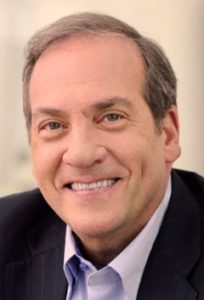
Rabbi Yechiel Eckstein

Yechiel Eckstein (1951-2019) was born in Massachusetts and raised in Canada, where his father served as a rabbi in Ottawa. Eckstein studied at Yeshiva University, starting with its high school program, and all the way through to earning his Master’s and his rabbinic ordination. He also held a Ph.D from Columbia University. After several years working with the Anti-Defamation League, Rabbi Eckstein founded the Holyland Fellowship of Christians and Jews in 1983. The main aim of this organization was to raise funds to support impoverished Jews all over the world, especially in Israel and the Soviet Union. The organization also promoted and funded aliyah, took care of Holocaust survivors, and supported the IDF’s lone soldiers. Originally, nearly all of his donors were Jewish. However, within a decade he had raised a huge amount of support from American Christians. The organization, now known as the International Fellowship of Christians and Jews (IFCJ) would go on to raise over $1.6 billion to help needy Jews in 58 countries. By 2003, it was the second largest charity operating in Israel, and some estimate it is the largest humanitarian organization in Israel today. In 2010, Eckstein was ranked among the Top 50 Most Influential Rabbis in America, and a few years later among the Top 50 Most Influential Jews in the world. IFCJ currently provides aid to over one million people each year, and has a base of 175 million donors. Rabbi Eckstein was known to be at the front lines of the work himself. He was an avid musician, and would often take his guitar with him on trips to play for kids and the elderly in camps and nursing homes. (In fact, he was once part of a Jewish band, and even recorded four albums of Hasidic music.) Eckstein was beloved by all those whom he met and assisted. It wasn’t only Jews who benefited from his work. Eckstein and the IFCJ also helped Arab Christians fleeing war-torn countries like Iraq, and supported Israel’s Christian minorities. He traveled to China to fight for the release of imprisoned pastors. He has been credited with being a major force in improving Jewish-Christian relations. He is also the author of eleven books, and his radio program had over 23 million listeners globally. Sadly, Rabbi Eckstein unexpectedly passed away last week from a heart attack. Russia’s chief rabbi, Berel Lazar, who worked closely with Eckstein, said of him that “He really cared for every single Jew. He had a special warmth, a warm heart, a special ability to feel someone else’s plight… We could have a discussion about a particular story, and he would break down crying. He wasn’t faking; that was the secret to his success—he really cared.”

Words of the Week

Where there is a soul, there cannot be a clock.
– Rabbi Menachem Mendel of Kotzkthe Kotzker Rebbe

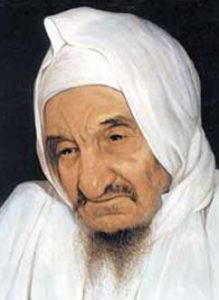
Jew of the Week: Baba Sali

A Modern Miracle Worker

Rabbi Israel Abuhatzeira (1889-1984) was born on Rosh Hashanah in Tafilalt, Morocco to a long line of Sephardic rabbis and miracle-workers. (His grandfather was the famed Abir Yakov, who was himself a grandson of Rabbi Shmuel Abuhatzeira, who had studied with Rabbi Chaim Vital, a disciple of the great Arizal.) The young Israel grew up on an estate that included a yeshiva and a beit din (the local Jewish courthouse), surrounded by wise scholars, judges, and mystics. By the age of 12, Israel was recognized as a child prodigy, and already began living the life of a mystic – fasting regularly, rising at midnight to pray and meditate – while hiding it all from his parents. He married at 16. After his father passed away and his older brother was murdered, the community begged him to take over as the town rabbi. Although only 22 years old, and exceedingly humble and modest, he eventually accepted. Within a decade, he was famous across Morocco, and as far as Israel, as a wise rabbi, a saint and a miracle-worker. On his first trip to the Holy Land, it is said that he reopened the Arizal’s ancient synagogue, which had been sealed off for years due to an apparent curse. Though he wished to stay in the Holy Land, Rabbi Abuhatzeira returned to Morocco to take care of his community. When the conditions for Jews in Morocco deteriorated even further after the founding of the State of Israel, Rabbi Abuhatzeira took it upon himself to facilitate Moroccan Jewry’s migration back to their Promised Land. He made the move himself in 1950. By then, he carried a new title: Because his prayers and blessings were known to always came true, he was referred to as Baba Sali, the “Praying Father”. The main possessions that he brought over from Morocco were 30 crates of books and manuscripts, together with thousands of pages of his own holy writings. He is considered one of the greatest kabbalists and holiest rabbis of recent decades. He was sought after not only by Jews, but by Arabs as well, and stories of his miracles abound. He took ill several months after his 94th birthday, and passed away soon after. The Baba Sali’s funeral was attended by over 100,000 people, and his grave in the town of Netivot is now a popular pilgrimage site. His yahrzeit begins tonight.
24 Amazing Torah Prophecies That Came True

Words of the Week

A man’s kind deeds are used by God as seeds for the planting of trees in the Garden of Eden; thus, each man creates his own Paradise. The reverse is true when he commits transgressions.
– Rabbi Dov Ber of Mezeritch

Jew of the Week: Rebecca Gratz

The Woman Behind Hebrew School

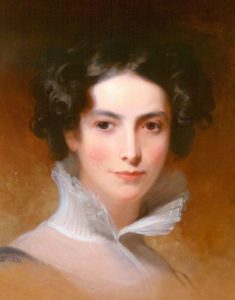
An 1831 Portrait of Rebecca Gratz by Thomas Sully

Rebecca Gratz (1781-1869) was born in Philadelphia, the seventh of twelve children in a religious Jewish home. On her mother’s side, she was the granddaughter of Joseph Simon, a wealthy Sephardic Jew who helped finance the American Revolution. Her father was an immigrant from Germany and came from a long line of rabbis. From a young age, Gratz was interested in literature and academia. She read her father’s entire library, and wrote articles and poetry of her own. At 19, she became a nurse in order to take care of her ailing father. Gratz soon recognized the countless women and children disadvantaged by the American Revolution, and established the Female Association for the Relief of Women and Children in Reduced Circumstances to help them. In 1815, she co-founded the Philadelphia Orphan Asylum and would go on to lead the organization for over 40 years, providing a safe home for hundreds of children. (She similarly helped open orphanages in Lexington, Richmond, and New York.) At the same time, Gratz was very active in her local synagogue, Philadelphia’s Mikveh Israel. Hoping to reverse the assimilation of Jews in America, and to provide free education for the poor, she opened up the world’s first Hebrew Sunday School in 1838 with 60 students. It would go on to have 4000 graduates. Gratz served as teacher, curriculum developer, superintendent, and president for nearly 30 years. She helped open new branches in Charleston, Baltimore, and other cities, while founding a teacher’s college to train new educators – all Jewish women. Gratz also co-founded the Female Hebrew Benevolent Society, and the Hebrew Education Society of Philadelphia (alongside former Jew of the Week Isaac Leeser). Her advocacy paved the way for the first Jewish foster home in the New World, which opened in 1855. Gratz was also a prominent defender of traditional Judaism. She fought back against proselytizing Christians, and vehemently opposed the new Reform Jewish movement. She advocated tirelessly for Jews to have equal rights, and inspired American Jews to be proud and open about their faith at a time when non-Christians were still often seen as second-class citizens. Not surprisingly, Gratz was described as “the foremost American Jewess of her day.” At one point, Gratz was called the most beautiful woman in America. Her portrait was painted twice by famous American artist Thomas Sully. Gratz never married; the man she loved was not Jewish, and she refused to marry outside of her faith. When her sister passed away at a young age, she raised her six children. After her own passing, the teacher’s college she co-founded was renamed in her honour, and still runs today as Philadelphia’s popular Gratz College. Rebecca Gratz is the basis for the heroine “Rebecca” in Sir Walter Scott’s classic novel Ivanhoe.

15 Facts About Tzedakah Every Jew Should Know

Words of the Week

A man should eat and drink less than what he can afford, dress in accordance with what he can afford, and honour his wife and children beyond what he can afford.
– Talmud (Chullin 84b)