Category Archives: Law, Politics & Military

Jews in the World of Law and Politics

Jews of the Week: Zalman Posner and Herb Gray

In Memory of Two Great Jews
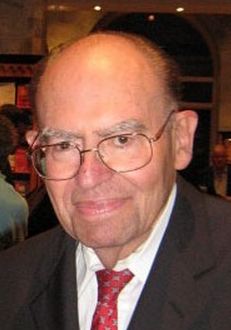
Herb Gray

Herb Gray

Herbert Eser Gray (1931-2014) was born in Windsor, Ontario, the son of Belorussian-Jewish immigrants. He practiced as a lawyer after receiving a degree from Osgoode Hall, before being elected to parliament in 1962. He became the first Jewish cabinet minister in Canada’s history. He would go on to be re-elected a whopping twelve times, setting a record as the longest-serving Canadian parliamentarian in history. During this time, he served in multiple roles including Leader of the Opposition, Solicitor General, and even Deputy Prime Minister. After retiring from politics, he was the Chancellor of Carleton University. Awarded a great many honours, including the Order of Canada, he was just one of a few people to be granted the title “The Right Honourable”, and was nicknamed the “Godfather of Politics”. Beloved by his constituents and on Parliament Hill, Herb Gray sadly passed away last week.


Rabbi Zalman Posner

Rabbi Zalman Posner

Just two days after came the sad news of the passing of Rabbi Zalman Posner (1927-2014). Born in Israel to parents who fled the Soviet Union, Posner’s family later immigrated to the U.S. to help in stimulating Jewish community life. After the Holocaust, Posner went to Europe to help survivors and refugees in DP camps. In 1949, he took up the post as Chabad rabbi of Nashville, Tennessee, and went on to serve as Nashville’s rabbi for 53 years. During this time, he helped open the community’s first Jewish schools, brought Jewish life onto university campuses, became renowned internationally as a profound lecturer, published eight popular books on Judaism, along with penning dozens of intriguing articles, and inspired countless people around the world. Rabbi Posner passed away last Wednesday, and is survived by his five children, and many more grandchildren and great-grandchildren.

Words of the Week

A well from which you drank, cast not a stone into it.
– Midrash Rabbah, Bamidbar 22:4

Jew of the Week: Irwin Cotler

Irwin Cotler

Irwin Cotler

Irwin Cotler (b. 1940) was born in Montreal and studied law at McGill University. After continuing his education at Yale, he returned to McGill as a law professor, and directed its Human Rights Program for over 25 years. As an expert on international and human rights law, Cotler served as a counsel for famous political prisoners like Nelson Mandela, Maher Arar, and Natan Sharansky. He has advised the Middle East peace process, and was involved in the Camp David Accords that brought peace between Israel and Egypt. In the 1980s, he served as President of the Canadian Jewish Congress, while also working to combat apartheid in South Africa. In 1999, he was elected as a Canadian Member of Parliament with a landslide victory that gave him 92% of the vote, described as “the most stunning electoral victory in this century.” Between 2003 and 2006, he served as Minister of Justice and Attorney General of Canada, and has been lauded for his work in ensuring human rights and citizen privacy, particularly in the face of increasingly restrictive anti-terrorism legislation. He has worked against discrimination, anti-Semitism, and racism, appointing two women to the Supreme Court (making Canada’s the most gender-representative in the world), and appointing the first aboriginals and visible minorities to appellate courts. He issued the first national initiative against racism, worked to bring justice to victims of the Rwanda massacres, and even to indict former Iranian President Ahmadinejad for inciting genocide. Cotler reverted more wrongful convictions than any other minister in history. Having been re-elected as MP no less than 5 times, Cotler recently announced that he will not seek further re-election, and is ready to retire, though he intends to remain very active in social justice and peace activism. Awarded ten honourary degrees and the Order of Canada, Irwin Cotler is described as a key global player “in the struggle for justice, peace and human rights.”

Words of the Week

And God said: “. . . Abraham shall be a great people . . . Because I know him, that he will command his children and his household after him that they shall keep the way of God, to do righteousness and justice.”
– Genesis 18:17–19

Jew of the Week: Ariel Sharon

Ariel Sharon

Ariel Sharon

Ariel “Arik” Scheinermann (1928-2014) was born on a moshav in Israel during the British Mandate, to Belorussian parents that immigrated there in 1922. He joined a youth battalion when he was just 14, and soon made a name for himself in the War of Independence, commanding a platoon that fended off the Iraqi invasion. His unit was often sent into the toughest conditions (in a single battle, they once lost 139 soldiers). Scheinermann himself was shot twice in the abdomen and once in the foot. Now a war hero, Prime Minister Ben-Gurion renamed him ‘Sharon’. After serving as an intelligence officer and studying in university, he was ordered back to the military to command 50 of Israel’s greatest soldiers in the new special forces Unit 101. In the 1956 war, he commanded a paratroopers brigade. In ’67, he was put in charge of the largest force in Sinai. He broke orders to come up with his own battle strategies, a major reason for Israel’s six-day victory. Later, his tactics were investigated by the US Army and credited with being unique military innovations. In August of 1973, Sharon finally retired to his farm. Unfortunately, just a few months later, the Arabs launched a surprise invasion of Israel on Yom Kippur. Unprepared, the State appeared to be doomed when Sharon was summoned out of retirement. When asked by his reserve commander, “How are we going to get out of this?” Sharon replied (like a boss): “You don’t know? We will cross the Suez Canal and the war will end over there.” Sharon drove to the war front in his own civilian car (!) and again broke his orders and did things his own way. His maneuvers were credited with turning the tide of the war and ending it in Israel’s favour. He became a national hero, and this led him to easily win a Knesset seat the following year. He would go on to serve as minister of defense, industry, housing, energy, foreign affairs, and finally, prime minister of Israel, while establishing and leading two political parties: Likud and Kadima. His most controversial act would be the pull-out from the Gaza Strip. Shortly after, he fell into a coma that lasted for 8 years, capping a difficult life that included the loss of a son and two wives. Sharon passed away last Saturday, on a special Jewish calendar date known as “Shabbat Shira”, the Sabbath of Song.

Tu B’Shvat Begins Tonight!

Words of the Week

A single action is better than a thousand groans.
– Rabbi Sholom Dov Ber of Lubavitch (1860-1920)