Category Archives: Business & Finance

Jews in the World of Business and Finance

Jews of the Week: Levi Strauss and Jacob Davis

Inventors of Your Favourite Pants
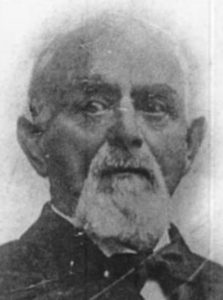
Jacob Davis

Jakobs Jufess (1831-1908) was born in Riga, Latvia. He became a tailor before immigrating to the US at age 23. Upon arriving in New York, he changed his name to Jacob Davis and opened up a tailor shop. Over the next 15 years, he moved all across North America trying to make a living, spending time in Maine, California, Nevada, and British Columbia, working as a tobacco salesman, gold miner, and brewer. By 1869, Davis settled in Reno, Nevada and opened another tailor shop. His primary merchandise was originally tents, horse blankets, and wagon covers. To make his stuff stronger and more durable, he started using the toughest cotton denim he could find, which happened to come from a small dry goods store in San Francisco called Levi Strauss & Co.
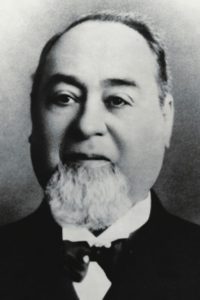
Levi Strauss, the name behind Levi’s jeans.

Levi Strauss (1829-1902) was born in Buttenheim, Germany. When he was 18 years old, his family immigrated to the US, joining two older brothers that had settled in New York some years earlier. The brothers had set up a dry goods shop, and Levi went on to open a new store location in Louisville, Kentucky. During the California Gold Rush, the family saw opportunity in the West and opened another branch in San Francisco. Strauss headed that branch (together with his sister’s brother, David Stern), importing from his brothers in the East and selling high-quality merchandise at his Levi Strauss & Co. shop. He became very wealthy, and built San Francisco’s first synagogue, Temple Emanu-El. Strauss gave generously to many charities, too, and his Levi Strauss Foundation donated to multiple orphanages and universities (including UC Berkeley). In 1871, Strauss received an offer from Jacob Davis to go into business together. Davis had designed a new type of work pants using blue denim and copper rivets to make the material extra strong. The first set of such “jeans” was custom-tailored for a lumberjack. Before long, everyone wanted a pair, and Davis couldn’t keep up with demand. Strauss helped Davis get the proper patents, and the two partnered up. To make his jeans distinct, Davis soon started to sew the back pockets with the now-ubiquitous orange double-stitch. Meanwhile, Strauss built a large jeans factory in San Francisco and Davis moved there to run the plant. Davis worked at the plant for the rest of his life, outfitting every miner, railroad worker, and cowboy with “Levi’s jeans”, his special pants. The modern jeans that Davis and Strauss brought to the world grew rapidly in popularity, first in the workforce, then among teenagers and “greasers” in the 50s and 60s, and today being the most popular type of pants in the world.

Coronavirus and the Coming of Mashiach

Words of the Week

Few are guilty; all are responsible.

Rabbi Abraham Joshua Heschel

Jew of the Week: Silvio Santos

Brazil’s Most Beloved Person

Silvio Santos (Courtesy: SBT)

Senor Abravanel (b. 1930) was born in Rio de Janeiro, Brazil to Sephardic parents who immigrated from Greece and Turkey. He is a descendant of (former Jew of the Week) Don Isaac Abravanel, who was treasurer to the Spanish monarchy in the 15th century. Senor worked hard from a young age to help support his family. At 14, while working as a street vendor, he got his first job at a radio station. It didn’t last long, as he made more money on the street. Several years later, Abravanel moved to São Paulo and worked a number of jobs in broadcasting before being hired to host a TV game show. Abravanel adopted the stage name “Silvio Santos”. His show was hugely popular, and Santos quickly became a wealthy celebrity. He soon bought the show’s production company, Baú da Felicidade, and started expanding across Brazilian media. He also diversified into real estate, hotels, agriculture, cosmetics, and banking. After years of trying to get his own TV network, the government finally relented in 1981, and Santos launched TVS (now SBT, Brazil’s second most-watched channel). By 1989, Santos was recognized as Brazil’s most famous personality, and that year he even ran for president! His life story—from poor immigrant to Brazil’s first celebrity billionaire—has served as an inspiration to countless Brazilians. He is admired for trying to help his country wherever he can and, in a place of rampant corruption, for paying his taxes. (In fact, Santos is Brazil’s single biggest individual tax-payer.) He was recently voted by Brazilians to be the most beloved person in the country. Amazingly, although he is nearly 90 years old, Santos still appears on television as the host of the Silvio Santos Show.

Why is the Month of Adar Lucky?

Words of the Week

When we want to believe something, we ask ourselves, “Can I believe it?” …and if we find even a single piece of pseudo-evidence, we can stop thinking. When we don’t want to believe something, we ask ourselves, “Must I believe it?” …and if we find a single reason to doubt the claim, we can dismiss it.
– Jonathan Haidt

Jews of the Week: Sybil, David Solomon, and James Meyer Sassoon

In honour of Jew of the Week’s 9th birthday this November, we will feature a month-long series on the Sassoon family, the “Rothschilds of the East”. This is the final Part 4. Read Part 1, Part 2, and Part 3.

David Solomon Sassoon

David Solomon Sassoon (1880-1942), the grandson of patriarch David Sassoon, was born in Bombay, India. He was deeply religious, and spent much of his life travelling in search of ancient and rare Jewish manuscripts. By 1932, he had amassed an incredible collection of over 1200 unique texts. He described them in his two-volume tome, Ohel David. Today, these works are an indispensable tool for scholars of Judaism. Unfortunately, many of the manuscripts were auctioned off in recent decades to pay off the Sassoon estate’s tax debts to the British government. Many others are stored at the University of Toronto, and some at the British Library.

Sybil Rachel Sassoon, the Marchioness of Cholmondeley

Sybil Rachel Betty Cecile Sassoon, the Marchioness of Cholmondeley (1894-1989), daughter of Edward Sassoon, she wished to assist the war effort during World War II, and joined the Women’s Royal Navy Service. She went on to serve as Superintendent of the Women’s Royal Navy Service, and a Chief Staff Officer. In 1946, she was made a Commander of the British Empire (CBE) for her valiant service. Her great-grandson is actor Jack Huston.

Rachel Sassoon Beer (1858-1927), daughter of Sasson David Sassoon, married a wealthy German-English banker and converted to Christianity, for which her family disowned her. She started writing for The Observer, and eventually became its editor. (She later became editor of the Sunday Times, too.) It was Rachel who managed to secure a confession from Count Ferdinand Esterhazy that the “evidence” against Alfred Dreyfus was forged, and that Dreyfus was innocent. This led to Dreyfus’ release from prison. (And it was the Dreyfus Affair that was one of the key elements in inspiring Theodor Herzl.) Rachel left much of her wealth to her nephew, Siegfried Sassoon (1886-1967), a war hero and one of the most celebrated poets of World War I.

The Right Honourable James Mayer Sassoon, The Lord Sassoon

The son of another of Rachel’s nephews is James Meyer Sassoon (b. 1955), who was born in London and studied at Eton College, followed by Oxford University. After heading a number of investment firms, he joined the British Treasury in 2002. Five years later, he was appointed as president of the Financial Action Task Force on Money Laundering. Among his duties was combat financing for terrorists. He was knighted in 2008, and entered the House of Lords in 2010, taking on the title of Baron Sassoon. He also served as the first Commercial Secretary to the Treasury.

Words of the Week

I prefer a wicked person who knows they are wicked, to a righteous person who knows they are righteous.
Rabbi Yaakov Yitzchak of Lublin (c. 1745-1815)