The Jewish Mark Twain
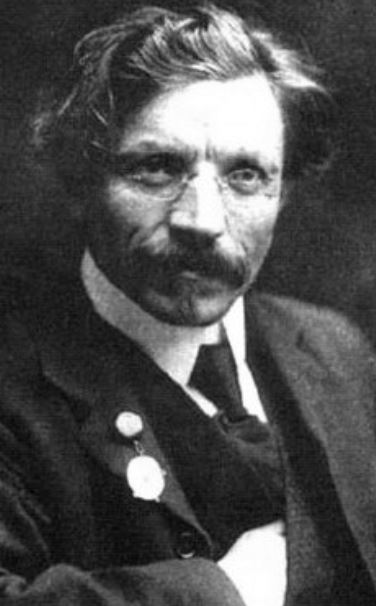 Sholem Solomon Alexei Rabinovich (1859-1916) was born to a wealthy family near Kyiv in what was then the Russian Empire. He grew up in the Jewish shtetl of Voronkiv, receiving both a secular education and a traditional Jewish one. His father lost most of the family’s fortunes, and his mother died of cholera when he was just 13. Rabinovich started writing around this time, and already at age 15 wrote a Jewish version of Robinson Crusoe. He wrote stories in Hebrew, Yiddish, and Russian. At 24, he took up the pen name “Sholem Aleichem”, the Yiddish pronunciation of the Hebrew greeting meaning “peace be upon you”. After completing his studies, he worked as a teacher and then as a “crown rabbi”, a representative of the Jewish community to the Russian government. He lost his own wealth in the stock market in 1890 and at one point struggled to make a living and feed his five children. By the end of the 1890s, Sholem Aleichem was the most popular Yiddish writer in the world, and inspired countless other young Jewish writers. He published Tevye the Milkman in 1894, which was later adapted to Fiddler on the Roof, becoming a major international hit (as well as a Broadway play—the first to run for more than 3000 performances—and a film). Rabinovich lived in Kyiv until 1905, when terrible pogroms raged across the Russian Empire and he witnessed the brutality firsthand. The family fled, splitting their time between New York City and Geneva, Switzerland. All in all, Sholem Aleichem wrote some 40 works in Yiddish, and many more in Hebrew and Russian. He was commonly referred to as “the Jewish Mark Twain”. (When Mark Twain himself heard about this, he said that he was actually “the American Sholem Aleichem”!) Rabinovich was a passionate Zionist, too, joining Hovevei Zion in 1888, and representing the American Jewish community at the Eighth Zionist Congress in 1907. There are streets, schools, and other public places named after him around the world, including in Argentina, Australia, Brazil, Israel, Lithuania, Russia, Ukraine, and the United States. There is even a Sholem Aleichem Crater on the planet Mercury! Rabinovich’s funeral drew some 100,000 mourners, making it among the largest in New York’s history. He wrote in his will: “Let my name be recalled with laughter, or not at all.”
Who are the Indigenous People of Israel?
Words of the Week
Life is a dream for the wise, a game for the fool, a comedy for the rich, a tragedy for the poor.
– Sholem Aleichem
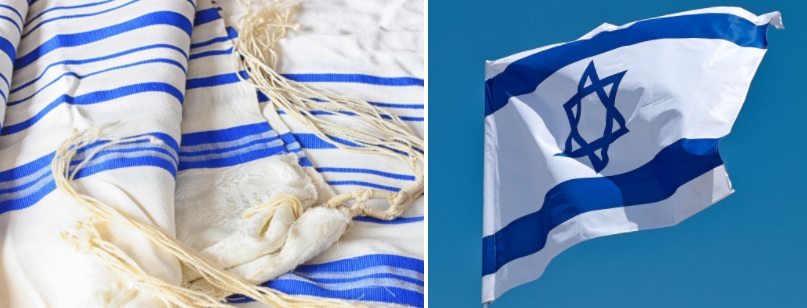
 David Wolffsohn (1856-1914) was born to a poor, religious Jewish family in the Lithuanian-Polish town of Darbenai (then part of Russia). His father was a Torah scholar and teacher, and Wolffsohn, too, was learning in yeshiva with the same goal in mind. In his teens, he was sent to live with relatives in Germany to avoid being conscripted to the Russian army. There, he met the rabbi, philosopher, and early Zionist leader Isaac Rülf, and became his devoted disciple. Meanwhile, Wolffsohn took up secular studies and went on to apprentice at a trading company. In 1877, he started his own flouring business, and was soon one of the most prominent Jewish businessmen in Europe. Henceforth, he dedicated his life to realizing that ancient dream of his people’s return to Israel. He played a key role within the Hovevei Zion movement, and in 1894 was a cofounder of the Society for the Promotion and Support of Jewish Agriculture in Syria and Palestine. When Herzl’s The Jewish State was published two years later, Wolffsohn immediately journeyed to Vienna to meet him. The two became very close and traveled the Holy Land together, setting the foundations for what would become the State of Israel. Not surprisingly, when the World Zionist Congress was founded, Herzl was made its president and Wolffsohn its vice-president. Upon Herzl’s death shortly after, Wolffsohn succeeded him. As president, he was instrumental in reinvigorating Jewish life in the Holy Land (among other things, it was under his tenure that the city of Tel-Aviv was founded). However, Wolffsohn is most famous for being the one who created the flag of modern Israel. Back in 1896, Herzl had written: “We have no flag, and we need one. If we desire to lead many men, we must raise a symbol above their heads. I would suggest a white flag, with seven golden stars…” Herzl’s proposal was good, but his flag gained little support. Wolffsohn responded to Herzl thus: “We have a flag—and it is blue and white. The talit with which we wrap ourselves when we pray: that is our symbol. Let us take this talit from its bag and unroll it before the eyes of Israel and the eyes of all nations…” Wolffsohn designed a simple flag with blue talit-like stripes and a