Tag Archives: Torah

Jews of the Week: Isaac Leeser and Warder Cresson

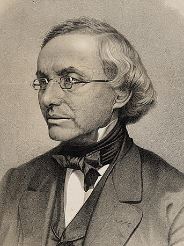
Isaac Leeser

Isaac Leeser

Isaac Leeser (1806-1868) was born in the Germanic kingdom of Westphalia. Growing up, he received both a religious Jewish education, as well as a secular German one, and was fluent in Latin, German, and Hebrew. He immigrated to the United States at the young age of 17 and lived with his wealthy uncle. While working in his uncle’s business, Leeser started to teach Judaism in his local synagogue, and vocally defended his religion when it was under attack in the public sphere. By age 22, he was quite well known, and was invited to take over Philadelphia’s Congregation Mikveh Israel, one of America’s oldest Sephardic synagogues. Leeser introduced American Jewry to the German custom of delivering a sermon between prayers (something now common in all synagogues). He wrote a book about Judaism in 1829 but found no publisher willing to print it. So, he started his own press, establishing the Jewish Publication Society. In 1845, he published his English translation of the Torah – the first by a Jew. Eight years later, he published a complete English Tanakh. This translation was the authoritative Jewish version for decades, and is still widely used today. Leeser helped found some of America’s first Jewish schools, seminaries, and magazines. He was also a civil rights activist and worked hard on behalf of all minorities. He is regarded as one of America’s most important Jewish pioneers.
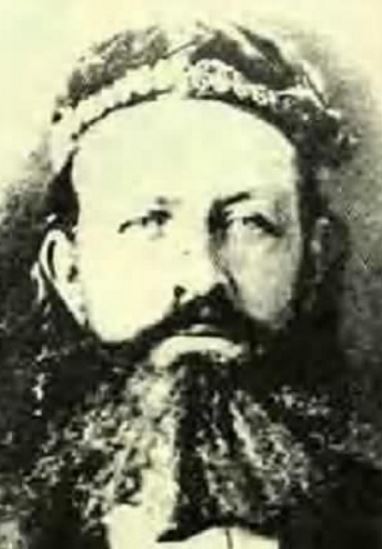
Michael Boaz Israel, aka. Warder Cresson

Michael Boaz Israel, aka. Warder Cresson

In 1840, Leeser met a wealthy farmer named Warder Cresson (1798-1860). Cresson was a very religious Quaker, a preacher and writer. After some discussions with Leeser, Cresson took a deep interest in Judaism. In 1844, he was appointed America’s first consul in Jerusalem. This brought him face-to-face with Judaism and he grew close to Jerusalem’s ancient Sephardic community. He started writing for Leeser’s magazine, The Occident, and even began doing counter-missionary work to stop Christian proselytizing of Jews. In 1848, Cresson converted to Judaism, was circumcised, and took on the Hebrew name Michael Boaz Israel ben Avraham. Upon his return to Philadelphia, his wife divorced him, sued him, and sought to have him declared insane. The case made headlines across the US. Cresson ultimately won the suit, proving his absolute sanity and wisdom. He returned to Jerusalem, married a Sephardic woman and had three kids. In 1852, he established a Jewish agricultural colony – predating the Zionist movement by several decades, and in fact, helping to inspire it. He continued writing on Jewish topics, and died as a respected and prominent leader in Israel’s Sephardic community. His original tomb and burial place on the Mount of Olives was recently rediscovered.

Words of the Week

Just as the olive yields oil for light only when it is pounded, so are man’s greatest potentials realized only under the pressure of adversity.
– The Talmud

Jew of the Week: Rebbetzin Esther Jungreis

JungreisEsther Jungreis (1936-2016) was born in Hungary, the daughter of a rabbi. During the Holocaust, the family was sent to Bergen-Belsen, and later loaded up on a train headed for Auschwitz. On route, they managed to escape to Switzerland with the help of Rudolph Kastner’s Aid and Rescue Committee. The quota for migrants to Israel was filled, so the family was given papers to go to the States. Jungreis went on to marry a rabbi and settled in North Woodmere, New York, where the couple founded the town’s Jewish Center and Congregation Ohr Torah. Seeing the rampant assimilation in the United States, Jungreis made it her life’s work to prevent what she saw as a “spiritual holocaust”. In 1973, she started an organization called Hineni, aimed at inspiring Jewish youth to return to their roots. Under her dedicated leadership and moving speeches, Hineni grew to become an international organization, no longer focused solely on youth but rousing countless young and old alike. Jungreis organized events and gave lectures around the world – visiting fifteen or more countries a year was normal for her. Her weekly class drew as many as 1500 people at a time. Meanwhile, Jungreis wrote a regular column for The Jewish Press (the world’s largest English-language Jewish paper) for some 45 years, making it the longest running column in the publication’s history. She also wrote four best-selling books, and had a television programme. In 2004, the Rebbetzin spoke at the Republican National Convention, and in 2008 was selected by President Bush to join him on his delegation to Jerusalem for Israel’s 60th anniversary. Today, she is recognized as one of the central pioneers of the modern kiruv (Jewish outreach) movement. Sadly, the Rebbetzin passed away yesterday. She worked tirelessly until the very end, and in her last article – published just last week – finished with these words: “When will we wake up? When will we don our priestly garments and fulfill our G-d-given destiny and be ‘a light unto all mankind’?”

Words of the Week

A long life is not good enough, but a good life is long enough.
– Rabbi Theodore Meshulem Jungreis

Jew of the Week: Rashi

Illustration of Rashi from 1539

Illustration of Rashi from 1539

Shlomo Itzchaki (1040-1105) was born in Troyes, France, the only child of a rabbi. He began his Torah studies at age 5 under the tutelage of his father. At 17, he married and moved to Worms, Germany to study at the yeshiva of Rabbi Yakar. He later studied under several other rabbis, including his uncle, and the chief rabbi of Mainz. At 25, now himself a rabbi, Itzchaki returned to Troyes and was invited to serve on the town’s rabbinical court. Soon after, he took over as the head of the court, and the central authority on Jewish religious and legal matters. By 30, Rabbi Itzchaki had opened a yeshiva, which went on to become a centre of Torah study for countless Jews. Undoubtedly, the Rabbi is most famous for his profound commentaries on the Bible and Talmud. These are included in just about every publication of the Bible and Talmud since the 1500’s. In these texts, he is referred to simply as “Rashi”, an acronym of his initials. Rashi’s commentary on the Five Books of Moses alone inspired over 300 future commentaries. Even the Christian world studied his texts (here, Rashi was sometimes referred to by his Latinized name, Isaacides). In fact, many Christian commentaries on the Bible are based on Rashi’s texts. One of the more famous ones, that of the monk Nicolas de Lyre, was so heavily drawn from Rashi that de Lyre was nicknamed “Rashi’s ape”. Nonetheless, it was de Lyre’s commentary that inspired Martin Luther, the father of Protestant Christianity, and Luther used this text to produce his famous translation of the Bible. In addition to his commentaries, roughly 300 of Rashi’s other legal texts exist today. These texts are studied by linguistic scholars, too, who are looking to better understand both Hebrew and medieval French. According to tradition, Rashi also worked as a winemaker to support himself financially. He had three daughters who were scholars in their own right, with some suggesting that they completed a number of his unfinished commentaries, and possibly even donned tefillin. Rashi’s grandsons were some of the biggest rabbis of the following generation, including Rashbam and Rabbeinu Tam. Recently, an ancient map was discovered showing the location of Rashi’s grave. It happens to be under a public square in Troyes. A monument now stands over the site.

Words of the Week

The first gulp from the glass of natural sciences will turn you into an atheist, but at the bottom of the glass God is waiting for you.
– Nobel Prize-winning physicist Werner Heisenberg