
The Abolition of Slavery and the First Jewish Senator
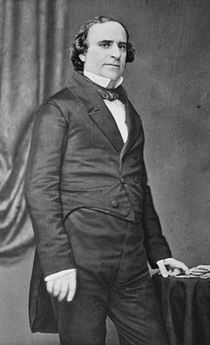
David Levy Yulee
Moshe Eliyahu Levy Yulee (1782-1854) was born in Morocco to a wealthy Sephardic Jewish family. His father was a prominent figure in the Ottoman Empire, and an adviser to the Sultan. Moshe went off on his own across the Atlantic, settling in the US Virgin Islands, and dropping the family name of “Yulee”, now going by Moses Elias Levy. He made his own fortune in the lumber and merchant trades, then moved the whole family to Florida. There, he purchased 100,000 acres of land and established it as a refuge for persecuted European Jews. He also planned for a 50,000 acre “New Jerusalem” in Florida. Levy has been described as a “proto-Zionist”, as he sought to re-establish a Jewish homeland in Israel long before the official Zionist movement began. Though he originally owned slaves, Levy soon joined the anti-slavery movement, and in 1828 published the popular treatise A Plan For the Abolition of Slavery. Levy’s work was instrumental in abolishing slavery in both the United States and across the British Empire. In 1835, Levy’s fortunes soured with the outbreak of the Second Seminole War, which devastated his land in Florida, destroyed the refuge, and strained his finances. In poor health, Levy retired to St. Augustine, Florida, where he slowly rebuilt his wealth.
His son, David Levy Yulee (1810-1886) was elected to the House of Representatives in 1841. When Florida became a state in 1845, he became the first Jew in the US Senate. The following year, he married into a prominent Kentucky family, and to do so, had to convert to Christianity. Though he only did this in name at the request of his wife, the move drove a wedge between David and his father, and the two became permanently estranged. After failing to win re-election in 1850, David turned to business, first opening a sugar plantation, and then spearheading the construction of railroads across Florida. Yulee returned to the Senate in 1855, after his father’s death. When the Civil War began, he joined the Confederates, for which he was imprisoned following the war. After being released, Yulee continued his railroad ventures, and went on to be nicknamed the “Father of Florida Railroads”. The town of Yulee and Yulee County in Florida are named after him, and he was selected as one of the “Greatest Floridians” in 2000.
Words of the Week
You are not as great as you think, and the world is not as bad as it seems.
– Rabbi Wolf of Strikov
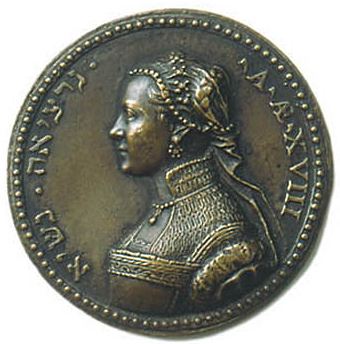
 Chaim Yosef David Azulai (1724-1807) more commonly known as the Chida (derived from his initials), was born in Jerusalem to a family with a long line of rabbis. From childhood he showed amazing proficiency in Jewish study, and learned under the great Torah scholars of the day. His name was soon well-known across the Jewish community of the Holy Land, and before he was 30, the Chida was selected to be the community’s emissary to Europe. He would go on several international trips to raise support and funds for the Jews in Israel (long before the start of the Zionist movement). Two of these trips lasted over 5 years each, and took him across Africa and Europe. Many credit him with sustaining the small Jewish community of Israel, which would have otherwise been extinguished by various Turkish and Arab warlords. During his travels he made sure to visit any ancient libraries he came across, and diligently studied their manuscripts, which earned him fame as a great scholar of all subjects. Meanwhile, he was able to publish roughly 70 different works on Judaism (writing his first book at age 16), ranging from Jewish law and scriptural commentaries to prayer books, mysticism and Kabbalah. His works are also important to secular scholars, as the Chida recorded a detailed diary during his trips around the world, giving historians an eyewitness account of the 18th-century. His incredible travels included a meeting with the Sultan of Turkey and King Louis XVI of France, a stint as Chief Rabbi of Cairo, as well as some dangerous encounters with the Knights of Malta and the Russian Navy. By the end of his life, he was considered a saint by both Jews and non-Jews alike.