A French Music Mega Star
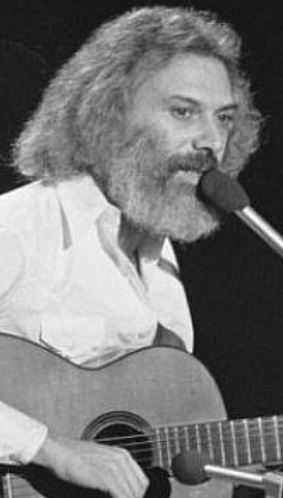 Giuseppe Mustacchi (1934-2013) was born in Alexandria, Egypt to a family of Greek Jews of Romaniote Jewish heritage. His parents were well-educated bookstore owners who had a love for languages. They spoke Italian at home and Arabic outside, and put their kids in a French school. Inspired by his favourite French authors and thinkers, like Sartre and Camus, a 17-year old Mustacchi decided to move to Paris. He worked as a door-to-door book salesman and, to make some more money, started to sing and play piano at night clubs. He soon met popular French singer and poet Georges Brassens, who opened the door for Mustacchi to formally enter the music industry. In gratitude, Mustacchi changed his first name to “Georges” (also stylizing his last name “Moustaki”). He once played before Édith Piaf—France’s “national singer”—who soon fell in love with him, and took him on as a songwriter. Moustaki wrote many of her hits, including the globally chart-topping “Milord”. Moustaki also wrote for other great European artists like Dalida, Yves Montand, and Tino Rossi. In the 1960s, he launched his own singing career. Songs like “Ma Liberté” are said to have inspired an entire generation. His “Le Métèque”, meanwhile, was about the difficult experiences of Mediterranean immigrants (in which he referred to himself in the lyrics as a “wandering Jew” and “Greek shepherd”). No record company wanted to produce it, so he produced it himself and it was #1 on the French charts for six weeks. Moustaki gave his last performance in Barcelona in 2009, at the age of 75. All in all, he wrote 300 songs (in seven different languages!), produced some 30 albums of his own, and also appeared in film and on TV. He is considered one of France’s biggest music stars of all time.
15 Facts About the Jews of Greece
Words of the Week
I remember how the materialist interpretation of history, when I attempted in my youth to verify it by applying it to the destinies of peoples, broke down in the case of the Jews, where destiny seemed absolutely inexplicable… Its survival is a mysterious and wonderful phenomenon demonstrating that the life of this people is governed by a special predetermination, transcending the processes of adaptation expounded by the materialistic interpretation of history.
– Nikolai Berdyaev
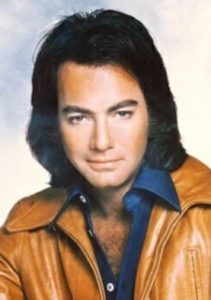 Neil Leslie Diamond (b. 1941) was born in Brooklyn to a Jewish family of Russian and Polish heritage. In high school, he sang in the school choir alongside classmate
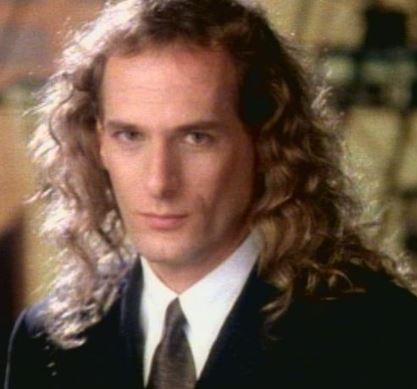
  Michael Bolotin (b. 1953) was born in Connecticut. His grandparents were all Orthodox Jewish immigrants from Russia, and kept a strictly kosher home. Bolotin, however, was more like his liberal parents who, fed up with anti-Semitic discrimination, sought to assimilate into American society and kept a Christmas tree alongside their menorah. This may explain why Bolotin was a trouble maker at his Hebrew school, and got kicked out when he was 13. That same year, he tragically lost his father. Music was one way to cope with the loss. At 16, he was signed to a record deal and dropped out of high school. His first songs didn’t go anywhere, so he joined a heavy metal band which opened for Ozzy Osbourne. Still, he struggled to make a living for a decade. It wasn’t until 1983 that Bolotin (now going by Bolton) had his first hit with a song he co-wrote, then released his breakthrough (fifth) album in 1987. By the late 80s’, Bolton was a household name, and in 1989 he won his first Grammy for “How I Am Supposed to Live Without You”, then a second in 1991 for “When a Man Loves a Woman”. All in all, Bolton produced 20 albums (so far) and sold over 75 million records, with 9 singles hitting number one on the Billboard 100. Bolton also wrote hit songs for other artists like