Father of Israeli Intelligence
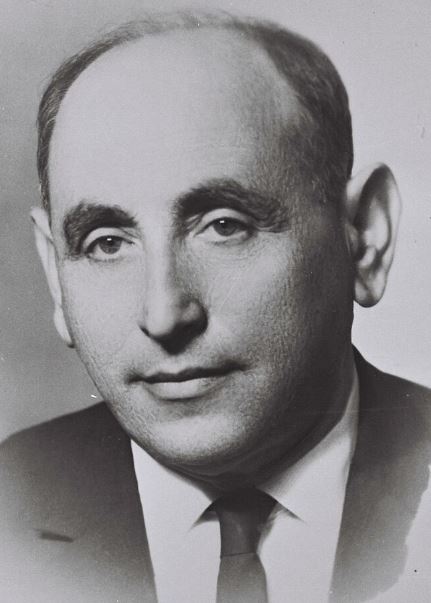 Israel “Isser” Halperin (1912-2003) was born in what is today Vitebsk, Belarus to a wealthy Jewish-Russian family. His father was a rabbi who had studied at the famed Volozhin Yeshiva, while his mother’s family ran a large vinegar factory. Following the Russian Revolution, they lost their business and the Communists confiscated all of their property. The family eventually fled to Latvia and were robbed along the way, arriving with absolutely nothing. Young Isser realized Jews would never be safe anywhere, and needed their own national home. He soon joined a Zionist youth group, and at 16 decided to make aliyah. The following year, he faked his age to get a British visa. Arriving in Israel, he joined a kibbutz and there met his soon-to-be wife. The couple later opened their own orange-packing company. In 1942, Isser changed his last name to the Hebrew Harel (“Mountain of God”), and joined the pre-IDF Haganah, which was working together with the British auxiliary forces to fight the Nazis. Harel took an officer’s course in intelligence, then joined the Haganah’s “Shai” intelligence unit. He eventually became the main aid to Shai’s chief, as well as the head of its Tel-Aviv office. With the birth of the State of Israel in 1948, Harel co-founded Shin Bet, Israel’s “FBI”, and built it from the ground up. In 1952, he became the director of Mossad, and over the next 11 years at its helm, turned it into one of the world’s most elite intelligence agencies. In 1955, he arranged meetings between Egypt’s Nasser and Ben-Gurion and nearly achieved a peace deal. Meanwhile, he convinced Morocco’s king to let 80,000 Moroccan Jews immigrate to Israel. It was Harel who obtained copies of Soviet leader Nikita Khrushchev’s critical 1956 “Secret Speech” denouncing his predecessor Stalin and marking an important shift in the USSR. He shared the speech with the CIA. Harel also exposed a number of Soviet agents. In 1960, Harel planned and led the successful mission to capture Nazi war criminal Adolf Eichmann. He later wrote an account of the mission, The House on Garibaldi Street, which became a bestseller and was adapted to a 1979 film of the same name. In 1963, Harel oversaw Operation Damocles which targeted German rocket scientists working for Egypt. When Mossad mail bombs killed innocent bystanders, Harel resigned from his position. He later joined Ben-Gurion’s new political party and was elected to the Knesset in 1969, serving until 1973. After retiring, he turned to writing and published ten popular books, both fiction and non-fiction. It has been said that “No one terrified Israel’s enemies like Isser Harel”.
Important Thoughts on Palestinian Refugees
Words of the Week
The best way to understand antisemitism is to see it as a virus. Viruses attack the human body, but the body itself has an immensely sophisticated defence, the human immune system. How, then, do viruses survive and flourish? By mutating. Antisemitism mutates, and in so doing defeats the immune systems set up by cultures to protect themselves against hatred. There have been three such mutations in the past two thousand years, and we are living through the fourth.
– Rabbi Lord Jonathan Sacks
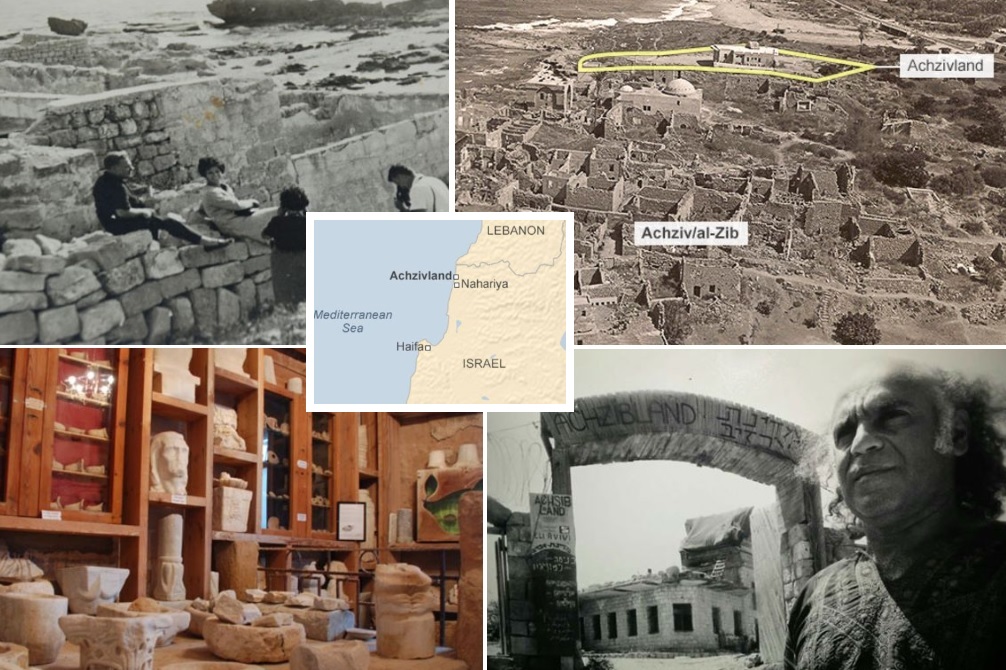
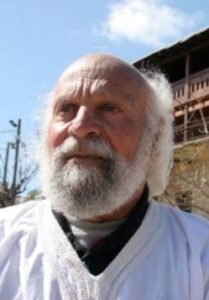 Eli Avivi (1930-2018) was born in Iran and made aliyah to the Holy Land with his family when he was just two years old. As a teenager, he joined Plugat HaYam, or Palyam, founded in 1945 as the navy arm of Palmach, the “special forces” of the pre-IDF Haganah. The primary task of Palyam was to escort and defend Jewish refugee ships coming from Europe, as well as ships containing arms for the young Jewish state. Avivi was one of seventy sailors that facilitated the arrival of 70,000 Jews to Israel over the course of 66 missions. He was also among the four hundred Palyam marines that fought in Israel’s War of Independence. Still drawn to the sea after the battles were over, Avivi became a fisherman. This took him on sailing trips around the world, and at one point he spent a year living in Greenland with the natives. Returning to Israel to visit his family in 1952, Avivi happened upon an abandoned fishing village near the Lebanese border, formerly inhabited by Arabs that had fled during the war. The young sailor settled there, making a living by selling fish to a nearby kibbutz. He eventually got married, and he and his wife continued a quiet, peaceful life mostly removed from civilization. In 1963, the Israeli government decided to turn the entire area into a national park, and sent the couple eviction notices. They battled the government until 1971, when their land was fenced in and their huts bulldozed, causing Avivi to declare independence from the State of Israel! The couple was promptly arrested. Their peaceful protests soon brought international attention, leading to an agreement with the government that resulted in the formation of the micro-state of “Akhzivland”. (The name comes from the archaeological ruins of the Biblical town of Achziv that the village was built upon.) Avivi’s success was partly owed to the support he had from