
Tag Archives: Philanthropists

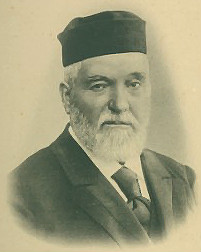
Jew of the Week: Wolf Wissotzky

Tea!

If you had a name like Kalonimus Kalman Vulf Ze’ev Yankelevich Wissotzky, you’d kick ass, too.

Kalman Ze’ev Yankelevich Wissotzky (1824-1904) was the son of struggling merchants in Russia. After studying at the famous Volozhin Yeshiva, he joined an agricultural colony which paved his way into the tea trade. In 1849, he established the Wissotzky Tea company in Moscow and very soon became known as the “King of Russian Tea.” By 1904, Wissotzky Tea was popular across the world, with branches in Europe and America. Meanwhile, the situation in Russia worsened to the point that Wissotzky Tea moved their headquarters to Israel. (During the Russian Revolution, the masses protested “Jewish domination” and chanted their slogan: “Tea of Wissotzky, Sugar of Brodsky, and the Tzar is Leiba Trotsky!”) In 1936, Wissotzky Tea opened a factory in Israel, becoming the first tea company in the region. Since then it has been Israel’s leading tea brand. It would surely make Wolf Wissotzky proud – he was an ardent Zionist and one of the main shakers of the movement. He gave 10,000 rubles to the Alliance Israelite for Zionist causes, then another lump sum of 20,000, as well as 6000 rubles to start one of Israel’s first monthly magazines (called HaShiloach). Wissotzky personally traveled to Israel and laid the groundwork for the Lod, Nablus and Gaza settlements. He also established and financed the first school in Jaffa. Outside of Israel, too, Wissotzky was a great philanthropist. In 1898, he gave 70,000 to build a yeshiva in Byelostok. Most amazingly, he worked tirelessly to help the Cantonists – young Russian Jews forcibly taken from their homes and conscripted into life-long military service. Wissotzky ensured many of them had Shabbat services and Passover meals, and helped bring countless young boys back to Judaism. Ultimately, he would leave over 1 million rubles to charity. In those days, one ruble was equal to 0.514 ounces of gold, which in today’s value is nearly $1,000. So, Wissotzky donated nearly one billion dollars to charity! Now that’s philanthropy!

Words of the Week

Great minds discuss ideas; average minds discuss events; small minds discuss people.
– Eleanor Roosevelt
Jew of the Week: Howard Schultz

Starbucks

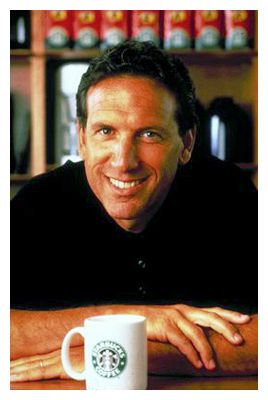
Howard Schultz, Mr. Starbucks

Howard Schultz was born to a poor Jewish-German family in Brooklyn. A phenomenal athlete, he paid his way through higher education on sports scholarships. After working as a salesperson for Xerox, he became the general manager of Swedish coffee machine maker Hammarplast. In this role, he paid a visit to one of the company’s clients – a tiny café in Seattle called Starbucks. Having traveled through Italy and seen the importance of café-socials in Italian society, Schultz was inspired to create the same for America. Unfortunately the three Starbucks founders (two of whom are fellow Jews Gordon Bowker and Zev Siegl) didn’t share his vision. So in 1985 Howard Schultz started his own café called Il Giornale. Hugely successful, by 1988 Schultz was able to buy out the original Starbucks and adopted it as his own brand name! Schultz quickly became a billionaire, went on to own the Seattle Supersonics basketball team, wrote two books, and received multiple awards, including one from Aish HaTorah for his Israel advocacy work. Today, Starbucks is the largest coffeehouse in the world, with 19,435 locations in 58 countries. The company continues to run under the direction of Schultz, and has become well-known for its humanitarianism: their Ethos brand raises money for water development projects, while Product Red delivers AIDS medication to Africa. The Starbucks Foundation works to develop youth literacy and leadership, sponsoring volunteer work and providing millions of dollars in grants every year.


Words of the Week

Leave Israel alone, for even if they are not themselves prophets, they are still the children of prophets.

The very first Starbucks in Seattle, 1971

– Hillel


Jews of the Week: George Lerner & The Hassenfeld Brothers

All Your Favourite Toys!

Mr. Potato Head – one of the most succesful toys of all time!

Having written recently of the world’s largest toy company, Mattel, it would be unfair not to mention the second-largest company, Hasbro. This toy giant was founded as a tiny textile company in 1923 by Polish-Jewish immigrants Henry and Helal Hassenfeld. Over time, they shifted their business towards pencil cases and school supplies, and later to children’s toys. Meanwhile, a fellow Jew (of Romanian descent, born in Brooklyn) named George Lerner invented Mr. Potato Head. In 1952, the Hassenfeld brothers bought the rights to the toy, quickly putting their company on the map. In fact, Mr. Potato Head was the first toy to be advertised on television! But the real big day came in 1964 when the brothers came up with G.I. Joe, thus launching the era of the now-ubiquitous “action figure”. Shortening the company name to Hasbro (a contraction of Hassenfeld Brothers), they continued growing tremendously, creating toys for Star Wars and Sesame Street, and later for Transformers, Batman and Pokemon. Favourites such as Play-Doh, Tonka, My Little Pony, and even Parker Brothers board games like Monopoly, are all created by Hasbro. True to Judaism, the company has become well-known for its charity work, setting up the Hasbro Children’s Foundation and the Hasbro Charitable Trust. They also built and continue to finance the Hassenfeld Children’s Center for Cancer and Blood Disorders, considered one of the top children’s institutions in the world!


Words of the Week

The responsible nuclear Iran. Wait. We’re supposed to believe that a revolutionary Shiite theocracy is overnight going to become a sober, calculating disciple of the realist school of diplomacy … because it has finally acquired weapons of mass destruction? Presumably this would be in the same way that, if German scientists had developed an atomic bomb as quickly as the Manhattan Project, the Second World War would have ended with a negotiated settlement brokered by the League of Nations.
– Niall Ferguson