
Tag Archives: Philanthropists

Jew of the Week: Robert Kraft

Robert Kraft

Robert Kraft

Robert K. Kraft (b. 1941) was born in Brookline, Massachusetts to an observant Jewish family. His father was a teacher and prayer leader at the local Congregation Kehillath Israel and his mother was a dressmaker. Despite coming from modest means, scholarships allowed him to study and graduate from both Harvard and Columbia University (where he was a member of the Jewish fraternity Zeta Beta Tau, and the school’s football team). In 1967, Kraft entered the world of business when he bought his father-in-law’s packaging company. Five years later, he started his own paper commodity business. Kraft built the two companies into a paper empire, the largest in the US, and one of the country’s top 100 exporters. In 1986, Kraft got into media, investing in TV and radio stations, film, theatre, and entertainment. Around this time, he bought the stadium of the New England Patriots football team, which was going into bankruptcy. By the mid-90’s, the team continued its terrible streak, having never won a Superbowl, and was about to be sold and moved to St. Louis. Kraft stepped in to save his beloved team, paying a record $175 million to purchase it, despite its horrible standing and poor value. Kraft immediately turned the fortunes of the sports franchise around. The following year, the Patriots sold out tickets to every home game for the first time in their history, and have sold out every year since then. They made the playoffs for the first time in nearly a decade, and have since won four Superbowls, including one last weekend. Kraft also plays a central role in the NFL at large, and was credited with saving the 2011 season and bringing about a 10-year contract to keep the league running. Meanwhile, he also owns the New England Revolution MLS soccer team. Kraft is a noted philanthropist, having donated over $100 million to various causes including universities, schools, and research centers, victims of terrorism, as well as Israeli causes. Among the latter is helping Israel’s struggling Ethiopian Jewish community, and spreading the game of football in the Holy Land, sponsoring the Israel Football League, and building the Kraft Family Stadium in Jerusalem. For his efforts, Kraft has won a number of prestigious awards and honorary degrees. With a net worth estimated at $4 billion, he continues to rank among the richest Americans.

Words of the Week

God’s words to Adam (Genesis 3:9), “Where are you?” is a perpetual call to every person, at all times. God calls out to each and every one of us every moment of the day: “Where are you in the world? You have been allotted a certain number of days, hours, and minutes in which to fulfill your mission in life. You have lived so many years and so many days – Where are you? What have you accomplished?”
– Rabbi Schneur Zalman of Liadi

Jew of the Week: Lev Leviev

King of Diamonds

Lev Leviev

Lev Leviev

Lev Avnerovich Leviev (b. 1956) was born in Tashkent, Uzbekistan (then part of the USSR) to an observant Bukharian-Jewish family, the son of a mohel. In 1971, the family moved to Israel, where Leviev dropped out of school and apprenticed at a diamond-polishing factory instead. After serving in the IDF, he started his own successful diamond business. When the USSR collapsed, Leviev took advantage of the opportunity to expand his enterprise into the former Soviet Union. With the blessing of the Lubavitcher Rebbe, his business flourished tremendously, and Leviev soon expanded his reach into other ventures, including real estate, construction, and the chemical industry. Today, his net worth is estimated at $1.2 billion, with diamond mines in Angola, Namibia, Alaska, and Russia. Now the world’s largest diamond cutter and diamond polisher, he has been nicknamed the “King of Diamonds”. Meanwhile, Leviev has joined the ranks of the top Jewish philanthropists in the world, with estimates of donating over $50 million every year. As one of the main financial supporters of Chabad, he has sponsored over 300 rabbis and 10,000 other Chabad staff around the world. A staunch supporter of Israel, Leviev’s philanthropic (and business) activities also include funding Israeli settlements, along with other Israeli institutions. He is also the president of the Federation of Jewish Communities of the CIS (former Soviet Union), and the president of the World Congress of Bukharian Jews. Leviev’s main charitable organization, the Ohr Avner Foundation (named after his father), funds countless Jewish schools, synagogues, educational institutions, kindergartens, and youth programs in over 500 communities around the world. Incredibly, Leviev also carried on the old family tradition of being mohels, and has performed over one thousand circumcisions himself! He remains fully observant; his businesses closed on Shabbat. Leviev has nine children, and currently resides in London, England.

Words of the Week

For me, Israel, Jerusalem, and Haifa are all the same. So are the Golan Heights. As far as I’m concerned, all of Eretz Israel is holy. To decide the future of Jerusalem? It belongs to the Jewish people. What is there to decide? Jerusalem is not a topic for discussion.
– Lev Leviev

Jews of the Week: Moses Levy and David Levy Yulee

The Abolition of Slavery and the First Jewish Senator 

David Levy Yulee

David Levy Yulee

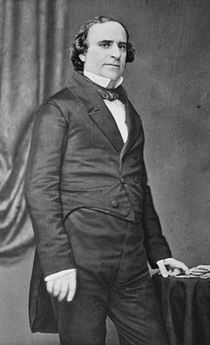
Moshe Eliyahu Levy Yulee (1782-1854) was born in Morocco to a wealthy Sephardic Jewish family. His father was a prominent figure in the Ottoman Empire, and an adviser to the Sultan. Moshe went off on his own across the Atlantic, settling in the US Virgin Islands, and dropping the family name of “Yulee”, now going by Moses Elias Levy. He made his own fortune in the lumber and merchant trades, then moved the whole family to Florida. There, he purchased 100,000 acres of land and established it as a refuge for persecuted European Jews. He also planned for a 50,000 acre “New Jerusalem” in Florida. Levy has been described as a “proto-Zionist”, as he sought to re-establish a Jewish homeland in Israel long before the official Zionist movement began. Though he originally owned slaves, Levy soon joined the anti-slavery movement, and in 1828 published the popular treatise A Plan For the Abolition of Slavery. Levy’s work was instrumental in abolishing slavery in both the United States and across the British Empire. In 1835, Levy’s fortunes soured with the outbreak of the Second Seminole War, which devastated his land in Florida, destroyed the refuge, and strained his finances. In poor health, Levy retired to St. Augustine, Florida, where he slowly rebuilt his wealth.

His son, David Levy Yulee (1810-1886) was elected to the House of Representatives in 1841. When Florida became a state in 1845, he became the first Jew in the US Senate. The following year, he married into a prominent Kentucky family, and to do so, had to convert to Christianity. Though he only did this in name at the request of his wife, the move drove a wedge between David and his father, and the two became permanently estranged. After failing to win re-election in 1850, David turned to business, first opening a sugar plantation, and then spearheading the construction of railroads across Florida. Yulee returned to the Senate in 1855, after his father’s death. When the Civil War began, he joined the Confederates, for which he was imprisoned following the war. After being released, Yulee continued his railroad ventures, and went on to be nicknamed the “Father of Florida Railroads”. The town of Yulee and Yulee County in Florida are named after him, and he was selected as one of the “Greatest Floridians” in 2000.

Words of the Week

You are not as great as you think, and the world is not as bad as it seems.
– Rabbi Wolf of Strikov