In honour of Jew of the Week’s 7th birthday this November, we will feature a month-long series on the most famous (and sometimes infamous) Jewish family of all time: the Rothschilds. This is part three of five. Click here for part one and here for part two.
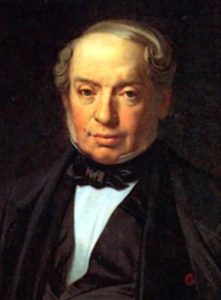
Jacob James de Rothschild
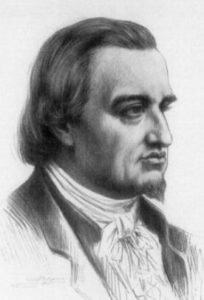
The youngest of Mayer Rothschild’s sons was Jacob “James” Rothschild (1792-1868). He moved to Paris in 1811 and opened a new branch of the family bank in 1817. Jacob play a central role in rebuilding post-Napoleonic War France, and financing the empire’s industrial revolution. He financed some of France’s first railroads and factories, imported tea and other goods, and invested in mining and wine-making. He would become the richest man in the world, and his fortune alone (not including the rest of the family) is estimated to have been over $300 billion in today’s dollars. Jacob, too, was brought into the nobility (becoming “de Rothschild”, while his brothers in the Holy Roman Empire were “von Rothschild”). He served as an adviser to French kings, and was awarded the French Legion of Honour. Jacob also served as an ambassador to Austria. He was a noted philanthropist and arts patron, funding greats like Chopin, Rossini, and de Balzac. He and his wife were French icons, and symbols of culture and sophistication. (When King Louis XVIII refused to host Jacob’s wife because she was Jewish, Jacob stopped doing business with him.) The couple was admired by the French people, and Jacob’s funeral drew countless thousands.
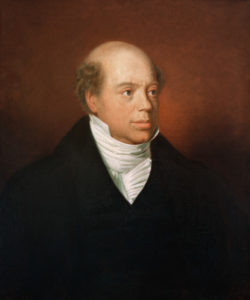
Nathan Rothschild
By far the most famous of the Rothschild sons was Nathan Rothschild (1777-1836). He moved to Manchester in 1798 to start a textiles business before opening a branch of the family bank in London in 1805. In 1809, he switched his focus to dealing gold, and in 1811 won a contract to take care of British payments to their soldiers fighting Napoleon. Nathan won this contract because, unlike other bankers, careful coordination with his brothers allowed him to transport gold safely across war-torn Europe. By 1825, Nathan’s bank was so wealthy and successful that he single-handedly saved the Bank of England from a serious crisis. Nathan, too, was a philanthropist, as well as a social justice advocate, playing a key role in the abolition of slavery in the British Empire. At the time of his death (from an infection), he was the wealthiest man in the world. Nathan is infamous because of a myth that he made much of his fortune by speculating on the London stock exchange one day. Supposedly, he knew that the British had won the Battle of Waterloo before everyone else, and created a false panic by selling all his bonds as if Britain had lost. This led everyone else to sell their bonds, too, before Nathan quickly bought them all for very cheap right before news of Britain’s victory came and bond prices soared. Researchers have traced this legend to an anti-Semitic French pamphlet published ten years after Nathan passed away. It has no historical basis, nor does it make any sense according to both financial and historical experts. Accurate estimates suggest that if Nathan made any money at all from knowing about the Battle of Waterloo, it could not have been more than a million pounds. Nonetheless, the legend persists and is popular among conspiracy theorists. (Nathan did make a fortune in bonds some years after the war.) Interestingly, Nathan also played a critical role in Brazil’s independence from Portugal. His son Lionel, whose life we shall explore next week, continued to run the London branch, and it would go on to become the most successful of them all. Click here to go to Part Four.
Words of the Week
It requires a great deal of boldness and a great deal of caution to make a great fortune; and when you have got it, it requires ten times as much wit to keep it.
– Victor Rothschild, 3rd Baron Rothschild
 Mayer ben Anshel Rothschild (1744-1812) was born in the Jewish ghetto of Frankfurt. His father was a merchant and dabbled in currency exchange. The family had lived in the same house of the Frankfurt ghetto for over a century; a house with a red sign above the door. The family would thus become known as Rothschild meaning “red sign”, referring to that first house, even when they later moved to another property in the ghetto. Although his father wanted him to become a rabbi, Mayer Rothschild became an apprentice of Simon Wolf Oppenheimer, a banker and “Court Jew”. (Some say Mayer had to leave his rabbinic studies after his parents died.) From Oppenheimer he learned the financial business, and become a dealer of rare coins. This brought him into the court of the Prince of Hesse (a duchy within pre-Germany’s “Holy Roman Empire”). By 1785, Rothschild had become one of the Prince’s main bankers. The French Revolution erupted just a few years later, and Britain would handle its hiring of Hessian mercenaries in the conflict through Rothschild. This made Rothschild quite wealthy, and at the turn of the 19th century, he began loaning money internationally. This business was facilitated by the help of his five sons: Nathan in London, Jacob in Paris, Salomon in Vienna, Kalman in Naples, and the eldest son Amschel taking over in Frankfurt. As the family prospered and entered into the nobility, they adopted a coat of arms, the simpler version of which features a red shield with five arrows to represent the five sons (based on the words of Kings David and Solomon in Psalm 127: “Like arrows in the hand of a warrior, so are the children of one’s youth”), and a motto: concordia, integritas, industria, “Unity, Integrity, Diligence”. Mayer Rothschild also had five daughters, and instilled in all ten of his children the importance of maintaining Jewish values. Unlike other wealthy European Jews, the Rothschilds did not assimilate, intermarry, or convert to Christianity. They played a central role in easing the plight of Europe’s Jews, and later in the establishment of the State of Israel. They would amass the largest private fortune in modern history, and possibly of all time. As per Jewish tradition, Mayer and his five sons were generous philanthropists. The Rothschild model of a tightly-controlled family business, with multiple branches established by siblings, inspired many other successful banks and companies, both Jewish and gentile. Mayer Rothschild himself has been described as the “founding father of international finance”, and ranked by Forbes among history’s most influential businesspeople. Next week we will explore the lives and achievements of his sons.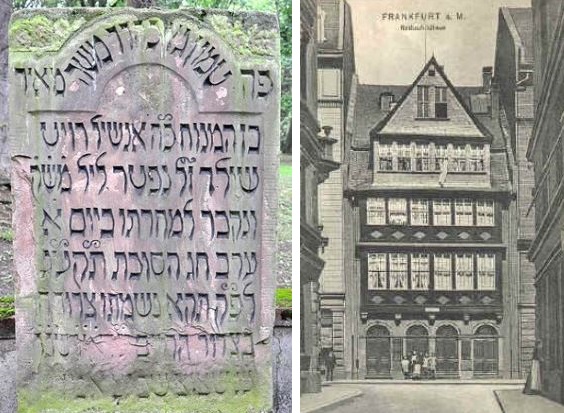
 Michael Bolotin (b. 1953) was born in Connecticut. His grandparents were all Orthodox Jewish immigrants from Russia, and kept a strictly kosher home. Bolotin, however, was more like his liberal parents who, fed up with anti-Semitic discrimination, sought to assimilate into American society and kept a Christmas tree alongside their menorah. This may explain why Bolotin was a trouble maker at his Hebrew school, and got kicked out when he was 13. That same year, he tragically lost his father. Music was one way to cope with the loss. At 16, he was signed to a record deal and dropped out of high school. His first songs didn’t go anywhere, so he joined a heavy metal band which opened for Ozzy Osbourne. Still, he struggled to make a living for a decade. It wasn’t until 1983 that Bolotin (now going by Bolton) had his first hit with a song he co-wrote, then released his breakthrough (fifth) album in 1987. By the late 80s’, Bolton was a household name, and in 1989 he won his first Grammy for “How I Am Supposed to Live Without You”, then a second in 1991 for “When a Man Loves a Woman”. All in all, Bolton produced 20 albums (so far) and sold over 75 million records, with 9 singles hitting number one on the Billboard 100. Bolton also wrote hit songs for other artists like