
Things You Didn’t Know About the Basketball Legend
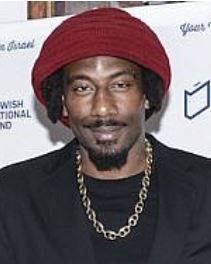
Amar’e Stoudemire (Courtesy: JNF)
Amar’e Stoudemire (b. 1982) was born near Orlando, Florida. He started playing basketball in high school, though he only managed to play two full seasons because his struggling family had to move six times. Despite this, his incredible talents were clear and he was named Florida’s Mr. Basketball. Ranked as the number one prospect in 2002, Stoudemire skipped college to go straight to the NBA, getting drafted in the first round by the Phoenix Suns. In his rookie season, he set a points record and won the NBA’s Rookie of the Year award—the first player straight out of high school to do so. After coming very close to the championship many times in Phoenix, Stoudemire tried his luck with the New York Knicks. There he set a franchise record with nine straight games where he scored over 30 points, then led the team to the playoffs for the first time in nearly a decade. Unfortunately, Stoudemire suffered many injuries, including to his knees, his spinal discs, and even retinal damage to his eye. He retired from the NBA in 2016 after 14 seasons, 6 All-Star appearances, and 15,994 points. Having always known his mother was part of the Black Hebrew Israelites, Stoudemire decided to fulfil an old dream and move to Israel to explore his heritage more closely. Meanwhile, he signed with Hapoel Jerusalem and led the team to an Israeli Basketball championship. After two seasons, Stoudemire retired and soon began the Orthodox conversion process. He completed his conversion last summer, taking on the Jewish name Yehoshafat. At the same time, he returned for one more season with Maccabi Tel Aviv and led them to the 2020 Israeli Basketball championship, also winning the League MVP award. Last October, he was hired by the Brooklyn Nets as an assistant coach. He recently made news when the Nets gave him Shabbat off, so he does not appear on the court from Friday to Saturday evening. Stoudemire has been praised both for his extensive volunteer and philanthropic work, as well as his devotion to Torah and Judaism. Over the course of his career, Stoudemire has also appeared in a number of TV shows and films, had a Nike shoe line and his own clothing line, published a series of children’s books, owns a record label, and a kosher winery called Stoudemire Cellars. He also started an educational program where Black and Jewish youth can learn and play basketball together. Stoudemire continues to learn Torah regularly and serves as an inspirational figure to thousands both on and off the court.
Words of the Week
I was always intrigued with the prophets, I was always intrigued by how these guys carried themselves. How they lived their life, how they were so on point with everything, from a righteous standpoint. And so my mindset was like, ‘How do I get to that level?’ It’s a heavy lift, it’s not easy, I’m not sure it’s possible. And so that is what somewhat gave me my love to continue my search, continue to try to clean myself up, clean my character, understand how to carry myself, how to speak properly, how to not use profanity, how to not say certain words, not speak lashon hara.
– Amar’e Stoudemire

 Irene Sue Kerchek (1924-2020) was born in St. Louis, Missouri. She met her future husband Abraham “Abe” Pollin (1923-2009) when she was just 17. The couple married and settled in Washington, D.C. Abe worked for his father’s construction company before he and Irene started their own business in 1957. Together, they built a prosperous real estate empire, raising up both affordable and subsidized housing projects as well as luxury properties. The Pollins went on to found and own the NBA’s Washington Wizards team, the NHL’s Washington Capitals, and the WNBA’s Washington Mystics, working hard to bring those three clubs to the city. They also built the Capital Center and what is now Capital One Arena (formerly the Verizon Center), and were credited with reviving Washington’s downtown core. In 1963, the Pollins lost their teenage daughter to heart disease, and Irene lost both of her parents to heart disease that same year. She fell into deep depression and, when nothing seemed to help her, decided to go study psychology and social work herself. She went back to university and earned two degrees. Pollin opened two pioneering therapy clinics, and wrote two acclaimed books on mental illness and counseling. Her greatest mission in life, however, was to combat heart disease. In 2008, she donated $12 million to Brigham and Women’s Hospital (of Harvard) to establish a heart wellness program. In 2012, she donated $10 million to Hadassah Medical Center in Israel to create a heart health institute, and another $10 million to do the same at Johns Hopkins University. The following year, she gave another $10 million to establish one more heart health centre in Los Angeles. After discovering that more women died from heart disease than from breast cancer, Pollin started a number of organizations to increase awareness of female heart disease and to get more women screened on time. The most famous of these organizations is Sister to Sister: The Women’s Heart Health Foundation. Through their efforts, and the screening clinics they set up across America, the lives of countless women have been saved. The Pollins were generous philanthropists and gave millions more to many other causes, including Washington’s Sixth & I Historic Synagogue, the National Symphony, and research into brain disease, which ultimately took the life of Abe Pollin. The Pollins had a summer house in Rehovot, Israel, and were close friends of