Tag Archives: London

Jew of the Week: Samuel Gompers

Champion of the Working Class

Samuel Gompers on the cover of TIME Magazine

Samuel Gompers on the cover of TIME Magazine

Shmuel Gompers (1850-1924) was born in London to a Jewish family that immigrated from the Netherlands. At age 10 he was taken out of school and sent to work as a cigarmaker to help his struggling family make a living. After a long day’s work, Gompers would continue his Jewish studies, focusing on the Talmud, which he later compared to studying civil law. Still struggling, the family moved again when Samuel was 13, to Manhattan. The childhood poverty he experienced inspired him to be a champion for the little guy. At 14 he joined the local cigarmakers’ union, while starting a debate club to hone his political skills. By age 25, Gompers was elected president of the local union, and later vice-president of the international union. Under his tenure, sick benefits and death benefits were introduced, along with a shorter (8 hour) work day, fair wages and safe working conditions. Gompers co-founded and headed the American Federation of Labor until his death, by which point it had over 3 million members, making it the largest such federation in the world. During this time, the AFL supported the implementation of a holiday for workers – now celebrated as Labor Day. For the first six years, he did not receive a salary for his work! His extensive knowledge got him appointed to the Council of National Defense during World War I, and in 1919 he participated in the post-war peace process as an official adviser on labor issues. At his death in 1924, Gompers was given a state funeral with thousands coming to mourn his passing. His life-long goal was giving every worker the opportunity for “a decent home, decent food and clothing, and money enough to educate their children”. He served as the central inspiration for generations of labor leaders after him. Across the US, countless streets, parks and squares are named after him, along with a class of navy ships. At his funeral it was said: “his idealism, his unfaltering courage, and love of his fellow-men were nurtured by his Jewish past… He was the pioneer of the American Labor movement and he played a great and honorable part in liberating men from bondage.”


Words of the Week

The desire to be good to all with no restrictions – not in the quantity of those to whom we are good, nor in the quality of the good we perform – that is the essence of the soul of Israel.
– Rabbi Avraham Itzhak Kook

Jew of the Week: Rabbi Abraham Isaac Kook

Rabbi Kook

Rabbi Kook

Avraham Itzhak Kook (1865-1935) was born in what is now Latvia (then part of the Russian Empire). Recognized as a young prodigy, he spent only a year and a half at the famous Volozhin Yeshiva, and yet, it was said that it was worthwhile for the yeshiva to have been founded just for him. After serving as head rabbi of several European towns, in 1904 Kook settled in Israel to become rabbi of Jaffa (Yafo), overseeing predominantly secular Zionists, whom he was able to inspire with Torah, and lead them to incorporate more observance into their lives. World War I broke out while he was on a trip to Europe, preventing him from returning to the Holy Land. Wasting no time, he served as a rabbi in London, England until the end of the war, then returned to Israel and took up the post in Jerusalem. He was instrumental in establishing the Chief Rabbinate of Israel, and saw it as a stepping stone towards reinstating the Sanhedrin. In 1921 he was appointed Ashkenazi Chief Rabbi of Palestine.

Rabbi Kook wrote excessively on Jewish law and exegesis. Many of these profound writings were only published after his death, and continue to make a powerful impact on people around the world. Kook founded Yeshivat Mercaz HaRav (“Centre of the Many”), Israel’s central academy for religious Zionists. He was beloved as a figure who tried to bridge the gaps between various sectors of Jewish society, especially between secular and religious. He also tried to win over the non-Zionist religious groups, and often preached that the re-establishment of the state of Israel was a necessary precursor for the coming of Mashiach. Kook remained totally apolitical, and refused to join any parties, working to unify groups instead of separating them into even smaller factions. His love for the Torah, the land of Israel, and the Jewish nation was renowned, and at his passing, over 20,000 mourners attended his funeral in Jerusalem (out of a total population of roughly 130,000!) He commanded a photographic memory and it was said there was no mystical secret he did not know. Some consider him to be the most influential religious Jewish thinker of the 20th century.


Words of the Week

The truly righteous do not complain about evil, but rather add justice; they do not complain about heresy, but rather add faith; they do not complain about ignorance, but rather add wisdom.
– Rav Kook

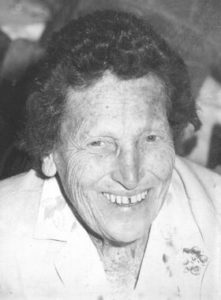
Jew of the Week: Tikvah Alper

Born in South Africa to poor immigrants from Russia, Tikvah Alper (1909-1995) showed a talent for maths and sciences at an early age. At age 20, she traveled to Berlin to work on her doctorate with former Jew of the Week Lise Meitner, where she published an award-winning paper on delta rays. Alper had a son who was born deaf, so she moved to the U.S. to study diligently from the best experts in the field, herself becoming a teacher for the deaf. Returning to South Africa, Alper was a professor at Witwatersrand University, where she became famous for championing black people’s rights, causing her to draw the ire of the government. For opposing apartheid, she lost her position at the National Physics Laboratory, and nearly lost her passport, too. Alper fled to Britain, where she worked for the remainder of her life in a radiobiology lab. It was there that she researched various brain-eating disorders and proposed a new mechanism of disease: an infectious protein. At the time, the idea was laughable, but it has since been proven and confirmed (now called a “prion”), especially after the mad cow disease scare. Alper’s book Cellular Radiobiology became the bible for radiobiologists. All of these things, as well as her iconic feminism, made her a heroic figure for many around the world, and her London home became a meeting place for the best and brightest in the field of radiobiology. Alper enjoyed sailing, and continued to travel the world well into her 80s.

This Friday Night is Tu B’Shvat! Click to Learn More About This Little-Known Holiday


Words of the Week

A person’s main vitality lies in his intellect. One who is not using his intellect to its full potential is considered asleep. Many people who seem to be alive are in fact sleeping their lives away…
– Rebbe Nachman of Breslov