Tag Archives: Jerusalem

Jew of the Week: Rabbi Marvin Hier

The Rabbi at Trump’s Inauguration

Rabbi Hier at Trump’s Inauguration

Moshe Chaim Hier (b. 1939) was born in New York to Polish-Jewish immigrants. At the age of 23, he was ordained as an Orthodox rabbi and moved to Vancouver where he soon took charge of its Congregation Schara Tzedeck. In 1977, Hier moved to Los Angeles and established the Simon Wiesenthal Center, a non-profit dedicated to “confronting antisemitism, hate and terrorism, promoting human rights and dignity, standing with Israel, defending the safety of Jews worldwide, and teaching the lessons of the Holocaust for future generations.” The Simon Wiesenthal Center is now one of the most well-known Jewish organizations in the world, with offices in Toronto, Jerusalem, Paris, Buenos Aires, and across the US. Its Museum of Tolerance welcomes 350,000 visitors a year, and its library holds over 50,000 important volumes. Hier also established the Moriah Films company, which has produced over a dozen films focusing on Jewish history and the Holocaust. Two of these won Academy Awards for Best Documentary. This makes Hier the only rabbi to ever win an Oscar. He is also the only rabbi to be a member of the Academy of Motion Picture Arts and Sciences. Meanwhile, Hier established Los Angeles’ Yeshiva University High Schools and was its dean for many years. He is currently working on a $200 million project to build a Museum of Tolerance in Jerusalem, to open next year, and producing his 16th film, about the life of Shimon Peres. Most recently, Rabbi Hier gave a blessing at President Donald Trump’s inauguration. This made him only the second Jewish religious leader in history to speak at a presidential inauguration, and the first Orthodox rabbi to ever do so. He has been ranked as the most influential rabbi in America, and was once described as being “one phone call away from almost every world leader, journalist, and Hollywood studio head.”

Words of the Week

The bond that has united the Jews for thousands of years and that unites them today is, above all, the democratic ideal of social justice coupled with the ideal of mutual aid and tolerance among all men.
– Albert Einstein
Jews of the Week: Isaac Leeser and Warder Cresson

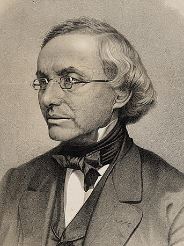
Isaac Leeser

Isaac Leeser

Isaac Leeser (1806-1868) was born in the Germanic kingdom of Westphalia. Growing up, he received both a religious Jewish education, as well as a secular German one, and was fluent in Latin, German, and Hebrew. He immigrated to the United States at the young age of 17 and lived with his wealthy uncle. While working in his uncle’s business, Leeser started to teach Judaism in his local synagogue, and vocally defended his religion when it was under attack in the public sphere. By age 22, he was quite well known, and was invited to take over Philadelphia’s Congregation Mikveh Israel, one of America’s oldest Sephardic synagogues. Leeser introduced American Jewry to the German custom of delivering a sermon between prayers (something now common in all synagogues). He wrote a book about Judaism in 1829 but found no publisher willing to print it. So, he started his own press, establishing the Jewish Publication Society. In 1845, he published his English translation of the Torah – the first by a Jew. Eight years later, he published a complete English Tanakh. This translation was the authoritative Jewish version for decades, and is still widely used today. Leeser helped found some of America’s first Jewish schools, seminaries, and magazines. He was also a civil rights activist and worked hard on behalf of all minorities. He is regarded as one of America’s most important Jewish pioneers.

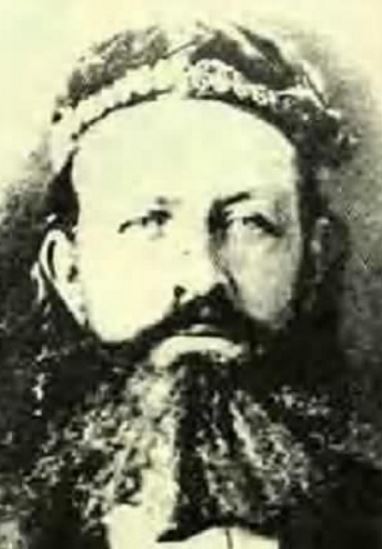
Michael Boaz Israel, aka. Warder Cresson

Michael Boaz Israel, aka. Warder Cresson

In 1840, Leeser met a wealthy farmer named Warder Cresson (1798-1860). Cresson was a very religious Quaker, a preacher and writer. After some discussions with Leeser, Cresson took a deep interest in Judaism. In 1844, he was appointed America’s first consul in Jerusalem. This brought him face-to-face with Judaism and he grew close to Jerusalem’s ancient Sephardic community. He started writing for Leeser’s magazine, The Occident, and even began doing counter-missionary work to stop Christian proselytizing of Jews. In 1848, Cresson converted to Judaism, was circumcised, and took on the Hebrew name Michael Boaz Israel ben Avraham. Upon his return to Philadelphia, his wife divorced him, sued him, and sought to have him declared insane. The case made headlines across the US. Cresson ultimately won the suit, proving his absolute sanity and wisdom. He returned to Jerusalem, married a Sephardic woman and had three kids. In 1852, he established a Jewish agricultural colony – predating the Zionist movement by several decades, and in fact, helping to inspire it. He continued writing on Jewish topics, and died as a respected and prominent leader in Israel’s Sephardic community. His original tomb and burial place on the Mount of Olives was recently rediscovered.

Words of the Week

Just as the olive yields oil for light only when it is pounded, so are man’s greatest potentials realized only under the pressure of adversity.
– The Talmud

Jew of the Week: Ada Yonath

The Woman Who Revolutionized Biochemistry

Yonath at the Weizmann Institute (Credit: Miki Koren)

Yonath at the Weizmann Institute (Credit: Miki Koren)

Ada Yonath (b. 1939) was born in Jerusalem, the daughter of Polish Zionists that immigrated to Israel in 1933. Growing up in poverty, she found solace in books, and was inspired by the Polish-French scientist Marie Curie. Yonath studied chemistry at Jerusalem’s Hebrew University and earned a Ph.D from the Weizmann Institute in 1968. Her focus was on x-ray crystallography, a technique for visualizing biochemical structures. After postdoc studies at Carnegie Mellon and MIT, Yonath returned to Israel to establish the country’s only protein crystallography lab. In the 1980s, she started developing a new crystallography technique that was initially met with a lot of resistance from the scientific community. Yonath silenced her critics with amazing results, and discovered some of the key mechanisms in the body’s production of proteins. By 2001, she unraveled the mysteries of the ribosome, the structure responsible for producing protein from the body’s genetic code. In addition to this, she discovered how dozens of antibiotics impact the ribosome, contributing tremendously to our understanding of antibiotics and drug resistance. The technique she invented, cryo bio-crystallography, is now standard in top biochemistry labs around the world. In 2009, Yonath was awarded the Nobel Prize in Chemistry. That made her the first Israeli woman to win a Nobel Prize, the first Middle Eastern woman to win a Nobel Prize in science, and the first woman to win the Prize in Chemistry in 45 years (and only the fourth overall). Yonath has won a handful of other awards, including the Harvey Prize, the Rothschild Prize, the Wolf Prize, the Albert Einstein World Award of Science, and the L’Oréal-UNESCO Award for Women in Science. Despite being in her 70s, Yonath is still doing very important research in her lab at the Weizmann Institute. Some say she may even be up for a second Nobel Prize! She also hopes to write a novel as soon as she has some extra time. (Click here to see an incredible video of a ribosome working in the body, based on Dr. Yonath’s research.)

Words of the Week

Family is not punishment! When I sit with young people and they say, “You’re a mother and you took care of the kids”, I say: “It’s a privilege.”
– Ada Yonath