Tag Archives: Israel

Jew of the Week: Rabbi Abraham Isaac Kook

Rabbi Kook

Rabbi Kook

Avraham Itzhak Kook (1865-1935) was born in what is now Latvia (then part of the Russian Empire). Recognized as a young prodigy, he spent only a year and a half at the famous Volozhin Yeshiva, and yet, it was said that it was worthwhile for the yeshiva to have been founded just for him. After serving as head rabbi of several European towns, in 1904 Kook settled in Israel to become rabbi of Jaffa (Yafo), overseeing predominantly secular Zionists, whom he was able to inspire with Torah, and lead them to incorporate more observance into their lives. World War I broke out while he was on a trip to Europe, preventing him from returning to the Holy Land. Wasting no time, he served as a rabbi in London, England until the end of the war, then returned to Israel and took up the post in Jerusalem. He was instrumental in establishing the Chief Rabbinate of Israel, and saw it as a stepping stone towards reinstating the Sanhedrin. In 1921 he was appointed Ashkenazi Chief Rabbi of Palestine.

Rabbi Kook wrote excessively on Jewish law and exegesis. Many of these profound writings were only published after his death, and continue to make a powerful impact on people around the world. Kook founded Yeshivat Mercaz HaRav (“Centre of the Many”), Israel’s central academy for religious Zionists. He was beloved as a figure who tried to bridge the gaps between various sectors of Jewish society, especially between secular and religious. He also tried to win over the non-Zionist religious groups, and often preached that the re-establishment of the state of Israel was a necessary precursor for the coming of Mashiach. Kook remained totally apolitical, and refused to join any parties, working to unify groups instead of separating them into even smaller factions. His love for the Torah, the land of Israel, and the Jewish nation was renowned, and at his passing, over 20,000 mourners attended his funeral in Jerusalem (out of a total population of roughly 130,000!) He commanded a photographic memory and it was said there was no mystical secret he did not know. Some consider him to be the most influential religious Jewish thinker of the 20th century.


Words of the Week

The truly righteous do not complain about evil, but rather add justice; they do not complain about heresy, but rather add faith; they do not complain about ignorance, but rather add wisdom.
– Rav Kook
Jew of the Week: Jackie Mason

King of Comedy

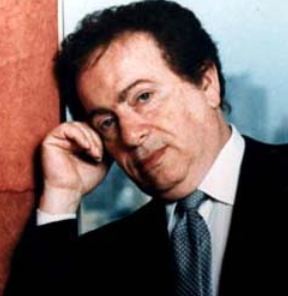
Yacov Moshe Maza aka Jackie Mason

Renowned Comedian Yacov Moshe Maza aka Jackie Mason

World-famous comedian and actor Jackie Mason (b. 1931) was born Yacov Moshe Maza in Wisconsin, and grew up in Manhattan. His father and grandfather were rabbis, and so were his three brothers. At 25, Yacov was ordained as a rabbi, too, though he’d always dreamed of being a comedian. Three years later, he resigned to follow his passion (click here to see Jackie discuss his transformation from rabbi to comedian). He first performed at a New York hotel but was soon let go for ridiculing the audience – something that is central to comedy today but was unheard of at the time. He gained more fame after several acts on The Ed Sullivan Show (including the episode that debuted The Beatles). Mason went on to star in some of the most successful one-man comedy shows on Broadway, including The World According to Me and Politically Incorrect. He also acted in many films and TV shows, and even won an Emmy Award for voicing Rabbi Hyman Krustofski on The Simpsons. Off the stage, Mason has been a vocal supporter of Israel, a hard-liner who opposed the Oslo process, and is a founder of One Jerusalem, an organization that works to ensure the city remains Israel’s undivided capital. A proud Jew, describing himself “as Jewish as a matzah ball or kosher salami”, he filed (and won) a lawsuit against ‘Jews for Jesus’ for using his image, accusing the organization of fishing for converts to Christianity. Mason continues to entertain and enlighten audiences, and now has over 200 video blogs on YouTube, most of which are humorous commentaries on current events and politics.


Words of the Week

We have paralyzed ourselves by our sickening fear of World Opinion, which is why we find it impossible to face one simple fact: We will never win this war unless we immediately threaten to drive every Arab out of Israel if the killing doesn’t stop.
– Jackie Mason

Jew of the Week: Franz Kafka

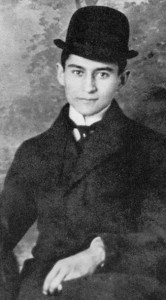
Franz Kafka

Franz Kafka (1883-1924) was born near Prague to Yiddish-speaking parents, the grandson of a shochet (kosher meat slaughterer). His Jewish education culminated with his bar mitzvah, after which he went to the prestigious Altstädter Deutsches Gymnasium. He enrolled to study chemistry in university, but quickly switched to law. After graduating, he worked for various insurance companies – a job that he despised, but which allowed him to make a living. The little time that he had off work he would spend writing. Kafka composed dozens of stories, novels (most of them unfinished), essays, letters and diaries. Ninety percent of these he burned. In his will, he instructed his friend Max Brod to destroy the remainder of his writings. Brod ignored the request, and published them instead. Thus, Kafka was virtually unknown in his own lifetime, but became hugely famous after his death. It is believed that there are still thousands of unpublished Kafka works. He is considered by many to be the greatest writer of the 20th century, and some of his writings have been ranked among the most influential of that century. He has inspired the adjective “kafkaesque”, and has an asteroid named after him. Besides writing, Kafka was an avid swimmer, hiker, and rower, studied alternative medicine, and was a vegetarian. After once seeing a Yiddish play, he immersed himself in Jewish study. In addition to Yiddish, Kafka spoke German, Czech, French, and studied both Hebrew and classical Greek. Towards the end of his life he intended to immigrate to Israel. This wish did not come to be, as Kafka succumbed to tuberculosis at a young age. His three sisters perished in the Holocaust. For what would be his 130th birthday today, he is honoured with a Google Doodle.


Words of the Week

Anyone who keeps the ability to see beauty never grows old.
– Franz Kafka