Two Trailblazing Women

Ruchie Freier
Rachel “Ruchie” Freier (b. 1965) was born in Brooklyn to a Hasidic Jewish family. In high school, she took a course in stenography and went on to work as a legal secretary. She soon became a paralegal, and was her family’s breadwinner, supporting her husband’s full-time religious studies. At 30, she realized she was working under lawyers that were younger and less knowledgeable than she was, and made the decision to go to law school herself. Juggling school, work, and raising six kids, it took Freier ten years to earn a bachelor’s degree in political science and a law degree. She passed the bar in 2006, becoming America’s first Hasidic female lawyer. Meanwhile, Freier was heavily involved in community work, and spent time as an advocate for New York’s oft-misunderstood Hasidic Jews. In 2005, she set up a charity called Chasdei Devorah to support poor Jewish families, and in 2008 co-founded B’Derech to help troubled teens. In 2016, she was elected Civil Court Judge after a tough race. That made her the world’s first female Hasidic judge. Freier also serves on New York’s Criminal Court. Amazingly, she is a licensed paramedic, too, and works with Ezras Nashim, an all-female volunteer ambulance service (a branch of the more famous, all-male Hatzalah). The New York Times has appropriately called her a “Hasidic superwoman”. Freier has won multiple awards, and was recently ranked by the Jerusalem Post among the 50 Most Influential Jews in the World.
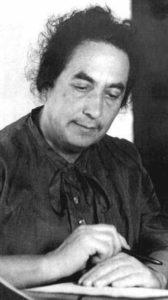
Recha Freier
Ruchie Freier is not to be confused with Recha Freier (1892-1984), also born to a devoutly Orthodox family, in Germany. Recha Freier experienced tremendous anti-Semitism in her youth, and this inspired her to become a Zionist. Her husband was a rabbi in Berlin, while she taught in a high school and spent the rest of her time writing. In 1932, Freier was asked to help five young men who could not get jobs because they were Jewish. Freier had the idea to send the boys to the Holy Land instead to learn farming. She raised the necessary funds and organized their voyage and settlement. Thus was born what would become the Youth Aliyah. The organization would go on to save 7000 young Jews from Nazi Germany and settle them in Israel. Freier coordinated with (former Jew of the Week) Henrietta Szold to make sure the teens were taken care of in their new home. Freier herself escaped Germany in 1940 by crossing the border to Yugoslavia. There, she saved 150 Jewish orphans. All made it safely to Israel in 1941. Two years later, Freier established the Agricultural Training Center to educate impoverished children. She was also an avid musician and pianist, and in 1958 founded the Israel Composer’s Fund. In addition to composing a number of original musical pieces, Freier wrote works of poetry and Jewish folklore. In 1981, she was awarded the Israel Prize for her contributions, the State’s highest honour.
Words of the Week
If you love life, don’t waste time, for time is what life is made up of.
– Bruce Lee
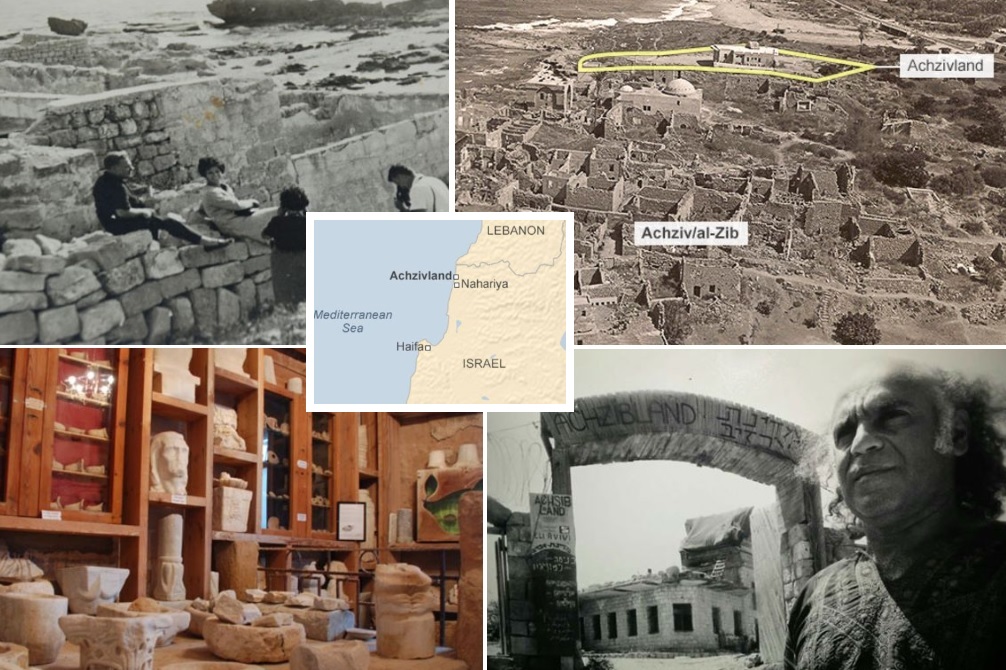
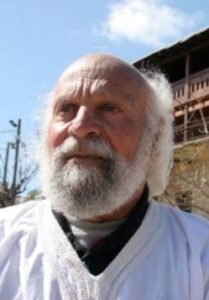 Eli Avivi (1930-2018) was born in Iran and made aliyah to the Holy Land with his family when he was just two years old. As a teenager, he joined Plugat HaYam, or Palyam, founded in 1945 as the navy arm of Palmach, the “special forces” of the pre-IDF Haganah. The primary task of Palyam was to escort and defend Jewish refugee ships coming from Europe, as well as ships containing arms for the young Jewish state. Avivi was one of seventy sailors that facilitated the arrival of 70,000 Jews to Israel over the course of 66 missions. He was also among the four hundred Palyam marines that fought in Israel’s War of Independence. Still drawn to the sea after the battles were over, Avivi became a fisherman. This took him on sailing trips around the world, and at one point he spent a year living in Greenland with the natives. Returning to Israel to visit his family in 1952, Avivi happened upon an abandoned fishing village near the Lebanese border, formerly inhabited by Arabs that had fled during the war. The young sailor settled there, making a living by selling fish to a nearby kibbutz. He eventually got married, and he and his wife continued a quiet, peaceful life mostly removed from civilization. In 1963, the Israeli government decided to turn the entire area into a national park, and sent the couple eviction notices. They battled the government until 1971, when their land was fenced in and their huts bulldozed, causing Avivi to declare independence from the State of Israel! The couple was promptly arrested. Their peaceful protests soon brought international attention, leading to an agreement with the government that resulted in the formation of the micro-state of “Akhzivland”. (The name comes from the archaeological ruins of the Biblical town of Achziv that the village was built upon.) Avivi’s success was partly owed to the support he had from