Tag Archives: IDF

Jews of the Week: Nathan, Benzion and Yoni Netanyahu

Nathan Mileikowsky (1879-1935) was born in what is now Belarus to an Orthodox Jewish family descended from the great Vilna Gaon. When he was ten, he joined the famous Volozhin yeshiva and after eight years of diligent study was ordained as a rabbi. During this time he became drawn to Zionism and soon dedicated his time to the Zionist cause. He traveled across Europe, Russia, and later the United States to raise support for Zionism – becoming one of the world’s most popular Zionist speakers – as well as to raise money for the Jewish National Fund. In 1920, Mileikowsky made aliyah to Israel. He headed a school in Rosh Pina, promoted settlement of the Galilee, and wrote articles for the Hebrew press – often under the pen name “Netanyahu”. He continued to tour globally, at one point giving over 700 lectures in under 9 months, and publishing some of these talks in a popular book. Towards the end of his life, Mileikowsky settled in Herzliya and established a farm.
Benzion Netanyahu

Benzion Netanyahu

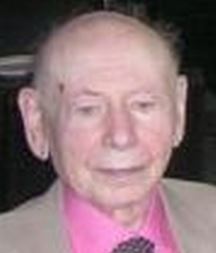
His son, Benzion Mileikowsky (1910-2012), was born in Warsaw while Nathan was head of its Hebrew Gymnasium. Growing up in Israel, he adopted his father’s pen name “Netanyahu”. Benzion studied at the Hebrew University in Jerusalem, taking on a more hard-line approach to Zionism. He became editor of a number of Zionist newspapers, and later the chief editor of the Encyclopaedia Hebraica. In 1940, Benzion moved to New York to build American support for the Jewish state, serving as executive director of an American Zionist group. Later on, he became a professor of Judaic studies and medieval history at Cornell University. Benzion published five books on Jewish history, and edited a number of others. His three sons are: Iddo, a doctor and author; Benjamin, Israel’s longest-serving prime minister; and Yoni, the eldest son.

Last known photograph of Yoni Netanyahu

Last known photograph of Yoni Netanyahu

Yonatan “Yoni” Netanyahu (1946-1976) was born in New York, went to high school in Pennsylvania, and studied at Harvard. He first enlisted in the IDF in 1964, and fought in the Six-Day War, getting wounded while rescuing a soldier behind enemy lines. A few years later, he joined Israel’s special forces unit, Sayeret Matkal, and by 1972 became its deputy commander. For his heroic service during the 1973 Yom Kippur War he was awarded a distinguished medal. In 1976, now commander of Sayeret Matkal, Yoni led Operation Entebbe, successfully rescuing over 100 Israeli hostages held in Uganda. Sadly, Yoni was the mission’s sole casualty, and passed away during the flight back home. In 1980, his personal letters were published, and were described as a “remarkable work of literature”. Both a film and play have recently been made about his life.

Words of the Week

God treats a person the same way they treat their children.
– Rabbi Shlomo of Karlin

Jew of the Week: Isaac Herzog

Isaac Herzog

Isaac Herzog

Yitzhak Herzog (b. 1960) was born in Tel Aviv to a father from Ireland and mother from Egypt. His grandfather was once the Chief Rabbi of Ireland, and the Ashkenazi Chief Rabbi of Israel between 1936 and 1959. His uncle was the great Israeli politician Abba Eban. Meanwhile, Herzog’s father was an IDF general who also served as Israel’s sixth president between 1983 and 1993, as well as Israel’s Representative to the U.N. During his term in the latter position, the family lived in New York, where Isaac went to the Modern Orthodox Yeshivat Ramaz school. Herzog also studied at Cornell, New York University, and Tel Aviv University. During his army service, he was an intelligence officer with Unit 8200, the IDF’s largest unit, often compared to the American NSA. Herzog continues to serve in the military as a reservist. After completing his education, he worked in his father’s law firm. His first foray into politics was as a secretary in Prime Minister Ehud Barak’s cabinet between 1999 and 2001. He then chaired Israel’s Anti-Drug Authority until 2003, when he won a seat in the Knesset and was appointed Minister of Housing and Building. Since then, he has held a number of other ministerial posts, including Minister of Tourism, Social Affairs, Diaspora, and Welfare & Social Services. In 2013, he was elected leader of the Labor Party and thus became Leader of the Opposition. One of his first moves was meeting with Palestinian President Mahmoud Abbas and announcing his support for a two-state solution. For yesterday’s elections, Herzog joined his party with Tzipi Livni’s ‘Hatnua’ to form the ‘Zionist Union’. Though hailed by many as being the clear favourite in the elections and unseating Netanyahu, the Zionist Union ended up winning only 24 seats to Likud’s impressive 30. Herzog has stated that he will not be part of the coalition government, and will continue as Leader of the Opposition.

UPDATE: After serving as the head of the Jewish Agency, Herzog became President of Israel in July 2021.

Words of the Week

I don’t speak because I have the power to speak; I speak because I don’t have the power to remain silent.
– Rabbi Abraham Isaac Kook

Jew of the Week: Ofra Haza

Ofra Haza

Ofra Haza

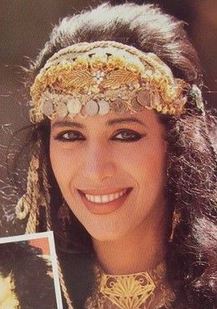
Bat-Sheva Ofra Haza (1957-2000) was born in Tel-Aviv to Yemenite Jewish parents, the youngest of nine children. Her talent was first discovered in her youth when she performed with a small theatre troupe. After her military service was complete, Haza officially began her musical career. Her first album quickly went gold, as did her two follow-up albums. In 1983, she was runner-up at the Eurovision Contest, skyrocketing her fame, and giving her next two albums platinum status. She was voted Israel’s “Female Vocalist of the Year” four times in a row. By the late 80s, her fame had spread internationally, particularly for her ‘Yemenite Songs’ album, and its single “Im Nin’alu” (written by 17th-century Rabbi Shalom Shabazi). Her unique mix of Israeli, Arabic, and traditional Jewish music soon topped the Eurochart, and she was even nominated for a Grammy in 1992. Haza collaborated and performed alongside popular artists like Paula Abdul, Michael Jackson, Sarah Brightman, and Iggy Pop, and many others have done covers of her songs, including Madonna and Led Zeppelin. She also voiced Moses’ mother Yocheved in The Prince of Egypt, and sang the hit song from the movie, ‘Deliver Us’, in 17 languages. (It is said that the film artists were so struck by Haza’s beauty that they decided to sketch the character Yocheved to look like her.) Haza also sang on the soundtracks of at least seven other movies. All in all, she brought forth an incredible 24 solo albums. Sadly, Haza died fifteen years ago this week, at just 42 years of age, while in the midst of working on another album. It was later revealed that the likely cause was AIDS-related, which many believed she contracted from her husband. (Her husband said it was from a blood transfusion during a miscarriage, though he himself was found dead shortly after, possibly from a drug overdose). Beloved by Israelis and fans around the world, her music continues to inspire, and she is still often described as the “Madonna of the East”. Tel-Aviv’s Gan Ofra park is named in her honour.

Words of the Week

I don’t know what I would have done without believing in God. His support gives me power and energy to continue to be optimistic, to smile, not to be depressed. Sometimes, if things are not going so well, I don’t cry. I say maybe it’s meant to be…
– Ofra Haza