First Ladies of the IDF
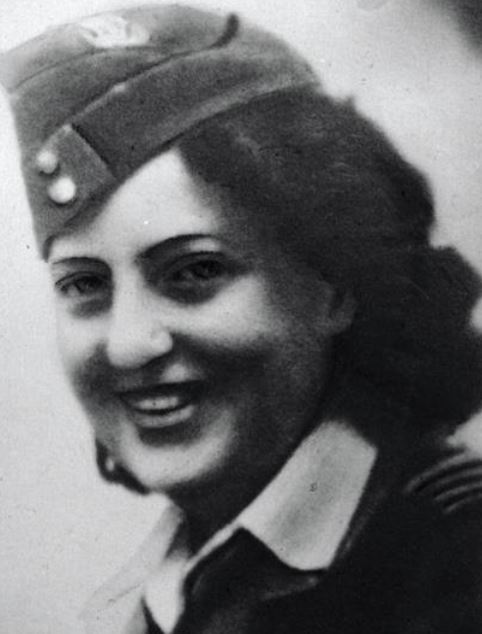
 Sara “Surika” Braverman (1918-2013) was born in Romania. She joined Hashomer Hatzair, the Zionist youth movement, when she was just 9 years old. She made aliyah at 20 and co-founded Kibbutz Shamir in the Galilee. She served with the pre-IDF Haganah, and then joined its elite special forces unit, the Palmach. During World War II, she agreed to join a group of soldiers to form a “Jewish commando” unit that would parachute into Nazi-occupied Europe with the British Special Operations Executive (SOE). The mission was to go undercover and assist in underground operations while rescuing Allied pilots and helping Jews escape. Out of 240 that volunteered, 110 were taken for training in Egypt, and 33 were ultimately selected, including Braverman.
 Another inductee was Hanna Szenes (1921-1944), originally from Hungary. Her parents noted her bright mind early on, and put her in a prestigious private school. However, Jewish students had to pay triple the tuition, and Szenes nearly dropped out because she couldn’t afford it. (The school later reduced her tuition as she was a gifted student.) Such discrimination led her to become a passionate Zionist. Upon graduation, she made aliyah and studied at the Nahalal Girls’ Agricultural School. Szenes soon joined a kibbutz, as well as the Haganah. In 1943, she joined the British Women’s Auxiliary Air Force and became a paratrooper. She was then recruited by the SOE and met Sara Braverman. In March of 1944, they were air-dropped in Yugoslavia. Their mission to go into Hungary was called off, but Szenes went anyway with part of the group. They were captured and tortured. Szenes refused to give up any information, and was ultimately executed by firing squad. Her remains were returned to Israel in 1950, and her diary and inspiring poems (in both Hebrew and Hungarian) were posthumously published and became hugely popular. Meanwhile, Braverman had stayed behind and joined Josip Tito’s underground partisans. When her mission ended, she was smuggled out through Italy and returned home. At the start of Israel’s War of Independence, Braverman founded the IDF Women’s Corps at the request of Chief of Staff Yaakov Dori. She recruited 32 other women and the group trained together in Tel Aviv. She went on to promote IDF service among Israeli women for decades to come, and is today known as the “IDF’s First Lady”.
Words of the Week
The gravest sin for a Jew is to forget what he represents.
– Rabbi Abraham Joshua Heschel

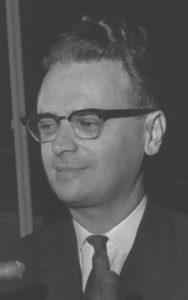 Ferenc Hoffman (1924-2005) was born in Budapest, Hungary to a secular Jewish family. He loved to write from a young age, and won a prize for a novel he wrote while still in high school. He was also an avid chess player. During World War II, he was first expelled from university before being imprisoned at a number of concentration camps, ending up in the Sobibor death camp. One of the ways he survived is by challenging the guards to chess matches. Another is by maintaining his sense of humour. After the Holocaust, he went by the name Franz Kishunt, studying sculpting and art history while also writing satire. In 1949, he escaped communist Hungary and made aliyah, becoming “Ephraim Kishon”. He was a passionate Zionist and would staunchly defend the State of Israel for the rest of his life—often being disparaged by the media for his hardline views. Within two years of settling in the Holy Land, Kishon was fluent in Hebrew (he literally hand-copied an entire dictionary) and began writing satire for a number of papers. His most famous column was Had Gadya in the Ma’ariv newspaper, which he wrote almost daily for over 30 years. Kishon soon became Israel’s greatest and most famous humourist. He also wrote popular plays, an opera, and books that have been translated into some 40 languages, including So Sorry We Won! about the Six-Day War. In the 1960s, Kishon entered the world of film. He wrote, directed, and produced five movies, the first being the critically-acclaimed Sallah Shabbati, highlighting the struggle of Mizrachi Jewish refugees to Israel. The film won a Golden Globe and was nominated for an Oscar, making Kishon the first Israeli with that distinction. (The film also launched the international career of Israeli actor Chaim Topol, most famous for portraying Tevye in Fiddler on the Roof.) Kishon’s fourth film, The Policeman, also won a Golden Globe and was nominated for an Oscar. Not surprisingly, Kishon has been credited with opening up Israeli cinema to the world, and paving the path to Hollywood for Israelis. He won a long list of awards, including the Bialik Prize and the Israel Prize. He was a billiards champ, a pioneer in the field of computer chess, and even created a board game (“Havila Higiya”) once popular in Israel. Kishon has been called the “father of Israeli satire”, and inspired an entire generation of Israeli humourists.