The Rabbi Who Marched With Martin Luther King Jr.
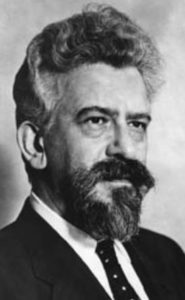
Rabbi Heschel
Avraham Yehoshua Heschel (1907-1972) was born in Poland to a long line of Hasidic rabbis from both his father’s and mother’s side. He was named after his ancestor, the Apter (or Apatower) Rebbe. After receiving semicha (rabbinic ordination) himself, Rabbi Heschel decided to pursue secular studies at the University of Berlin. (There he briefly crossed paths with three other future great rabbis: Yitzchak Hutner, Joseph B. Soloveitchik, and the Lubavitcher Rebbe.) While earning his Ph.D in philosophy, Heschel also studied at Berlin’s Reform seminary and received a liberal rabbinic ordination to go along with his Orthodox one. Meanwhile, he was part of a Yiddish poetry club and published his own book of Yiddish poems in 1933. Heschel was arrested by the Gestapo in 1938 and deported back to Poland. He moved to London just six weeks before Poland was invaded by the Nazis. (His mother and three sisters perished in the Holocaust.) Heschel eventually settled in New York. He first worked at the (Reform) Hebrew Union College for five years before switching over to the (Conservative) Jewish Theological Seminary. There he spent the rest of his career as a rabbi and professor of Jewish ethics and Jewish mysticism. Despite working at these institutions, Heschel never identified himself with any particular Jewish denomination, and was himself strictly Torah-observant. His discourses often weaved together Biblical, Kabbalistic, and Hasidic teachings. He especially focused on the ancient Hebrew prophets, and sought to revive their message in healing today’s world. Because of this, he was an active civil rights and peace activist. Heschel famously marched alongside Martin Luther King, Jr. in Selma. Later that year, he presented King with the ‘Judaism and World Peace Award’. The two formed a very close friendship. Heschel also wrote numerous books, including five bestsellers. These books have been credited both with bringing countless Jews back to traditional observance, as well as opening up the study of Judaism to the wider world. Heschel worked hard to build bridges between Jews and gentiles. He represented the Jewish world at the Second Vatican Council between 1962 and 1965, successfully getting the Catholics to formally abandon the belief that Jews were responsible for Jesus’ crucifixion—and therefore that all Jews are “accursed”—and to remove all prayers derogatory to Jews. Heschel is considered one of the most influential Jews of the 20th century, and remains among the most widely read and studied Jewish philosophers and theologians. Today, the 18th of Tevet, is his yahrzeit.
Words of the Week
Prophecy is the voice that God has lent to the silent agony, a voice to the plundered poor, to the profane riches of the world. It is a form of living, a crossing point of God and man. God is raging in the prophet’s words.
– Rabbi Abraham Joshua Heschel
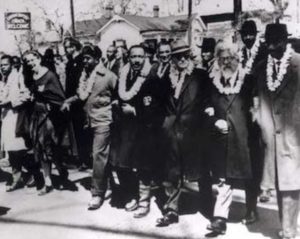
Rabbi Abraham Joshua Heschel (second from right) with Martin Luther King Jr. marching on Selma in 1965.
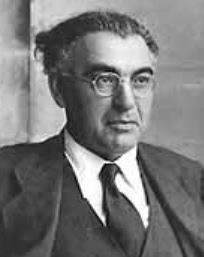
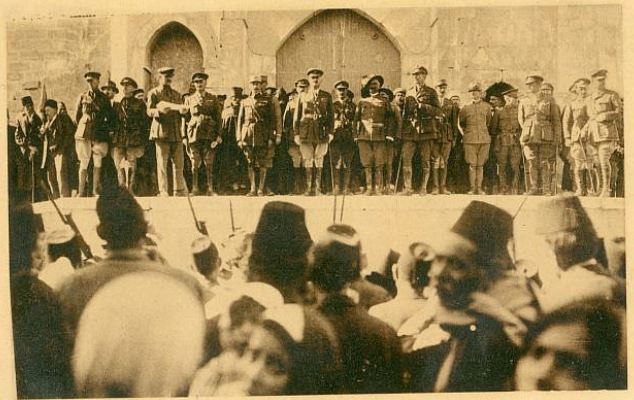
 Abraham Tzvi Idelsohn (1882-1938) was born in Latvia to a religious Jewish family. He studied to be a synagogue cantor. At 27, he made aliyah to Israel and worked as a musician and composer. In 1919, he opened a Jewish music school. A few years later, he left for Ohio where he served as professor of Jewish music at Hebrew Union College, the major seminary of Reform Judaism. Between 1914 and 1932 he published his ten-volume magnum opus, Thesaurus of Hebrew Oriental Melodies. Many consider him “the father of Jewish musicology”. His most famous melody is undoubtedly ‘Hava Nagila’. In December of 1917, British army general Edmund Allenby defeated the Ottomans and conquered the Holy Land for Great Britain. The Jews of Israel were elated, and celebrated the general’s arrival in Jerusalem. They asked Idelsohn to compose a song for the special occasion. Idelsohn remembered an old happy tune he had adapted from a Hasidic niggun. The song was a hit. A few years later, he asked his music class to write words for the song.
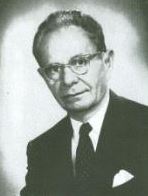 A young Moshe Nathanson (1899-1981) was in that class, and wrote a couple of simple lines based on Scriptural verses from Psalm 118. The rest is history. Nathanson was born in Jerusalem, the son of a rabbi. In 1922 he moved to Canada and double-majored in law and music at McGill University. He ended up studying at what is now the prestigious Julliard School of Music in New York. From there, he was hired to be the cantor of the first Reconstructionist Synagogue, and served in that role for the next 48 years. He wrote an important four-volume tome of liturgical songs. Nathanson also spent 10 years broadcasting Jewish music on American airwaves (“Voice of Jerusalem”) and dedicated much of his life to promoting Jewish folk music. Today, Nathanson’s and Idelsohn’s ‘Hava Nagila’ is the most recognizable Jewish/Hebrew song in the world, and a staple of every bar mitzvah and wedding. There is even a full-length documentary about it, called Hava Nagila (The Movie). This past year marked the song’s centennial anniversary.