Three Renowned Scientists

Hermann Minkowski
Hermann Minkowski (1864-1909) was born in what is now Lithuania, then part of Russia, and previously a part of Poland, to a wealthy Jewish family. His father was a merchant who paid for the construction of the famous Kovno Synagogue. In 1872, the Minkowskis fled the persecutions of the Russian Empire and settled in Germany. Hermann Minkowski went on to study mathematics and physics. In 1883 he won the Mathematics Prize of the French Academy of Sciences. He got his PhD two years later and taught at the Universities of Bonn, Konigsberg, Gottingen, and Zurich (where he was Albert Einstein’s teacher). Minkowski solved a number of big math problems, and actually improved upon Einstein’s theory of relativity, coming up with what is now called “Minkowski space-time”. He gave the mathematical proof for unifying space and time into a singular space-time continuum. Sadly, Minkowski met an untimely death at a young age from sudden appendicitis.
Oskar Minkowksi
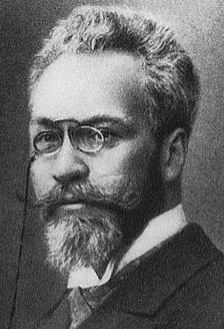
His older brother was Oskar Minkowski (1858-1931), who studied biology and medicine. He went on to become a professor at the University of Breslau. (Since Jews were barred from holding such positions at the time, Minkowski had to nominally convert to Christianity.) In 1889, Minkowski did a number of operations on dogs and showed the link between the pancreas and diabetes. Together with Josef von Mering, Minkowski discovered how the pancreas controlled blood sugar levels, which later led to the discovery of insulin. Today, the Minkowski Prize is awarded each year for breakthroughs in diabetes research. His son was Rudolph Minkowski (1895-1976), who studied astronomy. He did important work dealing with supernovae, and later became the head of the famed Palomar Observatory, where he discovered a number of asteroids and nebulae. He also made important contributions in astrophysics, and won the Bruce Medal in 1961 for outstanding lifetime achievement in the field. The Minkowski Crater on the moon is named after him.
Can Jewish Homes Have Christmas Trees?
Words of the Week
In God there is no time or beginning to start, for He always existed and is
everlasting and in Him there is no beginning or end at all.
– Rabbi Chaim Vital, Etz Chaim
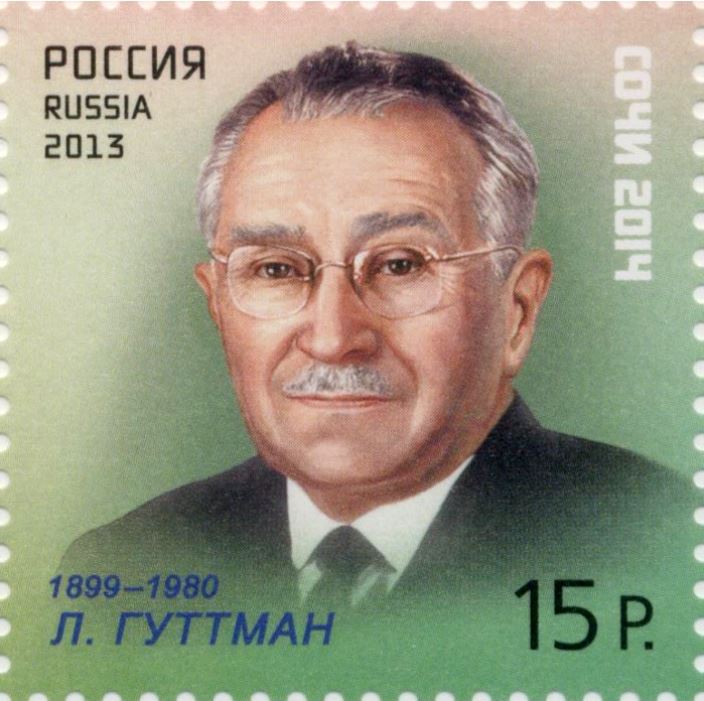
 Ludwig Guttman (1899-1980) was born to a German-Jewish family in what is now Poland. After serving in World War I, he volunteered at a hospital and first encountered a paraplegic patient. This inspired him to go to medical school and he went on to become a renowned neurosurgeon, specializing in spinal cord injuries and paralysis. He also taught at the University of Freiburg, where he supervised a Jewish fraternity that focused on fitness and physical training to give Jewish students more strength and confidence in the face of rampant anti-Semitism. When the Nuremberg Laws were passed by the Nazis, Guttman was stripped of his job and title. He was given an inferior position at the Breslau Jewish Hospital, where he eventually became the medical director. During Kristallnacht, Guttman witnessed the desecration of his synagogue and the abuse of his fellow congregants. That night, he admitted 64 Jewish patients that took refuge in his hospital, and was able to save 60 of them from deportation by the SS agents that came the next day. The following year, the Nazis gave him a visa and sent him on a medical mission to Portugal. Guttman never returned to Germany, and settled in England instead. He joined the Nuffield Department of Neurosurgery in Oxford. Guttman came up with the idea of turning paraplegic patients over in their beds every two hours to prevent bed sores, a small move that drastically cut the mortality rate. In 1943, the Royal Air Force asked Guttman to found and head the National Spinal Injuries Centre at Stoke Mandeville Hospital to look after injured pilots who commonly had spinal problems. It was here that Guttman realized how sports could be a powerful tool for rehabilitation. In 1948, he organized the first Stoke Mandeville Games for disabled war veterans, a huge success. Four years later, he turned it into an international event, and in 1956 was recognized by the IOC (International Olympic Committee) for his pioneering work. The Stoke Mandeville Games became an official part of the 1960 Rome Olympics, and by 1984 was known as the Paralympic Games. (When host city Mexico refused to hold the games in 1968, Guttman arranged for them to be held in Israel). Guttman founded what would become the English Federation of Disability Sport, as well as the International Spinal Cord Society. He was the first editor of the scientific journal Spinal Cord. The Guttmann Institute in Barcelona is named after him, as is the Ludwig Guttmann Prize awarded by the German Medical Society for Paraplegia. He was the subject of a BBC documentary called The Best of Men, and was knighted by Queen Elizabeth II in 1966. There are currently over 4400 athletes competing at the Tokyo Paralympic Games, the largest ever.