
Tag Archives: German Jews

Jew of the Week: Samuel Ullman

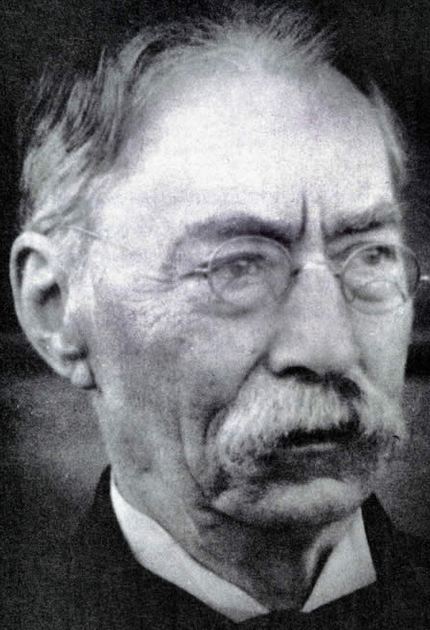
Samuel Ullman (Photo Credit: likesuccess.com)

Samuel Ullman (Photo Credit: likesuccess.com)

Shmuel Ullman (1840-1924) was born in Hechingen, Germany. Due to persecutions of Jews in the region, his family fled to the US in 1850, settling in Mississippi. Ullman spent much of his youth working in his father’s butcher shop. The Civil War broke out when Ullman was just 21, and as a citizen of Mississippi, the young man served in the Confederate Army. Following the war, Ullman got married and started a dry goods business. He became active in his town’s political and religious life, often devoting his time to the needs of the community. He then moved to Alabama and started a new hardware business. Together with his wife, they founded a hospital for the needy. Ullman also served on the Board of Education, was a key civil rights activist, and fought tirelessly to bring equal education for African-American children. His efforts led to the first free public school for blacks. At the same time, he served as the president and unofficial rabbi of Temple Emanu-El in Birmingham. When he finally retired, Ullman devoted his time to writing. The most famous of his essays and poems is titled “Youth”. It was the favourite poem of American General and World War II hero Douglas MacArthur, who credited the poem with getting him through the horrors of the war. MacArthur had it framed and hanging in his Tokyo office, and introduced the poem (and its poet) to the Japanese. Many Japanese, too, were given hope by those words, ultimately making Ullman one of the most popular poets in Japan – even moreso than in America! It was the same poem that inspired Konosuki Matsushita to start a business despite his advanced age, giving birth to Panasonic. Kim Dae Jung often quoted the poem in his successful campaign to become President of South Korea, as did Robert F. Kennedy, and countless other noted figures around the world. Seventy years after Ullman’s passing, his home was turned into a museum by the University of Alabama and the Japan-America Society.

Words of the Week

Youth is not a time of life; it is a state of mind…
… Nobody grows old merely by a number of years. We grow old by deserting our ideals…
… Years may wrinkle the skin, but to give up enthusiasm wrinkles the soul…
– Verses from Samuel Ullman’s “Youth”

Jew of the Week: Fritz Haber

Fritz Haber

Fritz Haber

Fritz Haber (1868-1934) was born to a traditional Jewish-German family in what is today Poland. He studied chemistry in Berlin, receiving his doctorate in 1891 and then going to apply his expertise in his father’s successful dyes and pharmaceuticals business. The two didn’t work well together, though, and Haber returned to academia. (In order to obtain a higher position at a time when Jews were barred from such posts, Haber nominally converted to Christianity.) His research in organic chemistry, electrochemistry, dye technology, gasses, and textiles brought him a great deal of recognition. In 1898 he was made an associate professor, and by 1906 a full professor at Karlsruhe University, among the most prestigious schools in Germany. It was there that Haber made his biggest breakthrough. Together with Carl Bosch, he invented a process that would quickly and cheaply produce ammonia (the key component of fertilizer) from abundant atmospheric nitrogen. Until then, ammonia had to be mined from very limited reserves. Today, over 100 million tons of ammonia is made annually using the “Haber Process”, helping to feed half of the world’s population. Haber won the 1918 Nobel Prize for this work. Unfortunately, Haber also applied his know-how to less honourable endeavours. Aside from the fact that ammonia is a central ingredient of explosives, too, and the Haber Process helped to arm the German military, Haber headed the Ministry of War’s Chemistry Section during World War I, developing gasses for chemical warfare (as well as the gas masks to protect from them). To be fair, many of the world’s top chemists during this time period worked on chemical warfare to assist in their nation’s war effort. As Haber himself said, “During peace time a scientist belongs to the World, but during war time he belongs to his country.” His wife did not agree, and committed suicide after failing to convince him to abandon his project. After the war, Haber started a company that produced pesticides. Incredibly, their most famous product was Zyklon B, later used in the gas chambers of the Holocaust. Haber fled Germany when the Nazis came to power. He accepted a position in what would later be the Weizmann Institute in Israel, but passed away on the journey there. Few people have at once been able to cause both so much harm and so much good. While half of the world’s food production today depends on the Haber process, so do much of its explosives, and Haber is often called “the father of chemical warfare”. Haber’s work simultaneously brought death to millions of people, and life to millions more.

Words of the Week

When God desired to create man, Truth said: “He should not be created, for he is full of lies.” Kindness said: “He should be created, for he is full of kindness.”
– Midrash Rabbah, Bereshit 8:5

Jew of the Week: Hilik Magnus

“The Godfather of Search & Rescue”

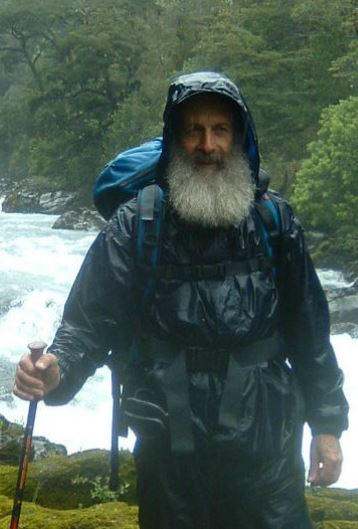
Hilik Magnus (Courtesy of Hilik Magnus and Times of Israel)

Hilik Magnus

Yechiel “Hilik” Magnus (b. 1949) was born in Sweden to a German-Polish-Jewish family that moved to Israel while he was still an infant. Magnus grew up in the Holy Land, and served in the IDF as an elite paratrooper, as well as with the special forces, and later with the Mossad. After his military career, he worked as the director of nature conservation in Israel’s southern regions. During an Israeli-Japanese cultural project, Magnus found a new passion in traveling to the Far East, and toured the region extensively. Due to his intense military and intelligence training, Magnus was soon involved in a number of rescue missions to save Israeli backpackers trapped in Asia. By 1994, he turned this into a full-time job, creating an international search and rescue team that works with insurance companies and worried parents. He has helped bring thousands of families back together, earning the nickname of Israel’s “national rescuer”. These missions have included saving people from natural disasters, accidents, druggings, hostage situations, and even freeing Israelis from prison. Several years ago, he tracked down the body of a young man missing for over a month in Brazil. Most recently, he journeyed to Nepal to help those trapped in the snowstorm that killed dozens. His expertise makes him sought out by various governments and organizations all over the world. He is the first man Israeli parents call when their children abroad are in trouble. Soon, it won’t be just Israeli parents, as Magnus has grown his search and rescue team, and intends on offering these services to any family in need of assistance. Despite being in his mid-60s, Magnus still leads even the most difficult of missions.

Words of the Week

Climb mountains not so the world can see you, but so you can see the world.
– David McCullough Jr.