The First Woman of Finance
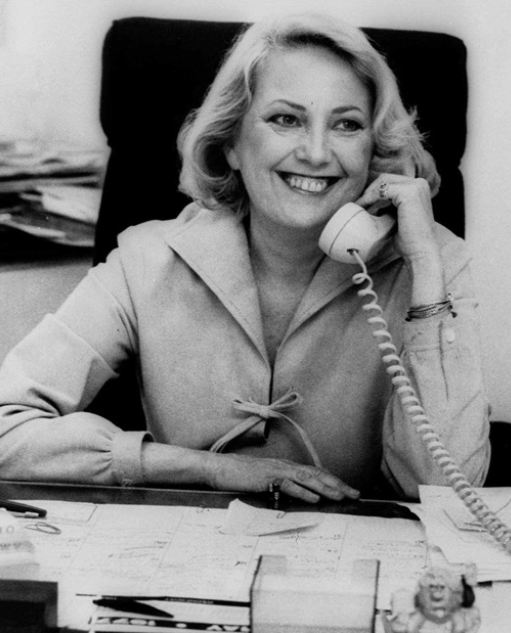
Muriel Siebert – the First Woman of Finance
Muriel Faye Siebert (1928-2013) was born to a Jewish family in Ohio. At 22, having dropped out of university, and with just $500 in hand, she moved to New York City. Siebert got a job on Wall Street making $65 a week, and quickly moved up the ranks. Frustrated that she earned only a fraction of what her male colleagues did, she decided to buy her own seat in the New York Stock Exchange (with a price tag of $445,000). After two years of hard effort, during which time she faced severe sexism and anti-Semitism, Siebert became the first woman to do so, and the first woman to own a stock brokerage. She would remain the only such woman for 10 years (among over 1300 males!), and continued throughout to fight for equal rights – not only in salaries and opportunities, but even basic necessities like a ladies bathroom. In 1977, Siebert was appointed New York’s Superintendent of Banks (another first), overseeing over $500 billion in finance. Under her watch, not a single New York bank failed, at a time when a great many others did. From there, Siebert ran for the Senate, but was unsuccessful. She returned to her brokerage and continued working into her old age. Both a feminist and a great philanthropist, Siebert gave millions of dollars to the cause, helping countless women open their own businesses and find success in the world of finance. She served as president of New York Women’s Agenda, developing a popular program called ‘Financial Literacy for Women’ (which was later adopted to New York’s high school curriculum). Siebert was awarded 19 honorary doctorates, and was elected to the National Woman’s Hall of Fame. Sadly, the ‘First Woman of Finance’ passed away last Saturday after a battle with cancer. Click here to see a recent interview with Muriel Siebert.
Words of the Week
In youth, one learns to talk; in maturity, one learns to be silent. This is man’s problem: that he learns to talk before he learns to be silent.
– Rabbi Nachman of Breslav
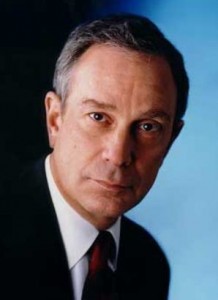 The 10th richest person in the U.S., Michael Rubens Bloomberg was born in Massachusetts, the grandson of immigrants from Europe and Russia. In the 1970s he worked for a Wall Street firm where he learned that information is the key to success, and people are willing to pay for it. So, when the company he worked for was bought out, he used his severance money to start a company called Market Systems, which built terminals that gave their users on-the-fly and up-to-date financial information, presented in various graphs and charts to make it simple to understand. The company started selling its terminals in 1982 and they were an instant hit. By 1990, over 8000 ‘Bloomberg’ terminals were in use around the world. Today, that number has risen to 310,000, and Bloomberg LP also includes a news channel, radio stations, magazines (such as BusinessWeek) and software. Michael Bloomberg himself left the helm of the company to become popular mayor of New York City. His mayoral salary is a symbolic $1. A mayor of the people, Bloomberg often rides the NYC subways to work. More impressively, The Chronicle of Philanthropy lists him as the leading individual donor in the U.S. for two years in a row. Bloomberg has donated hundreds of millions of dollars to hospitals, schools, environmental causes, and scientific research, as well as the arts. Many of his contributions are anonymous. He recently pledged another $500 million together with Bill Gates. Some have stated Bloomberg is the greatest contributor to higher education institutions in history, donating over $800 million to Johns Hopkins alone. All of these factors may be why Bloomberg has been elected to a third term as mayor, despite the two-term limit. And some say he will be president in the near future. If so, it would make him the first Jewish Commander-in-Chief.