
Founder of Positive Psychology
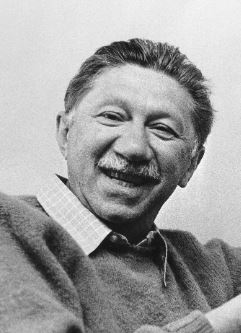 Abraham Harold Maslow (1908-1970) was born in Brooklyn to Jewish-Russian immigrant parents from Kiev. Maslow grew up in poverty and faced a great deal of antisemitism. He wasn’t happy at home either, and spent most of his time at the library reading. In high school, he was the editor of the school’s Latin and physics magazines. Maslow went on to study at City College of New York, and then took up psychology at the University of Wisconsin, where he did experiments and studies on primate behaviour. He moved on to Columbia University, where he worked with Alfred Adler, then taught at Brooklyn College and later at Brandeis University. After World War II, distraught by the Holocaust and the ravages of war, he switched his focus to mental health and human potential, founding a new branch of psychology called humanistic psychology, or positive psychology. The core idea behind humanistic psychology is that every person has the innate ability to grow, heal, and attain happiness and self-actualization. The job of the therapist is only to remove the obstacles that are holding a person back from achieving those goals. As Maslow described it: “Freud supplied us the sick half of psychology and we must now fill it out with the healthy half.” This inspired other psychologists and researchers like Carl Rogers, who pioneered client-centered therapy, and Martin Seligman, who coined “learned helplessness” and proposed Well-Being Theory. The most famous result of Maslow’s work was the Hierarchy of Needs, a pyramid that shows the five major necessities of a human being. At the bottom are the basic physiological needs which are most pressing, but provide the least happiness and satisfaction in the long term. At the top is self-actualization, living a harmonious life of purpose and meaning, which is the most difficult to attain but provides the highest degree of happiness and lasting satisfaction. In 1961, Maslow cofounded the Journal of Humanistic Psychology. His most popular book was The Psychology of Science, where he coined the well-known saying that “if all you have is a hammer, everything looks like a nail”. Maslow was voted Humanist of the Year in 1967, and has been ranked among the top 10 greatest and most-cited psychologists of all time.
Archaeologists Discover Tablet with Earliest Mention of God’s Name
10 Facts You Should Know About Ruth

Maslow’s Hierarchy of Needs
Words of the Week
Of all tyrannies, a tyranny sincerely exercised for the good of its victims may be the most oppressive. It would be better to live under robber barons than under omnipotent moral busybodies. The robber baron’s cruelty may sometimes sleep, his cupidity may at some point be satiated; but those who torment us for our own good will torment us without end for they do so with the approval of their own conscience.
– CS Lewis

 Dennis Mark Prager (b. 1948) was born in New York City to an Orthodox Jewish family. He attended religious schools, and during his time at the Yeshiva of Flatbush met the future renowned rabbi Joseph Telushkin. Prager majored in history and Middle Eastern studies at Brooklyn College before spending several years at Columbia University studying both the Middle East and Russia, followed by a stint at the University of Leeds learning Arabic and comparative religions. In the mid-70s, Prager teamed up with Rabbi Telushkin to co-author The Nine Questions People Ask About Judaism. The bestselling book was a huge success and shot Prager into the spotlight. Shortly after, he was hired to be the director of the Brandeis-Bardin Institute of the American Jewish University. (He would later teach Hebrew Bible at the University between 1992 and 2006.) In 1982, he met an executive of Los Angeles’ KABC Radio who was struck by Prager’s impressive knowledge, and instantly hired him to host a Sunday radio show called Religion on the Line. It was so popular that Prager was soon doing radio shows every day except Friday and Saturday (because of Shabbat). Meanwhile, he co-authored another bestseller with Rabbi Telushkin, Why the Jews? The Reason for Antisemitism. By 1999, Prager’s radio show was nationally syndicated, as was his newspaper column. He was called “One of America’s five best speakers”, as well as “one of the three most interesting minds in American Jewish Life”, and was described by the LA Times as “An amazingly gifted man and moralist”. All in all, Prager has published seven books (including The Ten Commandments: Still the Best Moral Code) and produced five films (including Israel in a Time of Terror, and the forthcoming No Safe Spaces about the extremes of political correctness). He continues to host one of America’s most popular radio shows, and is among the most sought-after political commentators in the world. Today, Prager is perhaps most famous for his Prager University, which he co-founded in 2009 in response to the growing trend of squashing conservative voices in the media and on campus. PragerU’s concise and informative five-minute videos have become hugely popular. To date, they have garnered over 1 billion views, with hundreds of millions of followers across social media sites. The videos have been so successful that PragerU has been called “the right-wing YouTube empire that’s quietly turning millenials into conservatives.” Perhaps because of this, Google recently started blocking some of PragerU’s videos, perplexingly citing them as “inappropriate”. Regardless of whether one agrees with Prager’s views or not, the blatant suppression of free speech sets a dangerous precedent. For this reason, Prager has launched a lawsuit against Google and YouTube, together with a campaign to draw support for the preservation of free speech (see their video,