Mystic, Physician, Defender of Judaism
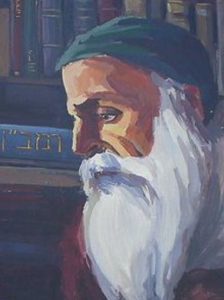
Painting of the Ramban from the walls of the Akko Auditorium
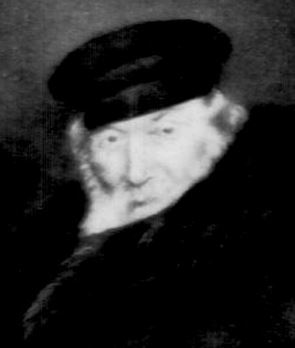
Moshe “Bonastruc” ben Nachman (1194-1270) was born in Gerona (present-day Spain) to a deeply religious Sephardic Jewish family. From a young age he studied with some of the great Sephardic sages of the day, and by the time he was 16 was already recognized as a wise scholar in his own right. He also studied medicine and became a sought-after physician. He was soon the chief rabbi of Catalonia and published several highly-acclaimed works, including glosses on the Talmud and several legal texts. Rabbi Moshe would become known as the Ramban, based on the initials of his name, and also as Nahmanides to the wider world. (The Ramban should not be confused with the Rambam. In fact, the Ramban helped to settle a philosophical dispute that first began with the Rambam in the previous century.) In 1263, Ramban was summoned to publicly debate a group of Dominican friars, before King James I, to settle whether Christianity or Judaism was the true faith. Rabbi Moshe tried his best to avoid the debate, which he knew would be a setup where Judaism could never be shown to win. The king conferred royal protection to him, promising no retribution of any kind. The Ramban gently tore down all the arguments of the Christians, and expertly defended Judaism, later publishing a written account of this famous “Disputation of Barcelona”. As he predicted, the failed friars sought to have him executed for “blasphemy”. The king, however, proved wise and fair, decreeing only a two-year’s exile, and gave the Ramban a gift of 300 gold solidi. (The friars then took their cause to the pope, unsuccessfully.) The Ramban journeyed to the Holy Land and settled in Jerusalem. When he arrived, he found just two Jews left there, following the ravages of the Crusades. He resolved to reinvigorate Jewish life in the Eternal City, building a small synagogue (which still stands today) and re-establishing a vibrant Jewish presence. Henceforth, a Jewish community has never ceased from Jerusalem. The Ramban spent his last days in Acre, where he similarly rebuilt the Jewish community. While there, he wrote his most famous work, the Commentary on the Torah. The commentary is among the first to feature mystical interpretations, since the Ramban was also a renowned Kabbalist. He is considered among the greatest rabbis of all time. Tomorrow, the 11th of Nissan, is his yahrzeit.
Words of the Week
We must believe in freedom of will, we have no choice.
– Isaac Bashevis Singer
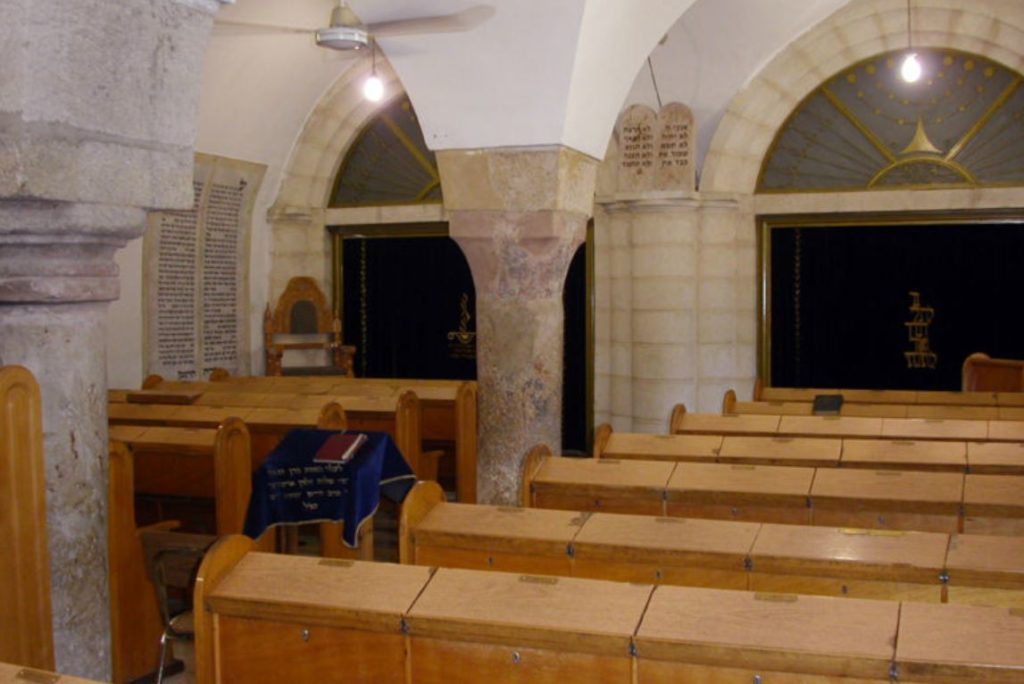
Interior of the Ramban Synagogue in Jerusalem’s Old City
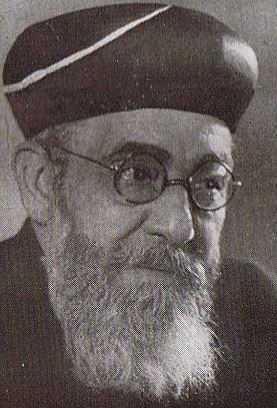
 Aharon Yehuda Leib Shteinman (1914-2017) was born in what is now the city of Brest, Belarus. To avoid being conscripted into the Polish army, the young yeshiva student fled to Switzerland with some classmates. He continued his diligent studies in a Swiss yeshiva until being arrested during World War II and sent to a labour camp. Shteinman was the only member of his family to survive the Holocaust. He settled in Israel after the war. There, the young rabbi quickly made a name for himself as a Torah prodigy, and was soon appointed rosh yeshiva, head of a Torah academy. He would serve as a rosh yeshiva for the next five decades, while also establishing a number of children’s schools for the underprivileged. Meanwhile, Rav Shteinman wrote profusely, authoring dozens of bestselling books and discourses on Torah, Talmud, and Jewish thought, as well as being recognized as an expert in the field of education. While abstaining from politics himself, Rav Shteinman was the spiritual leader of Israel’s Degel HaTorah party, playing an influential role in government. In his 90s, and in frail health, the Rav decided to journey around the world to strengthen Jewish communities. Countless thousands gathered to greet him and hear his wise words in Los Angeles, New York, Mexico City, Buenos Aires, Manchester, Odessa, Berlin, Gibraltar, Paris, and many more small towns. On these trips, he would give as many as 10 talks a day.
 Rav Shteinman was known for his extreme piety, humility, and modesty. His daily diet was nothing but a cucumber, a boiled potato, and one small bowl of oatmeal. He lived in a tiny apartment, with little furniture but walls lined end to end with books. He slept on the same thin mattress that was given to Jewish refugees upon arrival in Israel for some 50 years. Streams of people lined up at his open door each day seeking counsel and blessings. Rav Shteinman stood only for truth, even when it brought him adversity. This was particularly clear when he supported the Nachal Charedi, an IDF unit for yeshiva students. Even after some backlash from ultra-Orthodox communities, the Rav stood his ground and continued his support. He was widely recognized as the gadol hador, the world’s chief rabbi. Sadly, the great rabbi passed away yesterday, at 103 years of age. (His condition had turned critical two weeks ago after the tragic death of his 72-year old daughter from a heart attack, even though no one had told him of her passing.) Rav Shteinman wrote in his will that it would suffice to have just ten men to carry out his funeral, and requested no eulogies. Nonetheless, the funeral procession brought over 600,000 people. Israel’s President Reuven Rivlin stated that Rav Shteinman “bore the entire weight of the Jewish people’s existence on his shoulders… he knew how to convey his ideas gently, in a pleasant manner, and with a great love of the Jewish people… He was a man whose wisdom was exceeded only by his humility.”