An Unparalleled Genius and a Zionist Icon
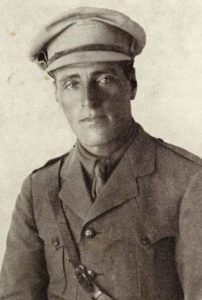
Joseph Trumpeldor
Joseph Volfovich Trumpeldor (1880-1920) was born in Russia, the son of a cantonist (young Jews forcefully conscripted into the Russian army). He became a dentist, but in 1902 enlisted in the Russian army. Trumpeldor lost his left arm in one battle of the Russo-Japanese War, yet wanted to continue serving, reportedly saying “I still have another arm to give to the motherland.” He returned to the battlefield and was captured by the Japanese. Trumpeldor spent most of his captivity studying, learning more about Judaism, Jewish history, and the Zionist cause. He even started writing on Jewish topics and found fellow Jewish prisoners who dreamed of settling in the Promised Land. Upon his release, he received four medals, and was later made an officer, making him the most decorated Jew in the Russian army, and its first Jewish officer. Unable to return to the military, he became a lawyer. In 1911, Trumpeldor made aliyah and settled in Kibbutz Degania. With the outbreak of World War I, he went to Egypt to establish the Jewish Legion (which fought for Britain) alongside Ze’ev Jabotinsky. The legion, also known as the Zion Mule Corps, is considered the first entirely Jewish military unit in two thousand years, and a precursor to the IDF. It helped the British conquer the land of Israel from the Ottoman Turks. Trumpeldor was a key soldier in that effort, and was wounded in the Battle of Gallipoli. After the war, he returned to Russia to gather more young Jews to settle in Israel. In 1920, while working to build the new town of Tel Hai, a band of Arabs attacked the Jewish community. Trumpeldor was shot twice, and succumbed to his injuries. According to legend, his last words were “Never mind, it is good to die for our country.” Trumpeldor immediately became a symbol of Jewish strength, self-defense, and resilience, and an inspiration for a new generation of Zionists. The day of his death, the 11th of Adar (this coming Monday), is a minor holiday in Israel.
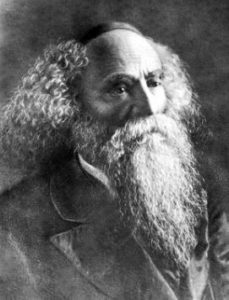
Rabbi Yosef Rosen, the Rogatchover Gaon
That same date is also the yahrzeit of Rabbi Yosef Rosen (1858-1936). He was born in the town of Rogatchov (in modern Belarus) to a Chabad family. By the age of 13, he was recognized as a genius and was sent to study with some of the great rabbis of the day in the town of Slutzk. At 31, he was appointed one of two chief rabbis of Dvinsk (in modern Latvia), and served in that role for nearly five decades, until his last days. Rabbi Rosen ensured the survival and flourishing of Jewish life under Russian Imperial, and then Communist, rule, often with great sacrifice to himself. Meanwhile, he published several important works of Jewish commentary and Jewish law. Some of his best writings were published only after his death, under the title Tzafnat Paneach, “Decipherer of Secrets”. Rabbi Rosen was known as the Rogatchover Gaon, the “Genius of Rogatchov”, and was famous for his unbelievable breadth of knowledge on just about any subject. After once meeting him for a lengthy discussion, the renowned poet Bialik said that “from the mind of the Rogatchover could be carved out two Einsteins” and that he is “a great spiritual national treasure.” Rabbi Rosen had many students, including Rabbi Menachem Mendel Schneerson, the Lubavitcher Rebbe, who also received his rabbinic ordination from the Gaon. The Rebbe once said that Rabbi Rosen was able to simplify all of Judaism into ten ideas, and quoted him as saying: “Were I a little bit smarter, it would be only one idea!”
Did You Know These Famous People Converted to Judaism?
Words of the Week
Love and work are the two things you have to do in life.
– Sigmund Freud
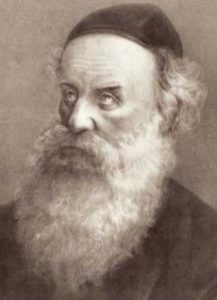 Schneur Zalman of Liadi (1745-1812) was born in the shtetl of Liozna in what is now Belarus. A child prodigy, he wrote his first commentary on the Torah when he was eight years old. Shortly after, he was sent to the nearby town of Lubavitch to begin advanced Talmudic studies, and was sent back home at the age of 12 as he had surpassed the knowledge of his teachers. He married at 15, and around the same time was first exposed to Kabbalah by two Bohemian refugees that settled in Liozna. They also taught him math, astronomy, and philosophy. A few years later, Rav Schneur Zalman met the Hasidic master Dov Ber, “the Maggid [Preacher] of Mezeritch”, who was himself the disciple of the
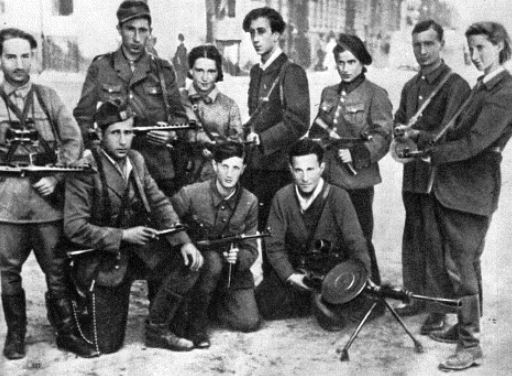
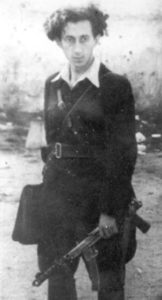 Abel “Abba” Kovner (1918-1987) was born in what is today Belarus and grew up in Vilnius (then part of Poland). As a young man, he was a member of HaShomer HaTzair, the Zionist youth movement. When the Nazis invaded Vilnius in 1941, Kovner escaped to a convent, but soon returned to the Vilna Ghetto to organize a Jewish resistance. At the start of 1942, Kovner secretly published a manifesto inside the Ghetto to inspire the Jews to fight back, writing that it was better to die than “go like lambs to the slaughter”. Along with several other young men, Kovner formed the United Partisan Organization, possibly the first armed underground Jewish group in Nazi Europe. Before they could launch their first large-scale attack, the Vilna Ghetto was liquidated in 1943, forcing the group to flee to the surrounding forests. From there, they launched a guerrilla warfare campaign against the Nazis. The small group began calling themselves “the Avengers” (HaNokmim) and were successful enough to draw the attention of the Red Army. They would go on to coordinate with the Soviets to crush the Nazis in Eastern Europe. Once the fate of the Nazis was sealed towards the end of 1944, Kovner was among the founders of a new group, called Bricha (“Escape”), which worked to get Jewish refugees out of Europe and to the Holy Land. Over the next couple of years, they would successfully move 250,000 Holocaust survivors to Israel. Having seen first-hand the horrific devastation inflicted by the Nazis, Kovner yearned for revenge. He started yet another group, called Nakam (“Vengeance”), seeking to punish Germany for the Holocaust. “Plan B” was to poison the water supply in Allied prisoner-of-war camps where Nazi SS soldiers were kept. The far more controversial and shocking “Plan A” was to poison the water supplies of several major German cities in order to kill 6 million Germans, one for each Jew lost in the Holocaust. Thankfully, Plan A was soon abandoned, though Kovner was still arrested by the British and held in a Cairo prison for several months. He did aim to accomplish Plan B, and Nakam members infiltrated a POW camp bakery in April 1946, coating the loaves of bread with arsenic. Over two thousands German soldiers fell ill, though no deaths were reported. In December 1947, Kovner joined the Haganah and fought in Israel’s Independence War as a captain of the Givati Brigade. Following this, he lived out the remainder of his life in a kibbutz, working tirelessly to strengthen the nascent state. He also helped to design several Holocaust museums, and testified at the Eichmann trial. More famously, Kovner wrote a series of poetry books (in Hebrew and Yiddish) describing the struggles he faced during the Holocaust and in Israel’s early years. This made him one of the country’s most celebrated poets and writers. For this, he won the Israeli Prize for Literature in 1970. A heavy smoker, Kovner succumbed to tracheal cancer before his 70th birthday.