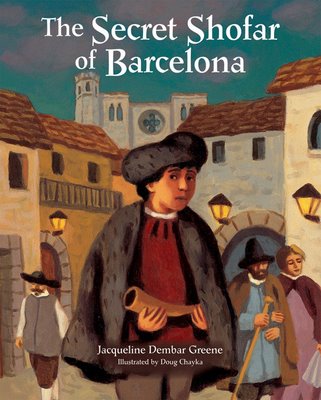
Mystic, Physician, Defender of Judaism
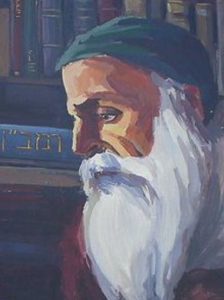
Painting of the Ramban from the walls of the Akko Auditorium
Moshe “Bonastruc” ben Nachman (1194-1270) was born in Gerona (present-day Spain) to a deeply religious Sephardic Jewish family. From a young age he studied with some of the great Sephardic sages of the day, and by the time he was 16 was already recognized as a wise scholar in his own right. He also studied medicine and became a sought-after physician. He was soon the chief rabbi of Catalonia and published several highly-acclaimed works, including glosses on the Talmud and several legal texts. Rabbi Moshe would become known as the Ramban, based on the initials of his name, and also as Nahmanides to the wider world. (The Ramban should not be confused with the Rambam. In fact, the Ramban helped to settle a philosophical dispute that first began with the Rambam in the previous century.) In 1263, Ramban was summoned to publicly debate a group of Dominican friars, before King James I, to settle whether Christianity or Judaism was the true faith. Rabbi Moshe tried his best to avoid the debate, which he knew would be a setup where Judaism could never be shown to win. The king conferred royal protection to him, promising no retribution of any kind. The Ramban gently tore down all the arguments of the Christians, and expertly defended Judaism, later publishing a written account of this famous “Disputation of Barcelona”. As he predicted, the failed friars sought to have him executed for “blasphemy”. The king, however, proved wise and fair, decreeing only a two-year’s exile, and gave the Ramban a gift of 300 gold solidi. (The friars then took their cause to the pope, unsuccessfully.) The Ramban journeyed to the Holy Land and settled in Jerusalem. When he arrived, he found just two Jews left there, following the ravages of the Crusades. He resolved to reinvigorate Jewish life in the Eternal City, building a small synagogue (which still stands today) and re-establishing a vibrant Jewish presence. Henceforth, a Jewish community has never ceased from Jerusalem. The Ramban spent his last days in Acre, where he similarly rebuilt the Jewish community. While there, he wrote his most famous work, the Commentary on the Torah. The commentary is among the first to feature mystical interpretations, since the Ramban was also a renowned Kabbalist. He is considered among the greatest rabbis of all time. Tomorrow, the 11th of Nissan, is his yahrzeit.
Words of the Week
We must believe in freedom of will, we have no choice.
– Isaac Bashevis Singer
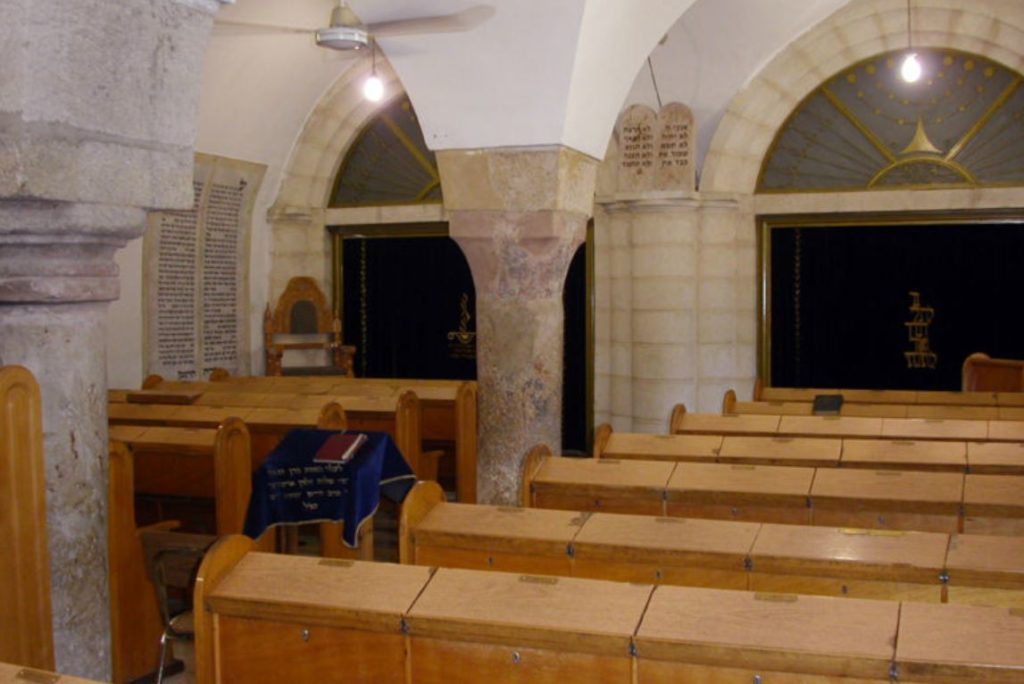
Interior of the Ramban Synagogue in Jerusalem’s Old City
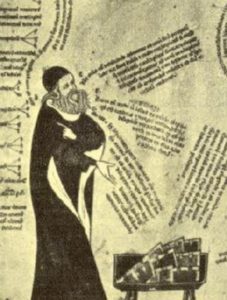 Avraham bar Chiya (c. 1070-1145) was born in Barcelona to a Sephardic Jewish family. It appears that his family was persecuted by its Christian rulers, so they fled to the neighbouring Arab kingdom of Zaragoza. Bar Chiya came from a long line of rabbis, and was also extensively trained in science, math, and astronomy. Famed for his wisdom, he became the court astronomer of Al-Musta’in II. Eventually, he was appointed minister of police and given the title sahib al-shurtah, “city governor”. This is why he was known in the Jewish community as HaNasi, “the prince” or “the president”. Al-Musta’in II was unable to defend his domain from the Christians, who soon took over. Bar Chiya moved to southern France for a while and lived in Narbonne and Provence. There he composed some of the most important scientific texts of the Medieval era. He translated a number of Arabic works into Latin, opening their study for Europeans, and played a key role in introducing the Hindu numerals we use today (by way of Arabia) to Europe, and thus to the rest of the world. Bar Chiya also synthesized ancient Greek wisdom with contemporary Arabic knowledge, and published new discoveries in number theory, arithmetic, geometry, optics, astronomy, and music theory. His Treatise on Measurement and Calculation inspired later greats like Plato of Tivoli and the world-famous Fibonacci. Meanwhile, Bar Chiya also served as the chief rabbi of the Jewish communities he presided over, and composed two important Jewish commentaries and texts. He is credited with being the first person to write a scientific book in Hebrew, and played an instrumental role in the development of the Hebrew language. His disciples included both Jews and non-Jews, among them the great