“The Jewish Elvis”
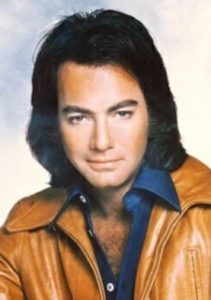 Neil Leslie Diamond (b. 1941) was born in Brooklyn to a Jewish family of Russian and Polish heritage. In high school, he sang in the school choir alongside classmate Barbra Streisand. Diamond was inspired by a Pete Seeger performance at his Jewish summer camp, and as soon as he returned home got a guitar and started writing songs. Meanwhile, he was on his high school fencing team and got a fencing scholarship to attend New York University. (He won an NCAA fencing championship in 1960!) Eventually, Diamond dropped out of his pre-med program and went to work for Sunbeam Music writing songs for $50 a week. He then went off on his own and formed a singing duet with a friend. Finding no success, Diamond decided to go solo and got a recording deal with Columbia in 1962. Unfortunately, despite good reviews his first album was a commercial flop. Diamond was dropped by Columbia and lived in poverty for the next several years of his life, at one point barely surviving on just $3 a day. In 1965, Diamond started writing hit songs for The Monkees, including “I’m a Believer”. Soon, Diamond became a popular songwriter and composed for the likes of Elvis Presley and Deep Purple. He had his own first hit in 1966 with “Solitary Man”, followed by “Sweet Caroline” in 1969 (later selected for historical preservation by the Library of Congress). After that, the hits kept coming and his shows sold out night after night. During one San Francisco show in 1979, Diamond suddenly collapsed on stage and couldn’t get up. It turned out that he had a tumour in his spine, and went through a 12-hour surgery to remove it. His 1980 hit “America” became the most recognizable song in the country, and is sometimes likened to a second national anthem. All in all, Diamond had ten Number 1 singles, and 38 reached the Billboard Top 10. He has sold over 100 million records, making him one of the most successful musicians of all time. Diamond has always been open about his Jewish faith, sang “Kol Nidre” in a famous Yom Kippur scene in the film The Jazz Singer, and has been called “the Jewish Elvis”. He was inducted into the Rock and Roll Hall of Fame, won a Grammy for Lifetime Achievement, and has a star on the Hollywood Walk of Fame. In 2018, Diamond retired after being diagnosed with Parkinson’s disease, though he still spends much of his time writing songs.
Words of the Week
Noah was told, “Make a tzohar for the ark.” [Genesis 6:16] The word “ark” in Hebrew is teivah, which also means a “word”. A tzohar, meanwhile, is something that shines. So the verse could be read to teach us: “Make each word you say shine.”
– Rabbi Israel Baal Shem Tov (1698-1760)
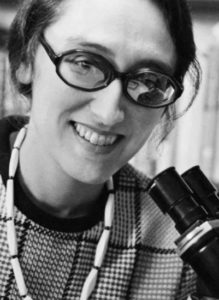 Lynn Petra Alexander (1938-2011) was born in Chicago to a prominent Jewish (and passionately-Zionist) family. She got accepted to the University of Chicago when she was just 15 years old, and graduated with a BA four years later. That same year, she married (former Jew of the Week)
  Sergey Mikhaylovich Brin (b. 1973) was born in Moscow to Russian-Jewish parents. After many long months trying to emigrate from the Soviet Union, the family was finally permitted to leave in the spring of 1979, when Brin was six years old. The family lived in Vienna, then Paris, and finally made it to the US with help from the Hebrew Immigrant Aid Society. Brin’s father got a job as a math professor at the University of Maryland, and his mother worked as a researcher for NASA. Following in his parents’ footsteps, Brin studied math and computer science at the University of Maryland. He went on to do graduate studies at Stanford, and there met Larry Page.
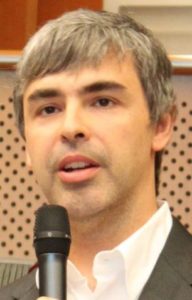 Lawrence Edward Page (b. 1973) was born in Michigan. His mother is Jewish, and his grandfather lives in Israel. Page’s parents were both computer scientists, and he grew up immersed in technology. He was also passionate about music, and credits music training with helping to shape his analytical mind. Page studied computer engineering at the University of Michigan before heading over to Stanford. Together with Brin, the two co-authored a paper on “The Anatomy of a Large-Scale Hypertextual Web Search Engine”. They then developed a new algorithm that would dramatically improve the capabilities of search engines. Brin and Page used their dorm rooms as office and lab, scrapping together whatever money they could for servers and other parts, and slowly building the infrastructure for their new search engine. (There were a number of other people involved, too, who were instrumental in its development.) The new search engine, originally called BackRub, was launched on the Stanford website in 1996. By the following year, Brin and Page understood that the search engine had the potential to transform the world. They renamed it “Google”, and bought the google.com domain on September 15, 1997 (twenty-three years ago, today). The rest is history.