
In Memory of Two Great Artists
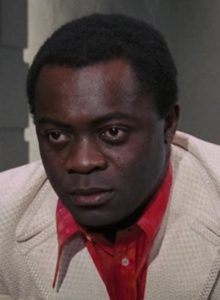 Yaphet Frederick Samuel Kotto (1939-2021) was born in New York City. His mother came from a family with Caribbean roots, and converted to Judaism in order to marry his father, an observant Jewish immigrant from Cameroon. Kotto was raised religious, and would later describe how walking to the synagogue with a kippah on his head led to some “heavy fistfights” with anti-Semites. He went to acting school at 16, and three years later appeared in his first play, Othello. Kotto acted in a number of Broadway productions before moving to Hollywood. After a decade of small film roles, Kotto was cast as the Bond villain Mr. Big in Live and Let Die. In 1977, he played Idi Amin in Raid on Entebbe about the daring Israeli mission to save hostages in Uganda, for which he was nominated Outstanding Supporting Actor at the Emmy Awards. Kotto also starred in Alien, The Running Man (alongside Arnold Schwarzenegger), and Midnight Run (with Robert De Niro). All in all, he appeared in over 60 movies and over a dozen TV shows. He once said in an interview that had he not become an actor, he would have become a rabbi. Sadly, Kotto passed away earlier this year.
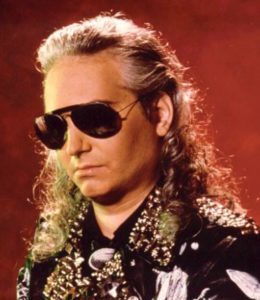 A fellow artist from New York who sadly passed away this year is James Richard Steinman (1947-2021). While studying at Amherst College, Steinman began writing music and lyrics for a number of school plays. In 1972, he wrote the music for the musical Rhinegold. The following year his first song was released commercially on Yvonne Elliman’s album. For much of the rest of the decade, he worked with the band Meat Loaf and wrote some of their greatest hits, along with one of the bestselling music albums of all time, Bat Out of Hell. In 1983, Steinman produced Bonnie Tyler’s album Faster Than the Speed of Night, and wrote its hit song “Total Eclipse of the Heart”. That year, it was the top song on the Billboard charts, followed by Air Supply’s “Making Love Out of Nothing at All”—which was also written by Steinman! All in all, Steinman wrote popular theme songs for television shows, soundtracks for movies, as well as music and lyrics for a number of stage productions. He wrote hit songs for Barry Manilow, Barbra Streisand, Celine Dion (“It’s All Coming Back to Me Now”), and even Hulk Hogan. He has been called “the greatest ever composer of symphonic rock” and the “father of the power ballad”.
Words of the Week
If a word is worth one coin, silence is worth two.
– Talmud (Megillah 18a)
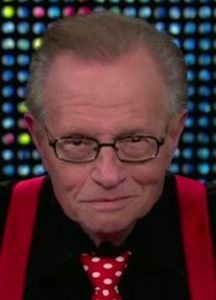 Lawrence Harvey Zeiger (1933-2021) was born in Brooklyn to Orthodox Jewish immigrants from Belarus. His father died when he was just a child, leaving the family impoverished. Young Larry was fascinated by radio and always wished to become a broadcaster. In Miami, he found a job cleaning at a radio station and, when the station’s broadcaster suddenly left the show, Larry was given a chance to take his place. The manager said “Zeiger” was not a good stage name, so Larry quickly chose “King” (based on an ad he had just seen for King’s Wholesale Liquor store). He got the job to radio DJ for three hours every morning, earning $50 a week. King soon started doing interviews, too, and would occasionally have a celebrity who was in town to do a show. He was then hired as a commentator for the NFL’s Miami Dolphins. It was in 1978 when The Larry King Show aired its first episode (on radio). It would be broadcast live every weekday at midnight, starting with a one-hour interview and followed by several hours of discussion. By 1985, King was a household name and was hired by CNN to star in a television version of his interview show. CNN’s Larry King Live went on to set a Guinness World Record as the “longest-running TV show hosted by the same person on the same network”. Many iconic moments took place in his studio, including the Perot-Gore debate of 1993 (which became CNN’s most-watched segment ever), and the joint interview of