Jew of the Week: Ben Ish Chai

Baghdad’s Greatest Sage
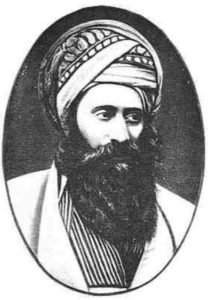
Rabbi Yosef Chaim of Baghdad, the Ben Ish Chai

Yosef Chaim ben Eliyahu (1832-1909) was born in Baghdad, the son of the city’s chief rabbi. After being miraculously saved at the age of 7, he resolved to devote his life to God and His Torah. He went to study at Baghdad’s Beit Zilka school, and spent all of his extra time absorbing his father’s extensive library of religious texts. When he was 14, a letter arrived from the chief rabbi of Turkey with a question for his father regarding a difficult case. His father was away at the time, so young Yosef Chaim answered the question himself. The chief rabbi sent a letter back: “Your son, dear to your soul, has already preceded you and decided this case. May his father rejoice in him…” Not surprisingly, when his father passed away, Yosef Chaim was immediately chosen as his replacement, and officially given the title of Hakham (the traditional Sephardic term for a rabbi). He was beloved by the entire Baghdad community, who regularly crowded into synagogues to hear his penetrating sermons, and who listened to his every word and instruction. One set of those sermons – which combined Halacha (Jewish law), with Kabbalah (Jewish mysticism), organized by the weekly Torah portion – was compiled into a book called Ben Ish Chai. The book was so popular that Hakham Yosef Chaim himself became known as the “Ben Ish Chai”. (The title has further significance because the Hakham believed himself to be a reincarnation of the great Biblical figure Benayah, who was called Ben Ish Chayil.) The Ben Ish Chai was known for his incredible humility and piety. He slept very little, built a mikveh inside his house so that he can purify himself daily, and at one point spent six continuous years fasting (eating only a little bit at night). He inspired Sephardic and Ashkenazi Jews alike, as well as the local Arabs. It is said that during his tenure there was no Jew in Baghdad that did not keep kosher or Shabbat. Throughout this time he never took a penny for his work, and made a living through his publications and his own wise investments. Many of his students became great rabbis in their own right, and Ben Ish Chai is still among the most popular Jewish books today, especially in the Sephardi world. Hakham Yosef Chaim also wrote a number of other works, including a book of kosher stories so that Jews wouldn’t be too drawn to secular novels. He is regarded as one of the greatest Kabbalists of all time. The Porat Yosef Yeshiva in Jerusalem’s Old City – today one of the most famous and prestigious in the world – was founded upon his instructions and guidance. Tonight, the 13th of Elul, marks 110 years since his passing.

10 Ladino (“Sephardic Yiddish”) Words to Use All the Time

Why Break a Glass at a Jewish Wedding?

Words of the Week

Just as punishment is brought upon a person because of evil speech, so is he punished if he could have spoken good words but did not.
– Zohar III, 46b 

The Porat Yosef Yeshiva near the Western Wall in Jerusalem. The Yeshiva was founded by Jewish-Indian philanthropist Yosef Shalom at the request of the Ben Ish Chai. The original building was destroyed by the Arabs in 1948. It was rebuilt in 1967 following Jerusalem’s reunification during the Six-Day War.
Jews of the Week: Oren Smadja & Sagi Muki

Judo World Champion

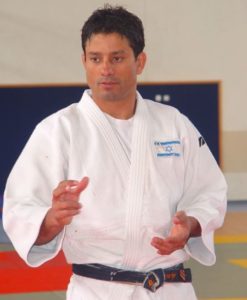
Oren Smadja

Shay Oren Smadja (b. 1970) was born to a Tunisian-Jewish family in Ofakim, Israel. He was the son of Israel’s first judo coach, Morris Smadja, who played a key role in introducing the sport to Israel. Trained by his father, Oren Smadja won his first gold medal in judo at the age of 12. Seven years later, he was Israel’s judo champion. Smadja went on to represent Israel at the 1992 Barcelona Olympics where he won a bronze medal. Three years later, he won the silver medal at the 1995 World Judo Championships. In 2008 he was a participant in the Israeli TV version of “Dancing With the Stars”. Altogether, Smadja won a medal or championship in 14 professional tournaments. He retired after competing in the 1996 Atlanta Olympics, and turned to coaching judo full time.

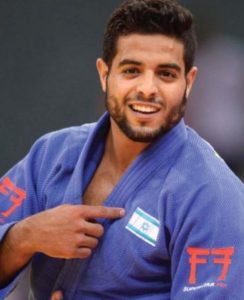
Sagi Muki

One of Smadja’s first students was a four-year old Sagi Aharon Muki (b. 1992) from Netanya, Israel. At the young age of 8 he had to choose to pursue either soccer or judo, and went with the latter. Under Smadja’s tutelage, Muki went on to win the under-20 European Cup in Berlin in 2011. The following year, he was Israel’s judo champion in his weight class, a feat that he repeated in 2013. He continued to win in multiple international competitions, and was ranked second in the world by 2015. That year, he took gold at the European Games and the European Judo Championship. Muki represented Israel at the 2016 Rio Olympics. Unfortunately, he failed to win a medal after severely injuring his spine. Bedridden for months, it seemed that Muki’s career was over. Undeterred, he refused surgeries and instituted an intense healing and training regime. Muki got back into shape and returned to judo at the Grand Prix Tashkent in October 2017. Silencing all of his critics, Muki won gold. Half a year later, he took another gold in the European Championships. Earlier this year, Muki climbed back to the world number 2 spot. Last week he won gold at the 2019 World Judo Championships in Tokyo, making him the first Israeli world champion. Muki also served in the IDF and carries the rank of sergeant. He takes great pride in representing Israel around the world, and is expected to bring home another gold at next year’s Summer Olympics in Tokyo.

How Many Soulmates Do You Have?  

21 Facts About Kosher Every Jew Should Know 

Words of the Week

Who can challenge the rights of the Jews in Palestine? Good Lord, historically it is really your country.
– Yusuf Diya al-Khalidi, Ottoman politician and Muslim scholar (1899)

Jew of the Week: Yitzhak Sadeh

Israel’s First Commando

Yitzhak Sadeh

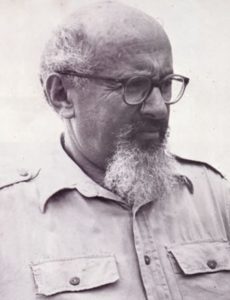
Izaak Landoberg (1890-1952) was born to a religious Jewish-Polish family in Lublin, then part of the Russian Empire. He was a student of Rabbi Hillel Zeitlin in his youth, but drifted towards secularism as a young adult. An avid athlete, Landoberg particularly enjoyed wrestling, and was once crowned St. Petersburg’s wrestling champion. When World War I broke out he joined the Russian Army and fought valiantly, receiving a medal. During this time, he met Joseph Trumpeldor and became a Zionist. He helped Trumpeldor establish the HeHalutz movement, which trained young Jews in agricultural work to settle the Holy Land. In 1920, he made aliyah and changed his last name to Sadeh, “field”. He joined the Haganah, and co-founded Gdud HaAvoda, the Labor and Defense Battalion, along with 80 others who worked tirelessly to drain swamps, pave roads, plant farms, defend Jewish settlements, and build kibbutzim. Sadeh defended the Jewish residents of Haifa and surrounding towns during an Arab uprising in 1929, and again during the Arab riots between 1936-1939 as the commander of the Jewish Settlement Police. It was during this time that he created two new fighting units. The first was Nodedet, a troop unit that started going on the offensive instead of always being on the defence from Arab violence. The second was Plugot Sadeh, “Field Companies”, the Haganah’s commandos, the first Jewish elite strike force. This evolved into the Palmach in 1941, which Sadeh commanded until 1945. At that point, he was made Chief of Staff of the Haganah, and set the foundations for the future IDF, crafting its first protocols, structures, and training procedures. Sadeh played an instrumental role during the War of Independence, commanding several brigades and creating Israel’s first armoured (tank) brigade, too. Sadeh retired at the war’s end with the rank of major general, and went on to have a successful literary career, publishing a variety of books, essays, and plays. Today there is a Yitzhak Sadeh Prize for Military Literature given in his honour, as well as several kibbutzim and many streets named after him in Israel. There is also a “Yitzhak Sadeh Wandering Song Club” with hundreds of members (mostly soldiers) that gather over bonfires, food, Israeli folk songs, and Sadeh’s wise words, seeing in Sadeh their spiritual mentor. Sadeh is recognized as one of the “fathers of the IDF”. This friday is his yahrzeit.

14 Tefillin Facts Every Jew Should Know  

The Significance of Judaism’s Four Holy Cities

Words of the Week

If I am to understand that you are inquiring whether I am of Jewish origin, I can only reply that I regret that I appear to have no ancestors of that gifted people.
– J.R.R. Tolkien