Category Archives: Extraordinary Individuals

Unique Jews In a Category of Their Own

Jew of the Week: Rebecca Gratz

The Woman Behind Hebrew School
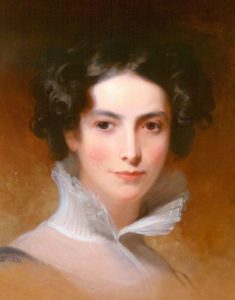
An 1831 Portrait of Rebecca Gratz by Thomas Sully

Rebecca Gratz (1781-1869) was born in Philadelphia, the seventh of twelve children in a religious Jewish home. On her mother’s side, she was the granddaughter of Joseph Simon, a wealthy Sephardic Jew who helped finance the American Revolution. Her father was an immigrant from Germany and came from a long line of rabbis. From a young age, Gratz was interested in literature and academia. She read her father’s entire library, and wrote articles and poetry of her own. At 19, she became a nurse in order to take care of her ailing father. Gratz soon recognized the countless women and children disadvantaged by the American Revolution, and established the Female Association for the Relief of Women and Children in Reduced Circumstances to help them. In 1815, she co-founded the Philadelphia Orphan Asylum and would go on to lead the organization for over 40 years, providing a safe home for hundreds of children. (She similarly helped open orphanages in Lexington, Richmond, and New York.) At the same time, Gratz was very active in her local synagogue, Philadelphia’s Mikveh Israel. Hoping to reverse the assimilation of Jews in America, and to provide free education for the poor, she opened up the world’s first Hebrew Sunday School in 1838 with 60 students. It would go on to have 4000 graduates. Gratz served as teacher, curriculum developer, superintendent, and president for nearly 30 years. She helped open new branches in Charleston, Baltimore, and other cities, while founding a teacher’s college to train new educators – all Jewish women. Gratz also co-founded the Female Hebrew Benevolent Society, and the Hebrew Education Society of Philadelphia (alongside former Jew of the Week Isaac Leeser). Her advocacy paved the way for the first Jewish foster home in the New World, which opened in 1855. Gratz was also a prominent defender of traditional Judaism. She fought back against proselytizing Christians, and vehemently opposed the new Reform Jewish movement. She advocated tirelessly for Jews to have equal rights, and inspired American Jews to be proud and open about their faith at a time when non-Christians were still often seen as second-class citizens. Not surprisingly, Gratz was described as “the foremost American Jewess of her day.” At one point, Gratz was called the most beautiful woman in America. Her portrait was painted twice by famous American artist Thomas Sully. Gratz never married; the man she loved was not Jewish, and she refused to marry outside of her faith. When her sister passed away at a young age, she raised her six children. After her own passing, the teacher’s college she co-founded was renamed in her honour, and still runs today as Philadelphia’s popular Gratz College. Rebecca Gratz is the basis for the heroine “Rebecca” in Sir Walter Scott’s classic novel Ivanhoe.

15 Facts About Tzedakah Every Jew Should Know

Words of the Week

A man should eat and drink less than what he can afford, dress in accordance with what he can afford, and honour his wife and children beyond what he can afford.
– Talmud (Chullin 84b)
Jew of the Week: Itzhak Bentov

The Amazing Life of Israel’s First Rocket Scientist

Itzhak Bentov

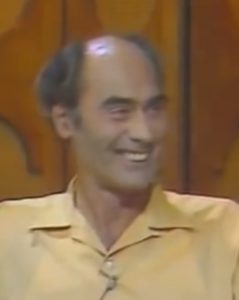
Itzhak Emery Bentov (1923-1979) was born in Czechoslovakia. After most of his family, including both parents, were killed in the Holocaust, Bentov settled on a kibbutz in the Negev. He soon joined the nascent Israeli Science Corps. In 1948, the corps was absorbed into the IDF as its official military research arm (heil hamadah). Although having no formal background or degree in science, Bentov quickly demonstrated his genius. Among other things, he designed Israel’s very first rocket, which was used successfully in the War of Independence. This marked the birth of Israel’s now world-famous military research and weapons development program. Out of the heil hamadah would be born RAFAEL, the organization tasked with developing Israel’s state-of-the-art rocketry, including the Iron Dome and the new David’s Sling missile system. Bentov moved to the US in 1954 and opened up his own workshop. There, he came up with dozens of new inventions, his most famous being the life-saving steerable heart catheter. Teaming up with a businessman, he founded Medi-Tech, which grew quickly and eventually became Boston Scientific, now a multi-billion dollar company with 29,000 employees worldwide. With dozens of patents for vital medical technologies under his belt, Bentov is considered a pioneer of the biomedical engineering industry. Full of great ideas, he was known as “Invention-a-Minute Ben”. At the same time, Bentov was a very spiritual person and was particularly drawn to the exploration of consciousness. After years of meditation and study, in 1977 he published his bestselling book, Stalking the Wild Pendulum: On the Mechanics of Consciousness. Many credit this book with launching the field of consciousness studies. Intriguingly, Bentov invented a seismograph which could record the vibrations of the aorta (the main artery coming out of the heart). He demonstrated that when a person meditates, the aorta’s vibrations tune to the beat of the heart, and synchronize with the brain’s alpha waves, and the Earth’s own magnetic pulsations. Bentov became a leading researcher on paranormal and supernatural phenomena, working alongside the renowned Dr. Andrija Puharich and Apollo astronaut Edgar Mitchell (who founded the Institute of Noetic Sciences to study the paranormal after returning from the moon and reporting a supernatural experience). In his second prized book, A Brief Tour of Higher Consciousness, Bentov synthesized the findings of modern physics and neurology with ancient mystical and Kabbalistic teachings. Bentov was famous for his vast array of knowledge, his ability to speak 11 languages, as well as his sense of humour. Sadly, he died in a plane crash at the young age of 56. His daughter recently published a book about his incredible life, called The Book of Telling: Tracing the Secrets of My Father’s Lives.

Why Do We Play With a Dreidel on Chanukah?

Chanukah & the Light of Creation

Words of the Week

We are all part of a gigantic hologram called Creation, that is everybody’s Self… a cosmic game where nothing exists apart from you.
– Itzhak Bentov

Jews of the Week: Recha Freier & Ruchie Freier

Two Trailblazing Women

Ruchie Freier

Rachel “Ruchie” Freier (b. 1965) was born in Brooklyn to a Hasidic Jewish family. In high school, she took a course in stenography and went on to work as a legal secretary. She soon became a paralegal, and was her family’s breadwinner, supporting her husband’s full-time religious studies. At 30, she realized she was working under lawyers that were younger and less knowledgeable than she was, and made the decision to go to law school herself. Juggling school, work, and raising six kids, it took Freier ten years to earn a bachelor’s degree in political science and a law degree. She passed the bar in 2006, becoming America’s first Hasidic female lawyer. Meanwhile, Freier was heavily involved in community work, and spent time as an advocate for New York’s oft-misunderstood Hasidic Jews. In 2005, she set up a charity called Chasdei Devorah to support poor Jewish families, and in 2008 co-founded B’Derech to help troubled teens. In 2016, she was elected Civil Court Judge after a tough race. That made her the world’s first female Hasidic judge. Freier also serves on New York’s Criminal Court. Amazingly, she is a licensed paramedic, too, and works with Ezras Nashim, an all-female volunteer ambulance service (a branch of the more famous, all-male Hatzalah). The New York Times has appropriately called her a “Hasidic superwoman”. Freier has won multiple awards, and was recently ranked by the Jerusalem Post among the 50 Most Influential Jews in the World.

Recha Freier

Ruchie Freier is not to be confused with Recha Freier (1892-1984), also born to a devoutly Orthodox family, in Germany. Recha Freier experienced tremendous anti-Semitism in her youth, and this inspired her to become a Zionist. Her husband was a rabbi in Berlin, while she taught in a high school and spent the rest of her time writing. In 1932, Freier was asked to help five young men who could not get jobs because they were Jewish. Freier had the idea to send the boys to the Holy Land instead to learn farming. She raised the necessary funds and organized their voyage and settlement. Thus was born what would become the Youth Aliyah. The organization would go on to save 7000 young Jews from Nazi Germany and settle them in Israel. Freier coordinated with (former Jew of the WeekHenrietta Szold to make sure the teens were taken care of in their new home. Freier herself escaped Germany in 1940 by crossing the border to Yugoslavia. There, she saved 150 Jewish orphans. All made it safely to Israel in 1941. Two years later, Freier established the Agricultural Training Center to educate impoverished children. She was also an avid musician and pianist, and in 1958 founded the Israel Composer’s Fund. In addition to composing a number of original musical pieces, Freier wrote works of poetry and Jewish folklore. In 1981, she was awarded the Israel Prize for her contributions, the State’s highest honour.

Words of the Week

If you love life, don’t waste time, for time is what life is made up of.
– Bruce Lee